

What if bringing in help didn’t mean stepping back from your loved one, but gave you more room to simply be family? If you’re searching for adult disability home care durham nc, you may be balancing caregiver exhaustion with concerns about safety, mobility, and how your loved one will feel about accepting support. Those concerns deserve care, not judgment.
Wanting a trusted caregiver at home doesn’t diminish your commitment. The right support may help an adult with a disability maintain familiar routines and take part in daily life while easing some of the responsibility resting on your shoulders. Depending on the person’s needs, a caregiver may assist with personal care, mobility, meals, errands, light housekeeping, or companionship.
In this guide, you’ll learn how personalized in-home care can support adults with disabilities in Durham, what to consider when choosing a caregiver, and how to plan for a transition to outside support. We’ll also explain how Life’s Angel Home Care’s team, including registered nurses and nursing assistants, provides practical in-home assistance, so you can consider whether its services fit your loved one’s needs.
Key Takeaways
- Learn how adult disability home care in Durham, NC, may support independence, daily routines, and dignity at home.
- Explore how respectful personal care and mobility assistance can help with everyday tasks.
- Know what to ask when choosing a caregiver, including how staff experience and training relate to the help your loved one needs.
- Include appointment and transportation needs in your care plan for Durham, Chapel Hill, and Raleigh.
- Consider how hourly in-home support may ease some caregiving responsibilities for family members.
What is Adult Disability Home Care in Durham, NC?
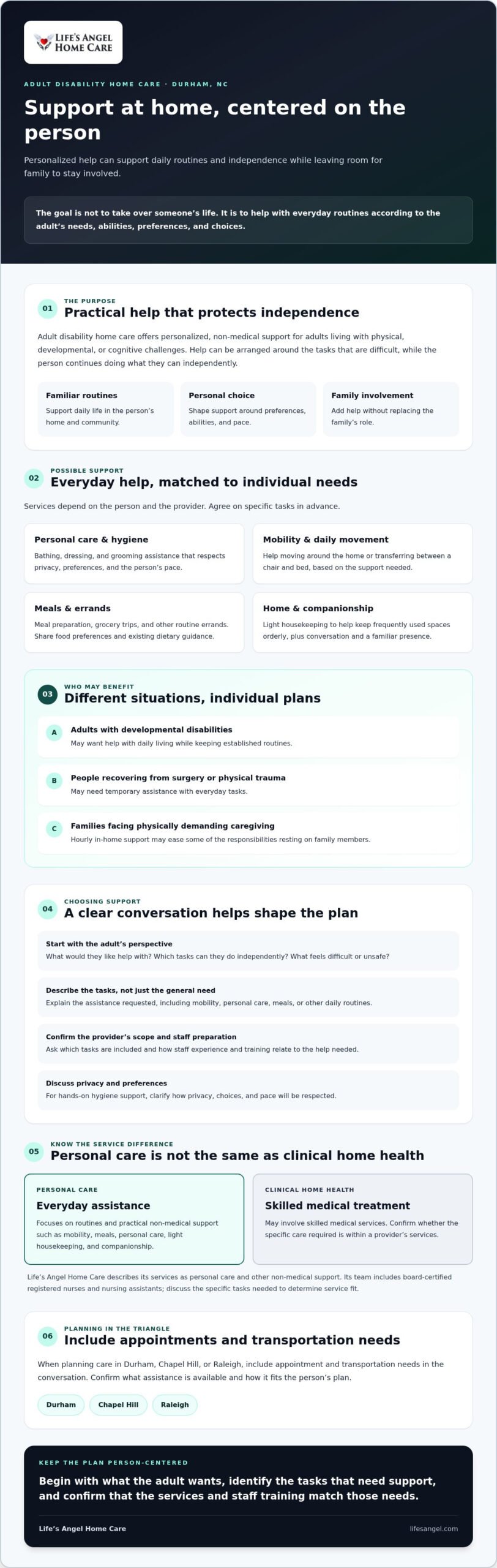
Adult disability home care provides practical, personalized support to adults living with physical, developmental, or cognitive challenges. The aim is not to take over someone’s life. It is to help with daily routines and support independence at home and in the community, according to the person’s needs and preferences.
Home care can mean different things, so it helps to distinguish personal support from clinical home health. Clinical services may involve skilled medical treatment, while personal care focuses on everyday assistance, such as help with routines, mobility, meals, light housekeeping, or companionship. The overview of home care services explains this broader distinction. Life’s Angel Home Care provides personal care and other non-medical support. Its team includes board-certified registered nurses and nursing assistants, but families should discuss the specific tasks required to determine whether the services fit their situation.
For adults and families exploring adult disability home care in Durham, NC, a caregiver can provide additional help without replacing family involvement. Support can be based on the adult’s preferences, while relatives receive help with agreed-upon daily tasks.
The Benefits of Staying at Home in the Triangle Area
Home may mean familiar rooms, established routines, and connections with friends and community in Durham, Chapel Hill, or Raleigh. Staying in those surroundings may feel more comfortable than adjusting to an unfamiliar setting. Personal support can help with specific daily challenges, but whether care at home is suitable depends on the individual, their home, and the level of support they need. For some households, personal care services Durham NC may offer a home-based option to consider.
Who Can Benefit from Disability Home Care?
Support may help adults with developmental disabilities who want assistance with daily living while keeping their routines. It may also help people recovering from major surgery or physical trauma who need temporary help with everyday tasks, or Durham families whose caregiving responsibilities have become physically demanding. Depending on the agreed service, a caregiver may assist with personal care, mobility, meals, or companionship.
Every person’s needs and abilities are different. Start by discussing what the adult wants help with, what they can do independently, and which tasks feel difficult or unsafe. This can help keep support practical and centered on the person’s choices.
Comprehensive Services for Adults with Disabilities
Support at home works best when it fits the person, not a checklist. For someone with limited strength or mobility, assistance may mean having a caregiver nearby while moving around the home or transferring between a chair and bed. Describe the specific tasks in advance, including what the person can do independently and what help they prefer. That information helps the family and provider discuss whether the requested assistance is appropriate.
Personal Care and Hygiene Support
Bathing, dressing, and grooming are personal tasks. Assistance should respect the adult’s privacy, preferences, and pace. Bathing assistance may help someone maintain a comfortable routine while doing as much as they can for themselves. Dressing and grooming support can also make getting ready less tiring while leaving choices about appearance to the person receiving care.
Before arranging hands-on hygiene support, explain what assistance is needed and ask how the caregiver will respect privacy and the person’s preferences. Confirm that the requested tasks fit the provider’s services and staff training.
Mobility and Daily Living Assistance
Everyday help can make routines easier to manage. Light housekeeping can help keep frequently used spaces orderly, while companionship offers conversation and a familiar presence. Errand assistance can help with grocery trips and other routine needs, and meal preparation can support regular mealtimes. Share food preferences and any dietary guidance the family already follows, and confirm what meal support includes.
Personal care at home is different from skilled medical treatment. Life’s Angel Home Care offers personal care and mobility assistance, and its team includes board-certified registered nurses and nursing assistants. If you’re comparing these services with medical home health, Medicare’s information on covered home health services can help clarify what Medicare describes as home health coverage. Ask each provider which tasks are included and whether the service matches the individual’s needs.
For families considering adult disability home care in Durham, NC, make a short list of daily tasks that are tiring, uncomfortable, or difficult to manage. Discuss the list with the adult receiving care, since their preferences should guide the plan. If personal care or mobility support is among those needs, you can review Life’s Angel’s home care support as one option.
How to Choose the Right Caregiver in Durham
Choosing a caregiver involves more than matching a list of tasks. You’re inviting someone into your loved one’s home and daily routine, so consider both relevant qualifications and whether the person communicates in a patient, respectful way. When comparing adult disability home care in Durham, NC, describe the adult’s abilities, preferences, and support needs, then ask how the agency determines whether its services are a fit.
Vetting Your Home Care Agency
Ask how caregivers are screened, trained, and matched with clients. Find out what training staff receive and how the agency communicates with families if needs or routines change. If background checks or specific credentials matter to your family, ask directly about them. During the conversation, notice whether staff listen carefully and speak about your loved one as a person, not just a list of tasks.
- Who will discuss the care plan, and how can the family ask to review it?
- What experience and training does the caregiver have for the requested support?
- How can the adult receiving care share preferences or raise concerns?
If hands-on support is needed, ask whether an RN is involved in assessing or reviewing the plan and what that role includes. Life’s Angel Home Care employs board-certified registered nurses and nursing assistants. Families can ask how those qualifications relate to the specific services being considered. Staff are also BLS and CPR/AED certified, credentials families can discuss when asking about training and preparedness.
CNA vs. Companion Care: What Fits Your Needs?
A companion generally focuses on social connection and everyday assistance, such as conversation, companionship, or errands. A nursing assistant may be a better fit when the person needs hands-on personal care or mobility assistance. Titles alone do not explain exactly what a caregiver can do, so describe the tasks involved and confirm that the provider’s services and staff training are appropriate. Personal home care should not be confused with skilled medical treatment.
The relationship matters, too. A caregiver should respect privacy, offer choices, and give the adult time to participate rather than rushing through routines. Ask how the adult can share feedback, especially during the first conversations about care.
Needs may change over time, so ask how to discuss changes to care hours or tasks. Life’s Angel Home Care provides hourly care and assistance on scheduled shifts. Explain which supports matter most now, such as personal care, mobility assistance, companionship, or errands, and ask how the agency can address those needs.
Planning for Safety and Medical Logistics in the Triangle
Getting to an appointment can take planning, especially if an adult needs mobility assistance or help navigating an unfamiliar setting. Trips from Durham to destinations such as Duke Health or UNC Medical Center may involve coordinating transportation, allowing time for the person’s needs, and confirming what support is available at the destination. For families considering adult disability home care in Durham, NC, appointment accompaniment may be one part of a broader plan for managing outings.
Accompanied Transportation to Appointments
Before a visit, confirm how transportation will be arranged, whether the vehicle can accommodate the person’s mobility needs, and what assistance is included from pickup through arrival. Life’s Angel Home Care offers scheduled transportation and personal accompaniment to healthcare appointments. Ask what the service includes and whether assistance is provided for the return trip. Share mobility needs and appointment details in advance so the agency can explain whether the support is suitable.
Before the appointment, agree on who will communicate with the healthcare team, keep track of questions, and handle written instructions. An accompanying caregiver can provide personal support, but should not replace clinicians for medical explanations or decisions.
Creating a Safe Home Environment
Start by noticing how the person moves through the home. Walk through the spaces they use most, especially the route between the bedroom, bathroom, and kitchen. Look for dim lighting, loose rugs, cluttered pathways, and items that require reaching or bending. In the bathroom, consider whether the person can move safely around wet surfaces and reach everyday essentials. For changes such as grab bars or other modifications, consult an appropriate professional about what suits the home and individual.
A caregiver who knows the person’s routine may help the family notice everyday challenges. Light housekeeping can also help keep frequently used spaces tidier. Share which areas feel difficult to navigate and agree on practical priorities rather than trying to change the whole home at once.
Plan for details that can cause stress: confirm the appointment time and location, identify the person’s mobility and communication needs, and decide who will help with follow-up questions. If you’re arranging support in Durham, Chapel Hill, or Raleigh, ask Life’s Angel about accompanied appointments and discuss what assistance may fit your loved one’s routine.
Life’s Angel: Your Partner in Disability Home Care
Choosing support for someone you love can bring relief and uncertainty at the same time. Life’s Angel Home Care is based in Durham and serves Durham, Chapel Hill, and Raleigh. Its services include hourly personal care, mobility assistance, companionship, meal preparation, light housekeeping, errand assistance, and accompanied appointments. Families can discuss the person’s routine and the kind of help they are looking for when exploring these services.
The goal is to offer practical support while respecting the comfort and choices of home life. A caregiver may help with agreed-upon daily tasks and give relatives help with caregiving responsibilities. Discuss the person’s routines and preferences so the support can be considered in the context of what matters to them.
The Life’s Angel Difference: Heart-Led Care
Warmth matters alongside experience. A good care relationship leaves room for the adult to express preferences, make choices, and take part in daily life at their own pace. Life’s Angel’s staff includes board-certified registered nurses and nursing assistants, with BLS and CPR/AED certification. Families can ask how staff qualifications relate to the requested support and how the care plan is discussed. No two family situations are identical, so explain the tasks, routines, and concerns that matter most to your household.
Local service can also make it easier to discuss practical needs in the area. Life’s Angel serves Durham, Chapel Hill, and Raleigh. If staying at home is important to your loved one, talk through which daily supports may help make that arrangement more manageable.
Getting Started with a Personalized Care Plan
A first conversation can be simple: describe what your loved one wants help with, what they prefer to do independently, and which caregiving tasks have become difficult for family members. Ask how the agency learns about a client’s routines and preferences, how caregivers are matched, and how to discuss changes to hourly care or scheduled shifts. Confirm which requested tasks fit the services offered and how communication with family members will work.
If you’re considering adult disability home care in Durham, NC, you don’t have to solve every care question at once. Start with a practical need, such as help with mobility, personal care, or accompanied appointments, and include the adult receiving support in the conversation. You can then discuss whether the service fits and revisit needs as circumstances change.
Take the Next Step Toward Support at Home
Choosing care for someone you love is a personal decision, and it’s okay to begin with a conversation about what feels difficult right now. The right support may help an adult maintain familiar routines at home while giving family caregivers help with agreed-upon tasks. As you explore adult disability home care in Durham, NC, consider which daily tasks would make the greatest difference and include your loved one in the discussion.
Life’s Angel Home Care serves Durham and the Triangle with personal care, mobility assistance, companionship, meal preparation, errand help, and accompanied appointments. Its team includes board-certified registered nurses and nursing assistants, with BLS and CPR/AED certification. Families can ask how the available services and staff experience align with their loved one’s needs.
You don’t have to figure out every detail alone. Contact Life’s Angel Home Care to discuss your family’s needs and possible next steps. A conversation can help you consider what support may fit your loved one’s routines and preferences.
Frequently Asked Questions
What is the difference between home health and personal home care?
Home health generally refers to medical services delivered at home, while personal home care supports everyday activities and comfort. Life’s Angel Home Care provides non-medical assistance such as personal care, mobility assistance, companionship, meal preparation, and light housekeeping. Its team includes board-certified registered nurses and nursing assistants, but that does not mean every home care visit is skilled medical treatment. Ask providers which specific tasks they offer and whether those services fit your loved one’s needs.
Can a caregiver help with transportation to doctor’s appointments in Durham?
Life’s Angel Home Care offers accompanied appointments and non-emergency medical transportation. This may help with planning a trip to a healthcare appointment in Durham or elsewhere in its service area, which includes Chapel Hill and Raleigh. Before scheduling, ask what transportation and accompaniment involve, including whether help is available for the trip to and from the appointment. Share mobility needs and appointment details in advance so the agency can explain what support may fit.
Are your caregivers certified to handle emergencies?
Life’s Angel Home Care reports that its staff are BLS and CPR/AED certified. These credentials relate to basic life support and CPR/AED training, but they should not be taken as a guarantee of a particular emergency response or medical service. Ask the agency about each caregiver’s current training, what to do if an urgent situation arises, and how to share the family’s preferred emergency contacts. For immediate emergencies, contact local emergency services.
How do you ensure the safety of my loved one while I am at work?
Care can provide scheduled assistance with agreed-upon daily needs, but it is not a substitute for continuous supervision unless that level of service has been specifically confirmed. Discuss your loved one’s mobility, routines, and safety concerns with the agency, and clarify the planned visit times and tasks. You can also review home pathways, lighting, and other possible hazards together. A clear care plan can help you understand what support is scheduled.
Can I schedule care for just a few hours a week?
Life’s Angel Home Care offers hourly care and assistance on scheduled shifts, so you can discuss what may fit your household. Confirm scheduling options directly with the agency. It may help to identify the tasks that would make the biggest difference, such as personal care, meal preparation, or companionship, and ask how the proposed schedule can address them.
What areas around Durham do you provide disability care for?
Life’s Angel Home Care serves Durham, Chapel Hill, and Raleigh. If your loved one lives outside these communities or needs help at a particular location, contact the agency to confirm whether that address is within its service area. Mention the support you’re seeking, such as mobility assistance, personal care, or accompanied appointments, so you can discuss what may be available locally.
How do you match a caregiver with an adult who has a disability?
Start by sharing the adult’s preferences, communication style, daily routines, and the specific tasks they want help with. These details give the agency a clearer picture of what may make a supportive care relationship feel comfortable. Life’s Angel Home Care employs board-certified registered nurses and nursing assistants, but its matching process should be confirmed directly. Ask how caregiver experience is considered, how the adult can share feedback, and how concerns or changing needs are addressed.
What happens if our regular caregiver is unavailable?
Ask the agency directly what its process is if an assigned caregiver cannot attend, since coverage arrangements and availability can vary. Find out how schedule changes are communicated and whether another caregiver may be offered. You can also discuss which tasks are most time-sensitive and how the family should plan if a visit needs to change. Confirming these details in advance can make unexpected schedule changes easier to manage.