

You notice your mother hesitating at the bathroom threshold, gripping the doorframe just a bit tighter, quietly hoping you won’t see how unsteady her balance has become. It’s a terrifying moment for any family, and it often brings an overwhelming wave of guilt. You want to protect your parent from a devastating fall, yet you can’t be there every hour of the day, nor do you want to strip away their privacy during delicate routines. This is where certified nursing assistant home care creates a gentle bridge, pairing essential physical safety with deep emotional dignity.
You shouldn’t have to carry the weight of being a full-time physical caregiver alongside being a loving son or daughter. We are here to bring you clarity and peace of mind. In this guide, you’ll discover what certified nursing assistant home care truly entails, how credentialed aides protect self-esteem during personal hygiene, and how to know when hands-on support is needed over basic companion sitting. We’ll walk you through the daily scope of practice and the exact standards to look for so you can choose trusted in-home support with confidence.
Key Takeaways
- Understand how certified nursing assistant home care bridges vital safety protocols with gentle, hands-on assistance during sensitive personal hygiene and mobility routines.
- Clarify the critical distinctions between social companion sitters and credentialed nursing assistants so you can confidently select the exact level of support your loved one needs.
- Discover how a comprehensive, nurse-led assessment uncovers subtle fall risks in the home while keeping your parent’s comfort and daily routines front and center.
- Learn the fundamental questions to ask North Carolina care agencies regarding caregiver vetting, CPR and safety certifications, and supervisory nurse oversight.
Understanding Certified Nursing Assistant Home Care: Roles and Credentials
Welcoming someone new into your family home is an intimate decision. When an aging parent needs help getting out of bed or safely stepping into the shower, you want to know that the person assisting them brings both technical skill and deep kindness. Certified nursing assistant home care provides structured, hands-on personal care and mobility support designed around your parent’s unique daily cadence. Unlike the sterile environment of a nursing facility with rigid shift bells and crowded hallways, in-home support preserves the comfort of home, surrounding your loved one with their favorite armchair, family photos, and familiar quiet.
State Certification and Practical Training Standards
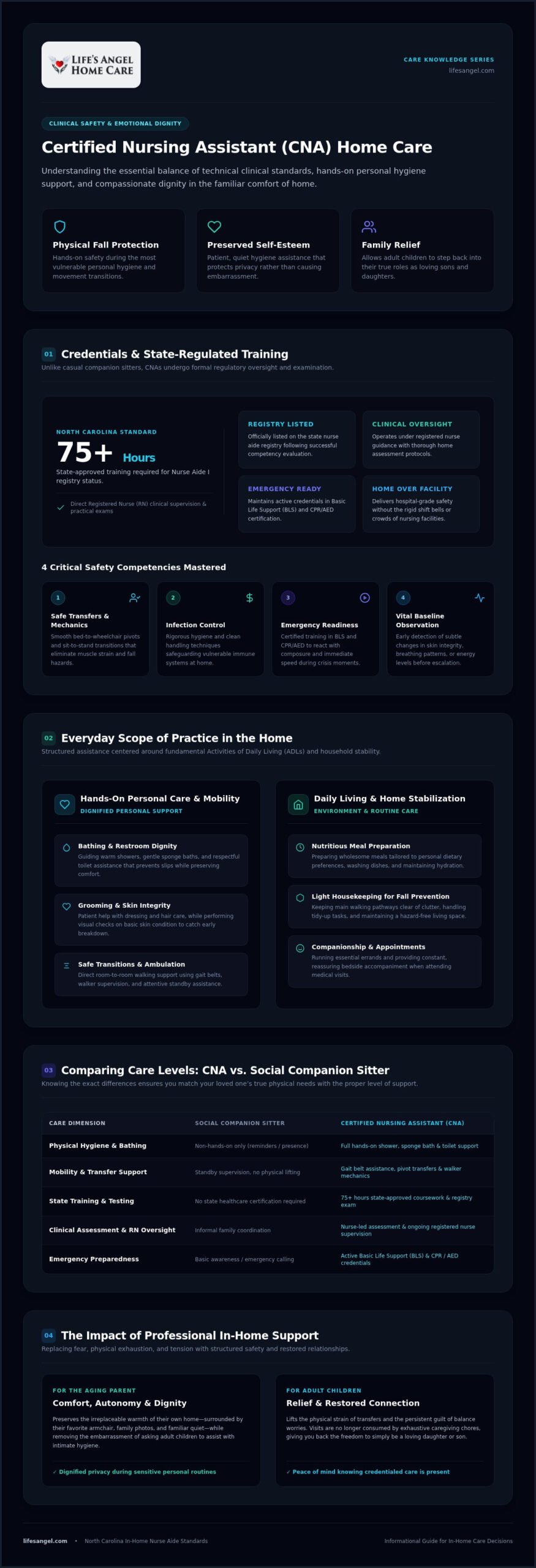
A certified nursing assistant (CNA) is far more than a friendly visitor. Within the broader healthcare field of unlicensed assistive personnel, CNAs complete rigorous state-regulated education and practical competency examinations before being listed on the state nurse aide registry. In North Carolina, for instance, a Nurse Aide I completes at least 75 hours of state-approved training, including dedicated hands-on clinical practice under direct registered nurse supervision.
Their training ensures essential safety protocols become second nature:
- Safe transfers and mechanics: Helping individuals pivot from bed to wheelchair or stand up smoothly without muscle strain or fall hazards.
- Infection control: Applying clean hygiene techniques that protect vulnerable immune systems at home.
- Emergency readiness: Maintaining active credentials in Basic Life Support (BLS) and CPR/AED to react calmly during unexpected moments.
- Vital baseline observation: Recognizing early, subtle changes in skin integrity, breathing patterns, or energy levels before they escalate.
The Heart Behind In-Home CNA Support
Technical credentials build the foundation, but genuine compassion defines the experience. Losing the ability to dress or bathe independently can feel quietly heartbreaking for an older adult. An experienced aide understands that preserving self-esteem is just as vital as preventing a physical slip. They approach delicate hygiene routines with calm patience, offering a gentle towel wrap and steady guidance so your loved one feels entirely safe and respected.
This dedicated presence brings profound relief to adult children. Instead of spending your visits exhausted by lifting transfers or feeling guilty about physical limits, you can step back into your true role as a son or daughter. Knowing a credentialed professional is managing the delicate physical routines lets everyone breathe a little easier.
Everyday Scope of Practice: What a CNA Does in the Home
Every family’s routine is different, yet the goal remains the same: helping your parent live safely and comfortably in the space they cherish. In certified nursing assistant home care, daily support centers around fundamental Activities of Daily Living (ADLs). A skilled aide blends physical help with quiet reassurance, ensuring morning and evening routines feel restful rather than stressful.
Hands-On Personal Care and Mobility Assistance
Personal hygiene and movement require trust and gentle technique. CNAs provide steady physical support that protects your loved one from sudden slips while honoring their privacy:
- Bathing and hygiene: Helping with warm showers, sponge baths, and dignified restroom assistance.
- Grooming routines: Offering patient help with dressing, hair care, and basic skin health checks.
- Safe movement: Guiding room-to-room transitions using gait belts, walkers, or attentive standby assistance.
Daily Living and Routine Household Support
A safe day involves more than physical assistance; it also requires a calm, supportive living environment. Certified aides help stabilize the home by preparing nutritious meals tailored to personal dietary preferences, washing dishes, and handling light housekeeping to keep walking paths clear of clutter. They also offer warm companionship, run essential errand assistance, and remain by your parent’s side when accompanied to appointments. If your family is feeling stretched, connecting with compassionate in-home care support can help restore balance to your family’s daily life.
Important Boundaries: What CNAs Do Not Do
Understanding these practical boundaries helps set clear expectations. While CNAs observe vital signs and track appetite or balance changes, their role focuses on non-medical personal care rather than licensed medical procedures. They don’t manage sterile wound dressings, administer IV therapies, or dispense medications, though they do provide timely medication reminders. If a medical emergency arises, aides follow trained safety protocols by contacting emergency services immediately to ensure swift professional attention.
Comparing In-Home Care Levels: CNA vs. Companion vs. Home Health Aide
Trying to make sense of different care titles can feel confusing when you just want the right support for your parent. Many families begin their search wondering whether a friendly visitor is enough or if hands-on assistance is required. Finding that balance comes down to evaluating mobility, personal hygiene needs, and safety risks. Choosing certified nursing assistant home care ensures your loved one receives certified physical support rather than just casual sitting.
Companion Care vs. Certified Hands-On Care
Companion sitters provide warm social engagement, share conversations, prepare simple lunches, and help tidy up around the living room. However, their scope remains strictly non-physical. If your loved one becomes unsteady while rising from a chair or needs help stepping into a tub, companion aides cannot legally or safely provide direct physical lifting. A certified nursing assistant possesses the specific clinical training required to handle bodily transfers, toileting, and delicate personal care safely.
Here are several clear signs that your loved one has outgrown basic companionship:
- Unsteady footing: Reaching for furniture or walls while walking down the hall.
- Hygiene hesitation: Skipping showers or wearing soiled clothes out of fear of falling.
- Physical transfer struggles: Requiring hands-on lifting to stand from a favorite recliner or bed.
- Caregiver fatigue: Family members feeling physically exhausted or fearful of injury while helping at home.
Non-Medical CNA Care vs. Skilled Home Health
Another common area of confusion is the distinction between continuous CNA personal care and skilled home health. Skilled home health is typically physician-ordered, intermittent medical care following a hospital discharge or surgery. A visiting registered nurse or physical therapist might drop by for thirty minutes two or three times a week to change surgical dressings or evaluate physical therapy exercises.
In contrast, CNA-level support offers consistent, ongoing hourly presence right in the home. A certified aide assists with everyday morning routines, helps prepare wholesome meals, and keeps the home safe throughout the week. When these care levels work together, families enjoy the best of both worlds. The visiting clinical therapist manages targeted rehabilitation milestones, while your dedicated CNA provides the continuous daily stability that keeps your loved one nourished, clean, and comfortable.
Having care plans guided by board-certified registered nurses provides an added layer of safety. This supervisory bridge guarantees that daily personal routines align thoughtfully with your parent’s health conditions, giving your family true peace of mind.
How to Prepare Your Home and Coordinate Care with a CNA
Talking with an aging parent about bringing help into their personal sanctuary can feel emotional for everyone involved. Many older adults worry that welcoming certified nursing assistant home care means surrendering their independence. When you approach the conversation with empathy, framing the aide as an ally who preserves their routines rather than someone taking over, apprehension usually turns into relief.
The Initial Needs Assessment and Care Plan Development
Every effective care journey starts with listening. A nurse-led in-home assessment allows a registered nurse to evaluate your loved one’s physical baseline, balance, and daily stamina in their natural setting. This visit uncovers subtle fall risks while gathering essential details about sleep habits, favorite breakfast routines, and personal preferences.
From there, a tailored care plan is created to honor your family’s unique rhythm. You will also establish direct lines of communication with supervisory nurses and care coordinators, giving you real-time visibility into your loved one’s day without having to second-guess how they are doing.
Preparing the Physical and Emotional Living Space
Setting up the home for certified nursing assistant home care involves both practical safety preparations and warm emotional groundwork. A few gentle adjustments make daily visits seamless:
- Clear walking pathways: Secure loose throw rugs, tuck away trailing cords, and verify that hallways and stairs are well-lit.
- Organize personal items: Place preferred toiletries, clean towels, and comfortable clothing within arm’s reach in the bathroom to support unhurried morning routines.
- Welcome the aide together: Introduce the caregiver warmly during their initial visit. Encourage your parent to explain where items belong and how they prefer their coffee, reinforcing that they remain in control of their home.
Preparing early takes the pressure off your shoulders and creates a foundation of mutual trust. If you are ready to design a supportive routine for your parent in the Triangle area, reach out to Life’s Angel Home Care to schedule a gentle initial consultation.
Selecting the Right In-Home Care Agency in North Carolina
Inviting an aide into your home requires deep vulnerability and immense trust. You aren’t just hiring a set of hands; you are choosing an advocate who will share intimate moments with someone you love. Finding the right certified nursing assistant home care agency means looking past polished brochures and focusing on real safety standards, caregiver credentials, and everyday clinical accountability.
Essential Standards: Licensing, Supervision, and Vetting
Before welcoming an agency into your family circle, asking clear questions about their hiring and clinical oversight practices will quickly reveal their commitment to quality. Not all agencies hold their teams to the same high standards.
Here are several foundational questions every family should ask during the interview process:
- Are your aides actively registered and vetted? Confirm that each caregiver holds active standing on the North Carolina Nurse Aide Registry and has passed thorough background clearances.
- What emergency credentials do they carry? Ensure care aides maintain current certifications in Basic Life Support (BLS) and CPR/AED.
- Who oversees the care plan? A reputable provider ensures licensed, board-certified registered nurses guide the plan of care and perform regular supervisory check-ins.
- How do you handle scheduling gaps? Ask how the agency arranges dependable coverage if your regular aide is sick or taking time off.
Compassionate Support Across the Triangle with Life’s Angel Home Care
At Life’s Angel Home Care, we believe caring for an aging parent is a sacred responsibility. As a locally owned agency serving families throughout Durham, Chapel Hill, and Raleigh, our mission is to walk beside you as a gentle, dedicated partner. We don’t believe in rigid, one-size-fits-all routines. Instead, our team designs personalized hourly support around your loved one’s specific lifestyle, whether they need gentle mobility assistance, help with personal care, nutritious meal preparation, or accompaniment to medical appointments.
Our certified nursing assistants and care aides are certified in BLS and CPR/AED, and every care journey is thoughtfully guided by board-certified registered nurses. More than that, we treat your family with the same tenderness, respect, and protective warmth we would offer our own. You don’t have to carry this journey alone. Connect with our dedicated care team at Life’s Angel Home Care to discuss your family’s needs and take the next step forward together.
Taking the Next Step Toward Gentle In-Home Support
Choosing certified nursing assistant home care means you no longer have to navigate the delicate balance between physical safety and personal dignity on your own. By understanding the vital difference between basic companion sitting and certified hands-on assistance, you can make informed, loving choices that keep your parent secure in the comfort of familiar surroundings. Daily care routines can once again become peaceful moments rather than sources of stress.
As a locally owned agency serving families throughout Durham, Chapel Hill, and Raleigh, our team is dedicated to walking right beside you. With individualized care plans overseen by board-certified registered nurses and compassionate caregivers certified in BLS and CPR/AED, we ensure every personal routine is met with protective warmth and steady skill. Ready to give your loved one the gentle, dignified support they deserve? Reach out to Life’s Angel Home Care today for a compassionate in-home care consultation. You don’t have to carry this journey by yourself, and true peace of mind is closer than you think.
Frequently Asked Questions
What is the primary difference between a caregiver and a certified nursing assistant?
A certified nursing assistant holds formal state certification and clinical training, whereas a general caregiver or companion typically provides non-physical assistance without state credentials. In North Carolina, CNAs complete state-approved coursework and clinical evaluations under registered nurse instruction. This training prepares them to safely handle physical transfers, bathing, and mobility assistance, offering a level of hands-on physical support that standard companion caregivers cannot legally or safely provide.
Can a home care CNA administer prescription medications to my parent?
No, home care CNAs cannot legally administer prescription medications or adjust dosages. In non-medical home care, certified aides provide verbal medication reminders to ensure your parent takes pre-poured doses on schedule. They can also bring a glass of water, gently hand over an organized pill organizer, and document that the medication was taken. If complex medical administration or injections are required, a licensed registered nurse must handle those tasks.
How many hours of in-home CNA care can a family schedule each week?
Families can schedule hourly care shifts tailored precisely to their needs, ranging from a few hours a week to daily daytime visits. Certified nursing assistant home care is flexible, allowing you to choose assistance specifically during demanding times like morning wake-up routines or evening meals. While agencies don’t offer 24/7 live-in skilled nursing, scheduled hourly visits provide consistent, reliable relief right when your family needs an extra pair of hands.
Does Medicare or health insurance cover certified nursing assistant home care?
Traditional Medicare and standard health insurance generally do not cover non-medical, hourly certified nursing assistant home care when it is needed solely for personal care or daily living support. Most families pay privately, through long-term care insurance policies, or via specialized state Medicaid waiver programs like North Carolina’s CAP/DA program for qualifying seniors. We always encourage families to review their private long-term care policies to see what daily custodial benefits apply.
How do agencies verify the credentials and safety of in-home CNAs?
Reputable agencies verify standing directly through the North Carolina Nurse Aide Registry maintained by the Division of Health Service Regulation. Beyond checking state licensure, agencies conduct comprehensive criminal background checks and verify current Basic Life Support (BLS) and CPR/AED certifications. In agencies like Life’s Angel Home Care across Durham, Chapel Hill, and Raleigh, board-certified registered nurses also conduct regular supervisory reviews to confirm each aide maintains excellent safety standards in the home.
What should we do if my loved one is resistant to having a CNA assist with bathing?
Start slowly by having the aide assist with less intimate tasks, such as preparing a meal or tidying the kitchen, before introducing personal hygiene support. Resistance often stems from embarrassment or feeling a loss of control. Reassure your parent that their dignity and comfort will always be respected. Experienced CNAs know how to build gentle rapport first, using warm towels and patient pacing so personal care feels comforting rather than intrusive.
Are home care CNAs qualified to help seniors living with Alzheimer’s or memory loss?
Yes, certified nursing assistants receive dedicated instruction in managing cognitive changes, confusion, and memory loss. They learn compassionate communication techniques that reduce agitation, redirect repetitive questions gently, and establish calming daily routines. For families in Durham, Chapel Hill, and Raleigh, an attentive CNA acts as a steady anchor, providing safe physical guidance while preserving a peaceful, familiar home atmosphere for seniors experiencing dementia or Alzheimer’s.