

What if accepting help could protect your parent’s independence rather than take it away? It’s understandable to wonder when family support is no longer enough, or whether having someone new in the home might disrupt familiar routines. If you’ve searched for “cna assistance for aging parent durham,” you may be looking for practical help that feels respectful, not like a loss of control.
Thoughtful in-home care can make everyday tasks more manageable while following your parent’s preferences and keeping you involved. Life’s Angel Home Care provides hourly support in Durham, including personal care, mobility assistance, meal preparation, light housekeeping, errands, companionship, and accompanied appointments. This article explains what that assistance can involve, how it may fit into your family’s routine, and what to consider when talking with your parent. You’ll also find steps for exploring support without rushing a decision.
Key Takeaways
- Look for recurring daily challenges that may signal your parent could use practical support at home.
- Learn how cna assistance for aging parent durham can fit familiar routines, personal preferences, and family involvement.
- Understand the difference between everyday personal assistance, skilled medical care, and emergency services.
- Prepare for a thoughtful conversation by noting your parent’s routines, mobility concerns, meal preferences, and appointment needs.
- See how hourly in-home support can make daily life more manageable while respecting your parent’s dignity.
When can CNA assistance help an aging parent at home in Durham?
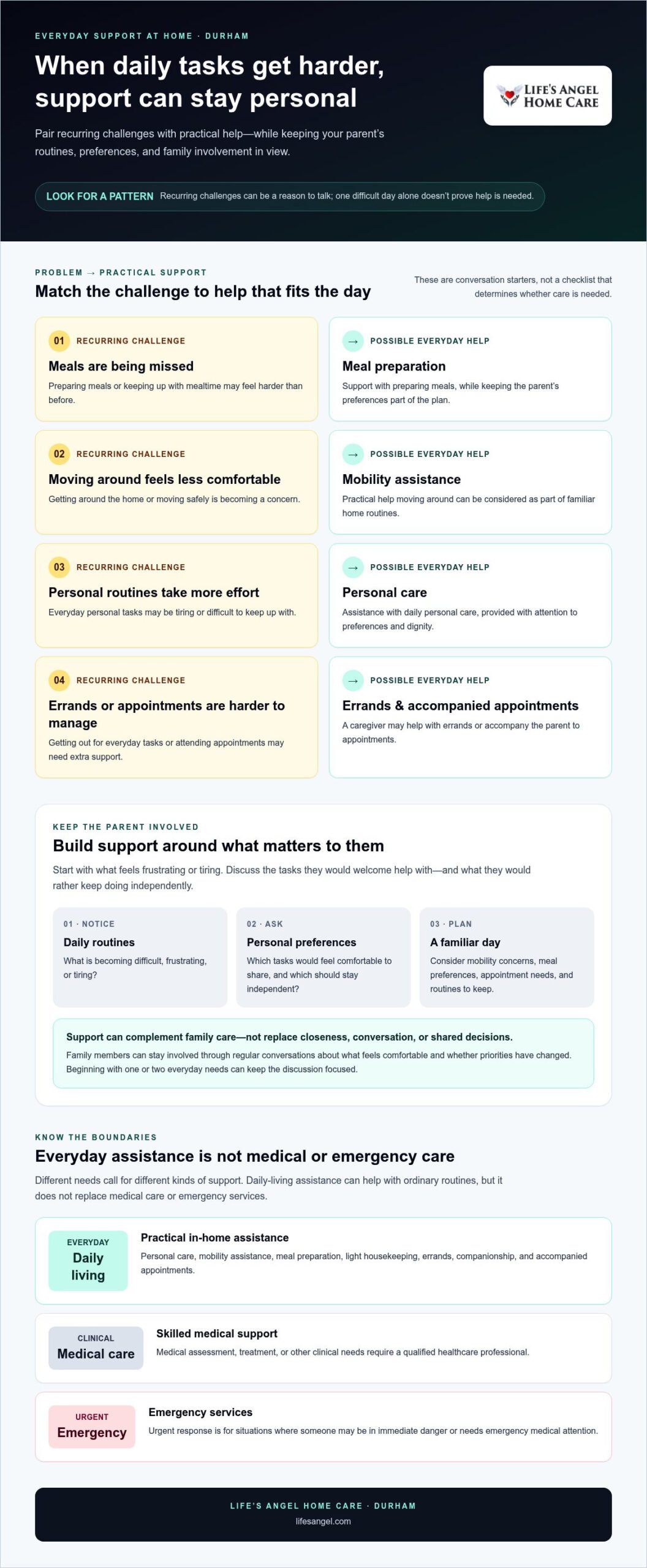
It can be hard to notice your parent’s daily needs changing while wanting home to remain familiar and life to feel like their own. Perhaps meals are being skipped, getting around the house feels less comfortable, or everyday tasks take more effort than they used to. One difficult day alone doesn’t mean your parent needs outside help. Recurring challenges, however, can be a reason to talk about what might make daily life easier.
For families considering cna assistance for aging parent durham, the aim can be practical support that respects a parent’s preferences and keeps family relationships at the heart of care. Daily-living assistance is different from skilled nursing, medical treatment, and emergency response. It can support ordinary routines, but it doesn’t replace medical care or emergency services.
What does CNA assistance at home mean?
CNA assistance at home is practical, person-centered help with everyday activities, provided in a way that respects someone’s routines, preferences, and dignity. Depending on a person’s needs, that may include personal care, help moving around, meal preparation, light housekeeping, errands, companionship, or accompaniment to appointments. The broader category of unlicensed assistive personnel includes workers such as CNAs and home health aides who help with daily activities.
This support can complement what relatives already do rather than replace the closeness, conversation, and shared decisions that matter to a family. A caregiver might help with a daily task while a daughter continues to visit, share meals, or make plans with her parent.
When might a family begin considering help?
Look for patterns rather than treating one missed meal or one unsteady moment as proof that care is needed. Recurring missed meals, difficulty keeping up with personal routines, concerns about moving safely, or growing strain on family caregivers may be signs to discuss extra support. Start with what your parent finds frustrating or tiring, then ask what kind of help would feel comfortable.
Before talking, note your parent’s routines, mobility concerns, meal preferences, and appointment needs. A calm conversation can focus on choices: which tasks they would welcome help with, what they would rather continue doing independently, and how support could fit into their day. Learning more about personal care services in Durham can also help your family understand the practical options available.
The next step doesn’t have to mean changing everything at once. Begin by listening carefully and identifying one or two everyday needs where a little help could bring comfort to your parent and breathing room to the family.
A Durham family case study: shaping CNA support around daily life
Illustrative example: Consider a hypothetical Durham family using these questions to think through support. The scenario shows how a family might plan around a parent’s priorities, without suggesting a specific client experience or outcome.
The family’s concerns and the parent’s priorities
Imagine an adult child noticing that helping a parent with meals, getting around, and everyday errands is becoming harder to manage alongside other responsibilities. The concern isn’t that the parent must give up their routines. It’s how to make daily tasks more manageable while preserving familiar choices, privacy, and time together.
In this example, the family starts by asking what the parent would actually welcome. The parent might want to keep deciding when to eat and how to spend the day while accepting help with a few practical tasks. Those preferences guide the conversation instead of assumptions about what the parent needs.
How everyday assistance could become part of a routine
The family could identify specific areas where support may help, such as meal preparation, mobility assistance, companionship, or errands. Any arrangement would reflect the parent’s stated priorities. Family members can stay involved through regular conversations about what feels comfortable and whether those priorities have changed.
Thoughtful planning can give families exploring cna assistance for aging parent durham a useful starting point. It can help relatives identify where they need breathing room while keeping the parent involved in decisions. For general local caregiver resources, Duke Health caregiver support is another place to explore.
If you’re considering family caregiver relief in Durham, begin by listing the tasks your parent would welcome help with and the routines they want to keep. You can also learn about hourly in-home support from Life’s Angel for assistance with everyday needs.
What CNA assistance can and cannot do for an aging parent
Understanding the boundaries of daily support can help you decide whether it fits your parent’s needs. In-home help can make familiar routines easier, but it isn’t medical treatment or a substitute for emergency response. For families considering cna assistance for aging parent durham, the distinction matters: practical support can complement family care while medical needs remain with appropriate healthcare professionals.
| Type of support | What it generally involves |
|---|---|
| Everyday in-home assistance | Help with personal care, mobility, meal preparation, companionship, errands, and accompanied appointments. |
| Skilled medical care | Medical assessment, treatment, or other clinical needs that require a qualified healthcare professional. |
| Emergency services | Urgent response when someone may be in immediate danger or needs emergency medical attention. |
Which everyday needs may be supported at home?
Daily assistance can address practical tasks while leaving room for your parent’s preferences. For example, support might include personal care, mobility around the home, meal preparation, companionship, errands, or accompaniment to an appointment. The priorities can be shaped around familiar routines and the family’s role in caregiving.
Accepting help doesn’t automatically mean giving up independence. Your parent can stay involved in choices about what they do themselves, where they want assistance, and how support fits into the day. Respectful help makes space for those choices rather than taking over every task.
When is a different level of care needed?
Everyday assistance has clear limits. It doesn’t provide medical treatment, clinical monitoring, medication management, or rehabilitation, and it can’t replace skilled care when a parent has medical needs that require a clinician. If you’re unsure whether a concern calls for medical attention, contact an appropriate healthcare professional for guidance.
If symptoms seem urgent or your parent may be in immediate danger, seek emergency services rather than relying on a home-care aide. Knowing the difference helps families understand what daily support is suited to and when a different response is needed.
With a shared understanding of these roles, you can discuss help without framing it as an all-or-nothing choice. Start with one or two everyday tasks your parent would welcome support with, and keep their comfort and control in the conversation.
Discussing CNA assistance and preparing for home support
Starting a conversation about help can feel delicate, especially if your parent worries that accepting assistance means losing control. A calm discussion keeps their preferences at the center and makes the decision feel like a shared plan, not something being done to them. Families considering cna assistance for aging parent durham can begin with a clear picture of what’s becoming difficult and what their parent wants to preserve.
How can you raise the subject with your parent?
Start with a specific observation, then listen before suggesting changes. For example: “I’ve noticed getting ready to go out seems more tiring lately. What parts feel hardest, and is there any help you’d be comfortable trying?” This opens the door without assuming your parent needs care or deciding for them. Give them time to share concerns, preferences, and what independence means to them.
Before the conversation, jot down recurring needs so you can discuss practical details rather than speaking in generalities:
- Notice recurring needs: Record which everyday tasks have become difficult and how often they come up.
- Talk with your parent: Ask what feels challenging and what kind of help, if any, would feel welcome.
- Identify priorities: List the routines, choices, and activities your parent most wants to maintain.
- Discuss support: Consider which tasks could be shared with an aide and how family members want to stay involved.
What information helps clarify daily support needs?
Useful notes might include your parent’s usual routines, mobility concerns around the home, meal preferences, personal care tasks they’d welcome help with, and appointment needs. Include what they prefer to do on their own, too. This gives the family a practical starting point for discussing personal care and mobility assistance without assuming that every task needs outside help.
There’s no single number of care hours that fits every family. Life’s Angel provides hourly or scheduled-shift support for everyday tasks your family has identified. Discussing your parent’s routines and preferences can help shape support while making room for family involvement. For more ideas on how to keep an elderly parent at home, focus on steps that support comfort while keeping your parent part of each decision.
When you’re ready, talk with Life’s Angel about in-home support and the daily routines your family hopes to make easier.
Explore CNA assistance for your aging parent with Life’s Angel in Durham
Finding the right help doesn’t have to mean changing everything about your parent’s day. Hourly in-home support from Life’s Angel Home Care can be shaped around everyday routines, so your parent can receive practical assistance in familiar surroundings. For families exploring cna assistance for aging parent durham, a useful first step is discussing which tasks feel difficult and what your parent wants to keep doing independently.
What families can discuss with Life’s Angel Home Care
Share your parent’s daily priorities and your family’s main concerns. You might describe where personal care or moving around feels challenging, whether meal preparation would help, or if companionship, errands, or accompaniment to appointments would make the day easier. These details can guide a conversation about support that respects your parent’s preferences and the family’s role.
You can also discuss hourly care or scheduled shifts in relation to your family’s needs. The aim is to consider what kind of help may fit your parent’s routine, not to prescribe a fixed number of care hours or assume every family needs the same arrangement.
A reassuring next step for Durham families
Life’s Angel Home Care is based in Durham and provides personal support at home. Its team includes board-certified registered nurses, nursing assistants, and care aides with BLS and CPR/AED certifications.
Exploring support doesn’t commit your family to an immediate or long-term decision. It’s a chance to talk through what your parent needs, what they value, and how practical assistance could fit into daily life. A thoughtful plan starts with listening and can take shape at a pace that feels comfortable for your family.
Talk with Life’s Angel Home Care about support for your family when you’re ready to discuss your parent’s routines and your family’s needs.
Take a thoughtful next step for your parent
Support should fit your parent’s life, not erase the routines and choices that make home feel like home. As you consider cna assistance for aging parent durham, remember that practical help with everyday activities can complement family involvement, while medical treatment and urgent needs call for appropriate healthcare or emergency response.
A useful place to begin is with your parent’s priorities: which tasks feel harder, what they’d welcome help with, and what they want to keep doing independently. Life’s Angel Home Care is a Durham-based in-home care agency serving seniors and adults with disabilities. Support includes personal care, mobility assistance, companionship, meal preparation, errands, and accompanied appointments. The team includes board-certified registered nurses, nursing assistants, and care aides with BLS and CPR/AED certifications.
Exploring help doesn’t require an immediate long-term decision. A conversation can help your family understand what support might look like and whether it feels right. Talk with Life’s Angel Home Care about support for your family and take the next step at a pace that respects your parent’s comfort and dignity.
Frequently Asked Questions
What does a CNA do for an aging parent at home?
A CNA can provide practical help with everyday activities, depending on the person’s needs and the caregiver’s role. At home, that support may include personal care, mobility assistance, meal preparation, companionship, errands, or accompanying a parent to appointments. This assistance can make daily routines more manageable while family members remain involved. Daily support is different from medical treatment or skilled nursing care.
Can a CNA help my parent stay at home in Durham?
In-home assistance may help your parent manage daily routines at home, but it can’t guarantee that staying home will suit every situation. Life’s Angel Home Care provides hourly personal support in Durham, Chapel Hill, and Raleigh. Families can discuss which everyday tasks are becoming difficult, what their parent wants to continue doing, and how practical support might fit their preferences and family involvement.
How do I know when my aging parent needs CNA assistance?
Consider discussing support when practical challenges recur, such as missed meals, difficulty with personal routines, mobility concerns, or growing strain on family caregivers. One difficult day alone doesn’t necessarily mean your parent needs assistance. Notice patterns, ask what feels hard, and listen to what kind of help your parent would find comfortable. A calm conversation can clarify whether everyday support may be worth exploring together.
Is CNA assistance the same as skilled nursing care?
No. CNA assistance described here focuses on everyday personal support, such as help with mobility, meals, personal care, or companionship. Skilled nursing care involves medical needs that require a qualified healthcare professional. Daily assistance doesn’t replace medical treatment, clinical care, or emergency response. If your parent needs medical attention or urgent help, involve an appropriate healthcare professional or emergency services.
Can a CNA help with bathing, meals, and getting to appointments?
In-home personal care may include help with bathing, while meal preparation can support familiar mealtimes. Mobility assistance may help with getting around as part of daily routines, and appointment accompaniment can provide support during a visit. The specific tasks should reflect your parent’s preferences and needs. This everyday assistance doesn’t include medical treatment or emergency transportation.
How many hours of CNA assistance does an aging parent need?
There isn’t a set number of hours that suits every aging parent. The amount of support depends on the daily tasks your parent wants help with, their routines, and how family members share caregiving. Life’s Angel Home Care provides hourly in-home support, and families can discuss hourly care or scheduled shifts in light of their needs. Start by noting recurring challenges and priorities rather than choosing a fixed schedule in advance.
Can CNA assistance replace moving my parent to a nursing home?
In-home assistance may support a parent who wants to remain at home, but it can’t promise to replace a move or meet every level of need. Daily personal support can help with routines such as meals, mobility, companionship, and personal care. If your parent has medical needs beyond everyday assistance, discuss them with an appropriate healthcare professional. Consider your parent’s wishes, support needs, and family circumstances together.