

Twenty hours of care each week doesn’t produce one fixed monthly price. The cost of 20 hours a week of home care in Durham depends on the individual care plan, and the amount is provided after a quote request. For a monthly estimate, multiply the hourly rate by 20 weekly hours and 4.33 weeks per month.
It’s understandable to want a clear figure before making plans, especially when you’re balancing someone’s needs with a household budget. This article explains how weekly care hours affect monthly costs and what factors can shape a personalized estimate, so you can make sense of the numbers without losing sight of the support your family needs.
You’ll also see how a 20-hour schedule compares with other levels of care and how to think through which arrangement may fit your circumstances. The aim is to make the budgeting side feel more manageable, one practical step at a time.
Key Takeaways
- See how Durham home-care rates compare with statewide and national benchmarks, and why the figures depend on the type of support.
- Learn how weekly care hours shape a monthly budget, including how to convert a weekly schedule into a monthly estimate.
- Compare companion care with home health aide support to understand how the kind of help needed affects planning.
- Explore how personal care, mobility assistance, errands, and light housekeeping can support daily life at home.
How much does home care cost in Durham, NC?
Home care estimates in Durham vary by source and by the assistance a person needs. Compare like with like: starting rates, agency care, and aide services may refer to different types of costs.
Durham, State, and National Rates
By contrast, the 2024 national median for private-duty home health aides was $34 per hour. These figures use different measures, so families comparing an agency should ask what each estimate includes.
Ask what the fee covers, whether minimum shifts apply, and how the care plan accounts for specific needs, such as dementia-related assistance.
North Carolina Regional Rates
A $30 hourly planning rate offers a simple budgeting baseline, not a quoted agency rate. Rates can differ with care needs and location.
North Carolina Medicaid beneficiaries who qualify may receive in-home support through CAP/DA and other home- and community-based service pathways. Some residents may also qualify for in-home aide support through state aging services.
Aide and Companion Care Rates
The service category matters: companionship and household help differ from hands-on personal assistance. Medicare may cover eligible intermittent skilled home health services, but generally does not cover ongoing nonmedical companion or custodial care.
Long-term care insurance may provide a set daily, weekly, or annual benefit for home care. Review the plan’s benefit structure when estimating how much it could contribute.
Agency and Private Caregiver Costs
Direct-hire caregivers in North Carolina typically cost 20-30% less than agency care, but families should account for payroll taxes alongside wages. Ask what the agency fee includes and who handles payroll responsibilities. The agency estimates use weekday shifts with a two-hour minimum; listed overtime and holiday surcharges are approximately 1.5 times the rate.
Evening and weekend charges can vary by arrangement. Compare the written schedule, minimum shift, and any applicable surcharges before choosing a plan.
| Option | Typical hourly rate | Budget consideration |
|---|---|---|
| Companion or homemaker | Nonmedical support | |
| Personal-care aide | Hands-on personal assistance | |
| Home health aide | Different service category |
Match the care tasks and schedule to the appropriate rate category, then compare what each quoted fee includes.
Care-plan cost examples by weekly hours
Weekly hours offer a practical starting point for estimating a senior’s care budget. The examples below use reported private-pay estimates, not a single rate for every provider or care plan.
At the national median private-duty home-health-aide rate, estimated monthly costs rise with scheduled hours:
These examples show how additional visits can change a monthly budget. A shorter schedule may cover selected tasks, while more hours may suit families arranging help on additional days. Consider when assistance matters most, such as bathing, meal routines, or time away from home.
The estimate uses a particular hourly rate and schedule, so it differs from the national median examples. It also shows how an agency-based estimate can differ from a national benchmark.
Compare schedules by writing down the days, visit lengths, and tasks your family needs. Then multiply the quoted hourly rate by weekly hours and 4.33 weeks to estimate a typical month. This makes comparisons between providers clearer, especially when considering care at home alongside assisted living.
Funding may affect a family’s share. Some eligible veterans or surviving spouses may receive Aid and Attendance benefits when they need regular help with daily activities. Medicaid pathways and eligibility depend on the program and the person’s circumstances. Consider potential benefits alongside the care schedule rather than assuming they will cover every planned hour.
For families mapping daily routines to a care schedule, personalized support at home can help make practical needs easier to organize.
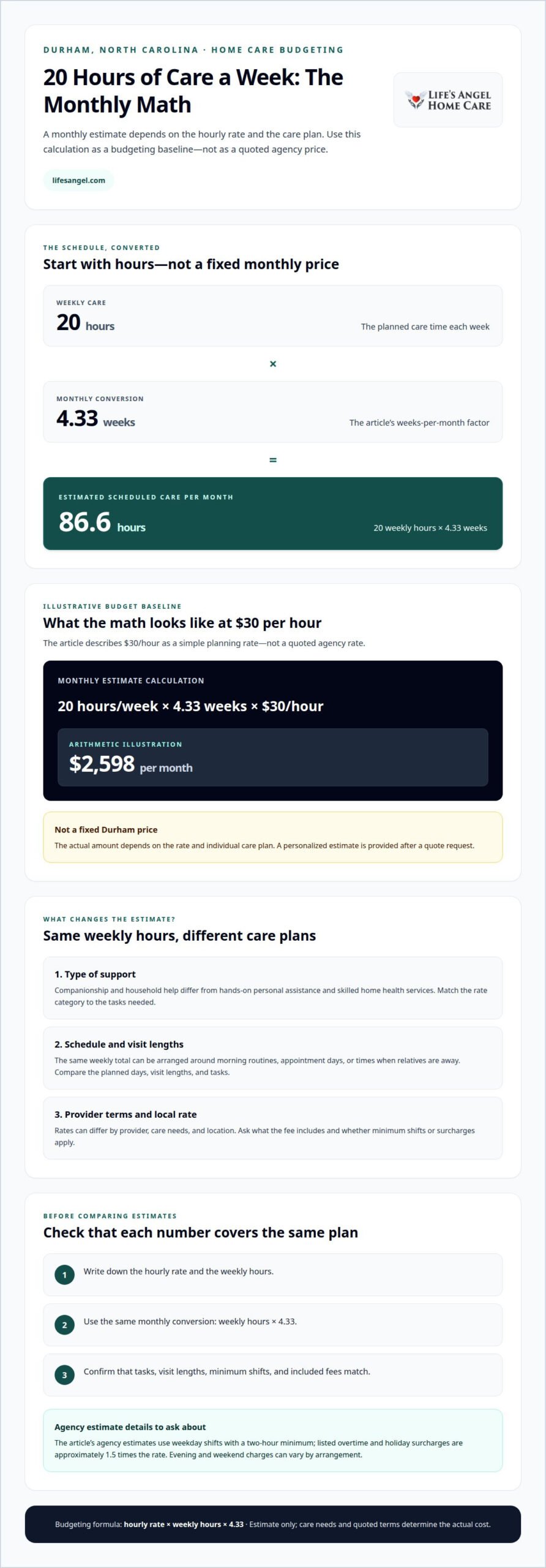
Monthly cost for 20 hours of weekly home care
For a 20-hour weekly schedule, estimate a month by multiplying the hourly rate by 20 hours and 4.33 weeks. That equals about 86.6 scheduled care hours monthly. The cost of 20 hours a week of home care in Durham depends on the rate used for the care plan, not simply the label “home care.”
Start by matching the hours to specific needs. One senior may need help at selected times for daily routines, while another family may spread visits across more days. The schedule, assistance requested, and distinction between companion care and home health support can affect which rate category applies.
For example, a Durham family could plan 20 weekly hours around morning routines, appointment days, or periods when relatives are away. The same weekly total can be arranged in different ways, so compare planned visit lengths and tasks, not only the monthly estimate. This helps families see whether the care plan fits their routine and priorities.
The type of support needed also matters. Nonmedical assistance and skilled home health services are distinct categories, and nursing support is not interchangeable with companionship. A rate reflects the service provided and the care recipient’s needs. Raleigh and other North Carolina communities may have different local market conditions, so a national median may not represent a Durham care plan.
To compare estimates, write down the hourly rate, planned weekly hours, and monthly conversion used. Then check that each estimate covers the same tasks and schedule. If one plan includes different services or visit lengths, its monthly total won’t provide a like-for-like comparison. Families considering the cost of 20 hours a week of home care in Durham can use this method to assess whether their planned hours match their needs.
Use the calculation as a budgeting tool, not as a substitute for matching support to the person. Someone who needs companionship may have different scheduling needs from someone requiring hands-on assistance. Listing those needs can help families weigh a care plan against comfort, routine, and practical support at home.
What is the cost of a home health aide versus a companion caregiver in Durham?
The type of help a person needs is a key factor in cost. Companion care focuses on nonmedical support, while home health aide services fall into a different care category. These statewide market estimates are not a quote for a specific Durham care plan.
For a 20-hour weekly schedule, use the same calculation for either category: hourly rate multiplied by 20 hours, then multiplied by 4.33 weeks. This gives a monthly estimate based on the selected rate. The comparison is only useful if both options cover the same schedule and needs.
Start with the daily tasks. If a senior mainly needs company or household support, companion care may be the closer category. If the plan requires home health aide services, compare estimates within that category instead. Before comparing monthly totals, describe the assistance needed, when it is needed, and any special requests. Care needs affect the estimate.
Durham rates can also reflect how care is arranged. Agency care and direct hiring are different arrangements, and a lower hourly figure alone doesn’t show the full cost. Consider the planned hours, shift pattern, and responsibilities involved. A 20-hour plan spread across several visits may compare differently from the same hours grouped into longer visits.
For a practical comparison, list each task and when it is needed. Identify whether it fits companion care or home health aide support, then apply the relevant hourly estimate consistently and note what each plan includes. This gives families a clearer basis for discussing support for a parent without confusing nonmedical companionship with aide services.
If you’re organizing daily assistance, explore personal care support as one way to consider help at home.
Life’s Angel Home Care: Personal Care
Life’s Angel Home Care provides Personal Care for families seeking practical support with everyday routines at home. Mobility Assistance addresses movement-related needs, while Errand Assistance and Light Housekeeping can help ease household responsibilities.
If your family is considering a weekly care schedule, identify which tasks would make the greatest difference for your loved one. A clear picture of those needs can guide a conversation about suitable support and how it may fit into daily life.
For a respectful conversation about in-home support, contact Life’s Angel Home Care.
Choose a Care Plan That Fits Your Family
Choosing a care schedule is more than a budgeting decision; it can help your family coordinate support thoughtfully. Note which parts of the day feel hardest, what help would preserve your loved one’s routine, and when family members can be present. These details can make your next conversation more focused and easier to prepare for.
Estimating the cost of 20 hours a week of home care in Durham is most useful when the hours reflect your family’s actual priorities, rather than an assumed standard schedule. Revisit the plan as needs or routines change, keeping comfort, dignity, and practical help at home in view. A clear starting point can make decisions feel more manageable.
If you’re ready to discuss support that may fit your family’s needs, contact Life’s Angel Home Care. You can take the next step at your own pace, with your loved one’s comfort at the center.
Frequently Asked Questions
What is the hourly cost of nonmedical home care in Durham, North Carolina?
The right category depends on the tasks in the plan. For example, a family arranging companionship and household help should compare that care category rather than treating it as the same service as personal assistance.
What is the weekly and monthly cost of home care for 20 hours per week in Durham?
These are planning estimates, not a specific provider’s quote. Your budget depends on the care schedule and type of assistance arranged.
Does Medicaid or North Carolina’s CAP/DA program pay for in-home care in Durham?
Some eligible North Carolina Medicaid beneficiaries may receive in-home support through CAP/DA and other home- and community-based service pathways. Eligibility depends on the person’s circumstances and the services needed. Families planning ongoing help at home can explore whether a Medicaid pathway may contribute to the care plan.
How do home care prices compare among agencies serving Durham, Chapel Hill, and Raleigh?
This is a regional range, not a separate price for each city or a rate shared by every agency. Compare plans with the same hours and tasks, since differences in the assistance requested can affect the estimate.
How much does hiring a private caregiver directly cost in Durham, including payroll taxes?
Direct-hire caregivers in North Carolina typically cost 20-30% less than agency care, but the total should include wages and payroll taxes. The material gives no specific Durham direct-hire rate.