

Accepting help at home doesn’t have to mean giving up independence. If you’re weighing non medical home care durham nc for someone you love, start by looking at the routines that have become harder: getting dressed, preparing meals, running errands, or getting to appointments. The key question is whether practical support with daily activities would help, or whether the person needs clinical care for a health concern. Outside support can fit around familiar habits while leaving room for personal choices and family connection.
This guide explains the difference between non-medical home care and skilled home health, with practical examples of when each may be appropriate. You’ll also learn how hourly in-home support from Life’s Angel Home Care can help Durham-area families share caregiving responsibilities through personal care, mobility assistance, companionship, light housekeeping, meal preparation, errands, and accompanied appointments. Use the examples to identify which tasks would make the biggest difference and consider a next step that respects your loved one’s needs, dignity, and routine.
Key Takeaways
- Learn how non medical home care durham nc can support everyday routines while helping your loved one maintain choice and independence.
- Understand the difference between practical daily-living assistance and skilled home health for clinical needs.
- Consider how support with personal care, meals, mobility, errands, or appointments may fit into your family’s routine.
- Use a simple planning approach to identify which tasks your loved one manages comfortably and where help could ease the day.
- See how Life’s Angel Home Care provides hourly in-home support for seniors and adults with disabilities in Durham, Chapel Hill, and Raleigh.
What Non-Medical Home Care in Durham, NC Can Help With
When everyday tasks take more effort, families may be unsure whether a loved one needs occasional help, regular support, or medical care. You might notice a parent taking longer to get ready, skipping errands, or feeling less steady while moving around the home. Pay attention to patterns: which tasks are repeatedly postponed, and which ones require a family member to rearrange their schedule? Those details can make it easier to decide what kind of support would be useful.
Non-medical home care is practical, non-clinical assistance with daily activities and companionship in a person’s home. It can include personal care, help getting around, meal preparation, light housekeeping, errands, and accompanied appointments. This kind of understanding home care can help clarify how day-to-day assistance fits within the broader range of care provided at home.
For families considering non medical home care durham nc, accepting support doesn’t have to mean giving up independence. A person can continue making choices about their day while a caregiver helps with specific tasks that have become difficult. For example, a caregiver might prepare lunch and tidy the kitchen while the person chooses what to eat and how to spend the afternoon. Family members can stay involved while sharing practical responsibilities with a caregiver.
Everyday signs that a loved one could use extra help
Look for changes that repeat, rather than focusing on one unusually tiring day. A loved one might regularly struggle to prepare meals, keep up with laundry, manage small errands, or move between rooms. They may turn down activities or appointments because getting ready or traveling feels like too much. Note the task, when it tends to become difficult, and what kind of help would ease it. This turns a general worry into a clearer starting point for a conversation.
Begin by asking, not assuming. Questions such as “Which parts of the day feel harder lately?” or “What would make getting to appointments easier?” invite your loved one to describe what they want to manage independently and where help might be welcome. Listening first keeps the discussion centered on their priorities.
The difference between non-medical care and home health
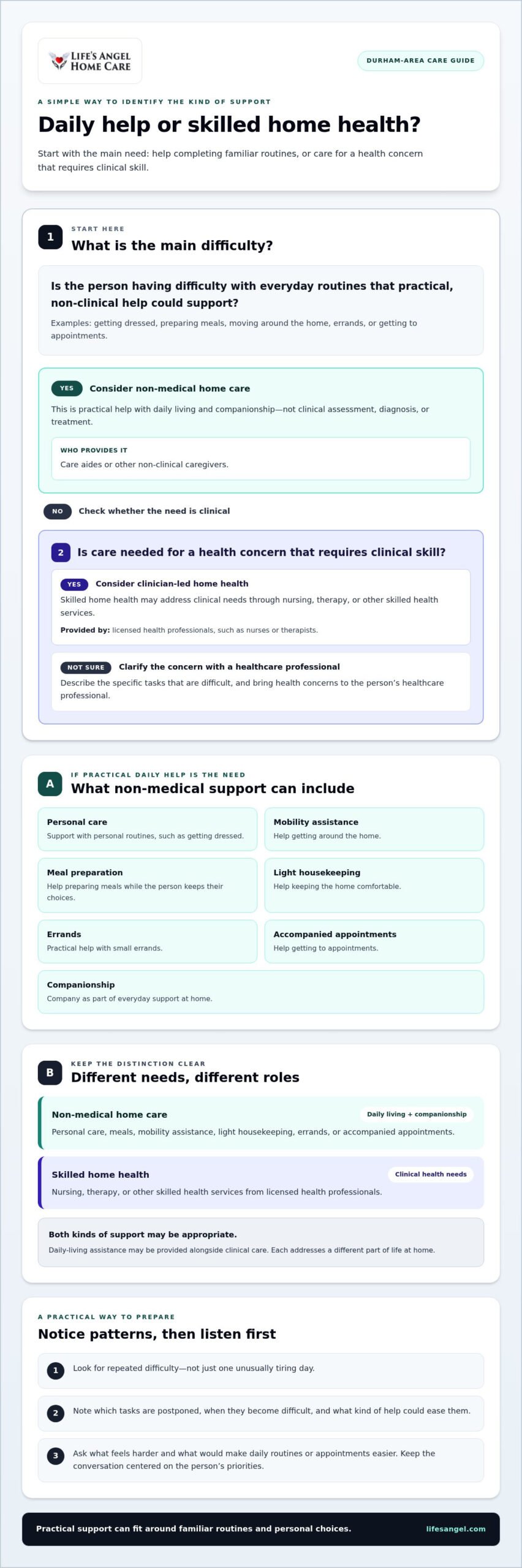
Non-medical care focuses on daily living and companionship, such as help with personal routines, meals, mobility, errands, and keeping a home comfortable. Home health addresses skilled health needs through clinician-led care, which may include nursing or therapy. These services serve different purposes, and one does not automatically replace the other. Daily-living assistance may also be provided alongside clinical care from appropriate health professionals.
A useful first question is whether the main difficulty is completing everyday routines or getting care for a health condition. Help getting dressed or accompanied to an appointment is practical support. Skilled medical treatment or therapy calls for clinical care. Describe the specific tasks that are difficult and bring health concerns to the person’s healthcare professional. That distinction helps families plan daily support while keeping clinical needs in the right hands.
Non-Medical Home Care vs. Skilled Home Health: Which Need Comes First?
Choosing support can feel confusing when everyday assistance and health concerns overlap. Start by identifying the kind of help needed: support with daily routines, or care that requires clinical skill? Neither option is universally better. They address different needs, and a person may benefit from both.
| Type of support | Main purpose | Typical tasks | Who provides it |
|---|---|---|---|
| Non-medical home care | Help with daily living and companionship | Personal care, meal preparation, mobility assistance, light housekeeping, errands, or accompanied appointments | Care aides or other non-clinical caregivers |
| Skilled home health | Address health needs that require clinical knowledge | Nursing care, therapy, or other skilled health services | Licensed health professionals, such as nurses or therapists |
Non-medical assistance isn’t a substitute for clinical assessment, diagnosis, or treatment. If a concern involves symptoms, a medical condition, or care that requires clinical skill, discuss it with the person’s healthcare professional. Daily-living support can still help with practical needs alongside clinical services, because each addresses a different part of life at home.
When daily-living support may be the practical fit
Non-medical support may fit when the main challenge is completing familiar routines, rather than receiving treatment. A caregiver could help with getting dressed, preparing a meal, moving around the home, or keeping up with light household tasks. Companionship or help with an errand may also make the day more manageable. These examples can guide a family conversation, but they don’t determine a medical need.
Sharing these practical tasks can give family members more room to focus on their relationship with a loved one instead of being the only person available for every errand or routine. For families exploring non medical home care durham nc, hourly in-home support can be shaped around a person’s preferences and everyday rhythm.
When a clinician-led home health service may be needed
If a person needs care for a health concern that requires clinical skill, a clinician-led home health service may be appropriate. A healthcare professional can assess the concern and explain whether nursing, therapy, or another clinical service is needed. Share specific observations and questions so the professional can understand what has changed.
Different forms of support can address different needs at home. A person may receive clinical care from health professionals while also getting non-medical help with meals, mobility, or appointments. Accepting practical assistance doesn’t mean surrendering independence. Your loved one can express what they want help with and continue making choices about their routines. If daily support is the main need, hourly in-home support can help families share caregiving responsibilities with care and respect.
What Non-Medical Home Care Can Look Like in a Durham-Area Home
Support at home is most useful when it fits the person’s actual day, rather than asking them to change familiar habits. One person may want help getting ready in the morning, while another may value company during an afternoon activity or help preparing a favorite meal. The needs of an older adult and an adult with a disability can differ, too. Start with the person’s routines, preferences, and comfort, then focus on the tasks where assistance would make daily life easier.
Families considering non medical home care durham nc can think of support as shared, practical help, not a one-size-fits-all schedule. A caregiver can assist with selected tasks while the person continues to make choices about how the day unfolds. Families comparing care settings may also find this in-home care vs assisted living guide helpful when weighing familiar routines at home against community living.
Personal care, mobility, and companionship
Personal care can involve considerate help with everyday routines such as dressing or grooming. Respect privacy, explain assistance calmly, and let the person do whatever they can comfortably manage. Mobility assistance can mean offering support as someone moves around the home or helping them maintain a familiar routine. Families can also identify the parts of moving around that feel most challenging, such as getting from one room to another. Families seeking more detail can explore a personal care services guide or a Durham senior mobility guide.
Companionship can be part of the same visit. A caregiver might share conversation over breakfast, join a person in a favorite activity, or offer a friendly presence while they complete a routine. Some people enjoy conversation; others prefer quiet company. Following the person’s lead can make the visit feel comfortable without taking away their independence.
Household tasks, meals, errands, and appointments
Light housekeeping can help keep commonly used areas comfortable and orderly, while meal preparation can make it easier to enjoy familiar foods at home. A caregiver might help tidy the kitchen after lunch or prepare a meal that suits the person’s preferences. Errand assistance can help with everyday tasks outside the home, such as picking up necessities, and ease the burden of coordinating every trip within the family.
For an appointment, an accompanying caregiver can provide practical, non-emergency support with the trip and offer company along the way. This is different from emergency transportation and does not replace medical care. Depending on the person’s wishes, a family member may also attend or share information with the healthcare team. A senior transportation guide can offer more detail about planning a supported trip.
Needs can change, so notice which parts of the routine are going smoothly and where the person would welcome assistance. An adult with a disability may want help with particular tasks while independently managing many others; an older adult may prefer support with different routines. Ask what is useful and adjust support to those preferences. This keeps care personal, dignified, and grounded in the life the person wants to continue living.
How Durham Families Can Plan for Non-Medical Home Care
Planning support can feel like one more responsibility, especially when you’re already coordinating work, family, and a loved one’s needs. A short, shared plan can make the conversation more manageable. Start with the person’s preferences, identify recurring tasks, choose where help would matter most, and consider how support could fit into familiar routines.
Start with the person’s priorities and daily routine
Begin by asking what your loved one wants to keep doing independently and what feels tiring, difficult, or inconvenient. Their answers should guide the plan. Family observations can add context, but keep the conversation about the person, not just a list of chores or concerns.
Jot down the flow of a typical day, including the parts that already work well. Note recurring tasks and times when support could help, such as getting ready, making a meal, handling an errand, or traveling to an appointment. Include preferences that matter, such as a favored mealtime or a quiet start to the morning. This gives the family a concrete picture of when and what kind of assistance may fit.
Make a simple, adaptable support plan
Once priorities are clear, separate everyday practical needs from questions that call for clinical guidance. Help with household routines, companionship, or mobility is different from assessing symptoms or providing treatment. Share medical concerns with the person’s healthcare professional, and keep the in-home support plan focused on daily living.
Then use a simple sequence to turn observations into a workable routine:
- Discuss preferences. Agree on what the person welcomes help with and what they want to continue doing themselves.
- Identify tasks. Write down recurring needs and the times they tend to come up.
- Prioritize support. Start with the tasks that cause the most strain for the person or family, rather than trying to change everything at once.
- Plan routines. Consider how hourly in-home care in Durham, NC could fit around the person’s habits and family responsibilities.
Keep expectations clear among your loved one, relatives, and the care team. Note which tasks the caregiver will help with, which responsibilities family members will continue to manage, and what the person prefers to handle independently. Clear expectations help everyone feel more comfortable and reduce the chance that important preferences get lost in day-to-day coordination.
A plan doesn’t need to be fixed. Revisit it as routines or family responsibilities change, and ask your loved one whether the support still feels useful and respectful. For families exploring non medical home care durham nc, the goal is to make daily life more manageable while honoring the person’s choices.
If you’re ready to talk through practical needs and routines, discuss in-home support with Life’s Angel’s care team.
Local Non-Medical Home Care in Durham, NC with Life’s Angel
Inviting someone into a loved one’s home is a personal decision. Families need support that feels respectful and attentive to the person’s everyday life. Life’s Angel Home Care is based in Durham and provides hourly in-home support for seniors and adults with disabilities in Durham, Chapel Hill, and Raleigh. Care can help with practical daily needs while honoring each person’s preferences and the family’s role.
A respectful, practical approach to support at home
Support can include personal care, mobility assistance, companionship, light housekeeping, meal preparation, errands, and accompanied appointments. Assistance can be shaped around a person’s privacy, habits, and choices, so it complements the routines they value. Families looking for non medical home care durham nc can talk with Life’s Angel about practical daily support and sharing caregiving responsibilities.
Life’s Angel employs registered nurses, nursing assistants, and care aides. Nursing assistants and care aides are BLS and CPR/AED certified. These qualifications describe staff training; they don’t mean that every visit is skilled home health care. Non-medical support focuses on daily living, while clinical assessment or treatment remains the role of appropriate healthcare professionals. If a loved one has a health concern, their healthcare professional can help determine what clinical care is needed.
Support can be shaped around what matters in an individual’s day. One person may appreciate help with a morning routine, while another may value companionship or assistance preparing a meal. Adults with disabilities may have distinct preferences and tasks they want help with, just as seniors do. Listening to the person keeps assistance practical and dignified instead of assuming everyone needs the same kind of care.
A calm first step for your family
You don’t need every detail figured out before starting a conversation. Describe a loved one’s usual routine, what they manage comfortably, and the tasks that have become difficult for them or their family. Mention preferences that could shape support, such as how they like to spend their mornings or what help they would welcome during an appointment trip.
Life’s Angel’s Durham-area care team can help your family think through practical daily support and how it might fit into your loved one’s routine. The conversation can focus on where a helping hand would be welcome while keeping the person’s comfort and choices at the center.
If you’re considering support, talk with Life’s Angel about in-home care and take the first step at a pace that feels comfortable for your family.
Take the Next Step at Your Family’s Pace
Deciding to bring support into the home can take time. You don’t have to solve every care question at once. Start with one reflection: what would make an ordinary day easier for your loved one while preserving the routines and choices that matter to them? That answer can help your family move from uncertainty toward a personal, manageable plan.
Exploring non medical home care durham nc can be a first step, not a commitment to change everything. Share what your loved one wants to continue doing independently, where help may be welcome, and what your family is finding hard to balance. A thoughtful conversation can help you consider support that fits your circumstances, with dignity at its center.
Talk with Life’s Angel about caring support at home and discuss the daily tasks your family would like help with. Start the conversation when you’re ready, with your loved one’s comfort and choices at the center.
Frequently Asked Questions
Is non-medical home care covered by Medicare?
Coverage depends on the service, the person’s circumstances, and current Medicare rules. Help with everyday activities, such as meal preparation or errands, is different from eligible skilled home health services, so don’t assume the same coverage applies. Before making plans, review current Medicare information and ask the person’s plan or benefits administrator about the specific support needed, including what service is being considered and how often it may be used.
Can a person with dementia receive non-medical home care?
Some people with dementia may benefit from practical support with routines, companionship, meals, or household tasks. The right arrangement depends on the person’s individual needs, preferences, and safety considerations. For example, a family might explore help with preparing lunch or keeping a familiar daily routine. Non-medical care doesn’t diagnose or treat dementia, so discuss health or behavior concerns with a qualified healthcare professional and explain everyday support needs clearly.
What happens if someone receiving home care develops a medical need?
A new or worsening medical concern should be discussed with an appropriate healthcare professional, not diagnosed by a non-medical caregiver. If there’s an emergency, contact emergency services. Families can make communication easier by keeping healthcare contacts and relevant care instructions accessible, then sharing changes with the care team as appropriate. Practical home support may continue for daily routines while qualified medical professionals address clinical needs.
Can non-medical home care support an adult with a disability?
Yes. Non-medical home care can support adults with disabilities with practical tasks such as personal care, mobility, meals, errands, companionship, or household routines. The person should guide what assistance feels useful and what they prefer to manage independently. For instance, someone may want help preparing a meal but prefer to handle other parts of their day without assistance. Clinical questions should be discussed with their healthcare professional.
How do families know when it is time to arrange help at home?
Consider arranging a conversation when everyday tasks are repeatedly disrupted or family caregiving is becoming difficult to sustain. You don’t need to wait for a crisis. Notice one or two specific pressure points, such as a regular errand that’s hard to coordinate or a household task that keeps getting postponed. Ask your loved one what kind of help would feel welcome, and raise medical or safety concerns with a healthcare professional.
Is non-medical home care available in Durham, Chapel Hill, and Raleigh?
Yes. Life’s Angel Home Care is based in Durham and serves families in Durham, Chapel Hill, and Raleigh. The agency provides hourly in-home support for seniors and adults with disabilities. If you’re looking for non medical home care durham nc, start by describing the routines your loved one wants to maintain and the daily challenges your family hopes to address. That gives the care team a practical starting point for discussing support at home.