

Consistent in-home care starts with a dependable routine that respects a person’s needs and preferences. Hourly in-home care in Durham, NC can include personal care, mobility assistance, meal preparation, errands, light housekeeping, and companionship, scheduled around the hours that fit daily life. The price depends on the case and is provided after a quote request. The schedule, visit length, and type of assistance all shape the cost.
It’s understandable to want reliable care and a clear idea of the cost, especially when balancing a loved one’s comfort with family responsibilities. This guide explains what hourly care can include, what affects the total, and how to compare care arrangements across the Triangle, while keeping the focus on consistency and dignity at home.
We’ll also explain how a care plan can adapt as needs change, from occasional help with everyday tasks to more regular support. That way, you can consider practical options with greater confidence and focus on a routine that feels reassuring for your loved one and your family.
Key Takeaways
- Consistent care depends on clear routines, respectful communication, and support that fits the person’s needs.
- Learn which everyday tasks an in-home caregiver can help with and how to preserve dignity during personal care.
- Understand what shapes hourly care costs across Durham and the Triangle, and how visit schedules affect the overall budget.
- See how a care plan can adjust as daily needs and family routines change.
- Explore how personal care, mobility assistance, errands, and light housekeeping can make life at home more manageable.
Caregiver experience and qualifications
Reliable care begins with matching the caregiver’s abilities to the person’s everyday needs. Someone who needs steadying while walking may benefit from mobility assistance, while another person may value help preparing lunch and maintaining a familiar routine. Before care begins, write down priorities, communication preferences, and tasks that need extra attention. These details help shape the plan and clarify expectations for everyone.
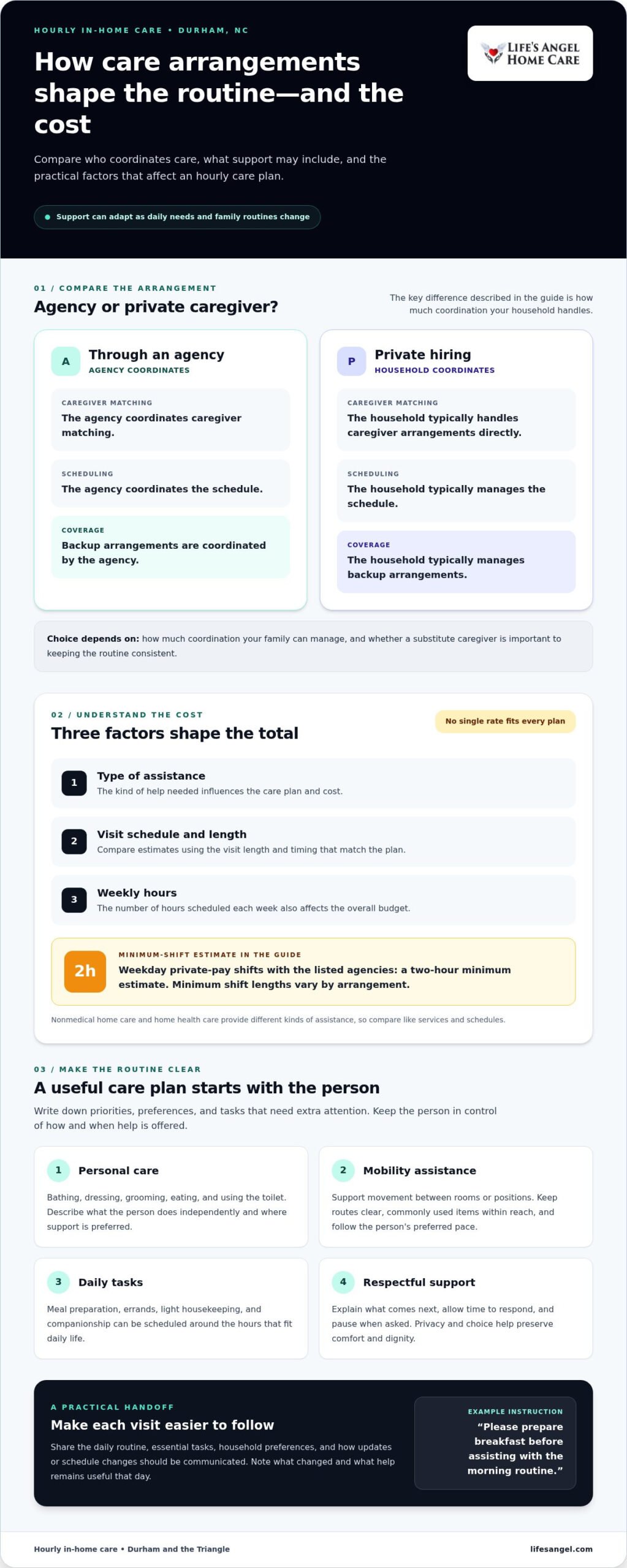
What are the differences between hiring a caregiver through an agency and hiring privately in North Carolina? An agency coordinates caregiver matching, scheduling, and backup arrangements; with private hiring, the household typically handles these tasks directly. The right approach depends on how much coordination your family can manage and whether a substitute caregiver is important to maintaining the routine.
Minimum shift lengths vary by arrangement. An estimate current as of July 25, 2025, places the weekday minimum for private-pay shifts with the listed agencies at two hours. A shorter visit may not fit that estimate, so build a schedule around the minimum that applies to the arrangement you choose and the help needed during each visit.
Caregiver onboarding works best as a clear sequence: explain the daily routine, identify essential tasks, share household preferences, and agree on how updates will be communicated. A written example can help: “Please prepare breakfast before assisting with the morning routine.” Clarify who receives schedule changes and how the person’s preferences will be shared if a different caregiver arrives.
What questions should I ask when hiring an hourly home caregiver in Durham? Ask about experience with the specific tasks, how the first visit is introduced, how schedule changes are handled, and who communicates updates. If an appointment is part of the routine, clarify whether the caregiver accompanies the person and how the trip fits into the visit.
Training and consistent routines help caregivers follow the same preferences across visits. Keep notes about meal choices, mobility support, and the best way to offer assistance. Before choosing a provider, ask how caregivers are screened, what safety practices guide visits, who covers an absence, and how your family is notified about coverage changes.
Respite care gives family caregivers time for errands, rest, or other responsibilities while a caregiver assists at home. List the tasks that need coverage, such as preparing a meal or helping with a daily routine, then schedule the visit for that window. A brief handoff note helps the caregiver understand what the person needs that day.
Personal care and assistance with activities of daily living
Everyday tasks can become harder as strength, balance, or energy changes. Personal care and help with activities of daily living can support familiar routines at home. This might mean setting out clean clothes, preparing a meal, or offering a steady arm while walking between rooms. The person should guide how and when assistance is given, so support preserves comfort and dignity rather than taking over.
Activities of daily living often include bathing, dressing, grooming, eating, using the toilet, and moving between positions. The help needed varies: one person may want help fastening buttons, while another may need a reminder to use a mobility aid. Describe each task clearly, including what the person can do independently and where they prefer support.
Build a useful routine around the person’s usual order of tasks. If breakfast comes before dressing, for example, keep that sequence unless the person prefers otherwise. List needs for morning, afternoon, and evening, along with helpful details such as clothing preferences or where everyday items are stored. This gives caregivers practical guidance and helps care fit the household’s rhythm.
Mobility assistance can support everyday movement at home, such as getting from a chair to the kitchen or walking to the bathroom. Keep routes clear and commonly used items within easy reach. Tell the caregiver which movements feel difficult and what help the person prefers. A calm pace and simple instructions can make each transition more manageable.
Offer personal care respectfully, with privacy and choice at every step. A caregiver can explain what comes next, give the person time to respond, and pause when asked. Asking whether someone wants help choosing clothes, for example, lets them guide the routine. Small choices can preserve independence even when hands-on assistance is helpful.
- Morning: Organize grooming items and clothing before the routine begins.
- Meals: Set up food and utensils according to the person’s usual preferences.
- Movement: Keep walking paths clear and follow the person’s preferred pace.
- Evening: Place needed items nearby before the person settles in.
Before a visit, identify the one or two tasks that matter most that day. Needs may shift, so a clear handoff can explain what changed and what assistance remains helpful. If support with personal care or mobility would ease a loved one’s routine, explore personal care and mobility assistance as part of planning support at home.
Hourly in-home senior care costs in Durham and the Triangle
Durham care costs depend on the type of help, visit schedule, and weekly hours. Compare similar services: nonmedical home care and home health care provide different kinds of assistance.
Estimated Hourly Rates
Estimates in Durham vary because services and schedules can differ. Before comparing estimates, match the visit length, weekday or holiday timing, and tasks. A plan with shorter visits may have different scheduling terms from one built around longer shifts. The price depends on the case and is provided after a quote request; scheduled hours, visit length, timing, and assistance needs shape the estimate.
For a realistic household budget, list the days and time windows when help is needed, then calculate planned weekly hours. One estimate for Durham home care and home health care uses an average of 44 hours of assistance per week. That example provides a comparison point, not a schedule every senior needs.
Care Needs and Costs
The tasks and time involved shape a care plan. A visit focused on meal preparation differs from one that also includes mobility assistance, personal care, and errands. List the essential tasks for each visit, then identify which can be grouped together. This lets families compare arrangements against the same practical needs.
The schedule matters, too. One family may need help with weekday morning routines, while another needs support around appointments. More weekly hours usually mean a larger total commitment, while visit length and timing affect how services fit the household budget. Compare the planned routine, not just an hourly figure.
Home Health Care Costs
Home health care is distinct from nonmedical home care. It involves health-related services, while hourly home care commonly supports everyday routines and tasks. Compare Durham home health care estimates with other home health estimates, rather than treating them as the cost of personal assistance.
Before comparing options, identify the kind of help needed. Support with dressing and meals differs from a health service delivered at home. The service category, schedule, and amount of assistance all affect the comparison. Keeping these distinctions clear helps seniors and families understand what an estimate covers.
Coverage for Hourly In-Home Care
Medicare is generally associated with qualifying home health services, rather than ongoing personal assistance alone. Medicaid coverage depends on the applicable North Carolina program, while long-term care insurance depends on the policy’s covered services and terms. Review the service description and benefit rules together before estimating what a household may pay.
For North Carolina Medicaid in-home programs, eligibility depends on the financial and care criteria of the specific program. Living in Durham County alone does not establish eligibility. Gather income and care information, then compare it with the program’s requirements. This helps distinguish financial qualification from coverage for a particular in-home service.
Customized and adaptable care plans
A useful care plan starts with the person’s daily routine, preferences, and priorities. Someone may want help with breakfast but prefer to dress independently, for example. Write down what matters most, then match each visit to those needs. This keeps support personal and gives family members a clear starting point when discussing changes.
Build the plan around specific tasks rather than broad labels. A morning visit might include companionship over breakfast, while another focuses on errands or moving safely around the home. Note what the person can do independently, what help they welcome, and what they want to keep private. These details help caregivers follow a familiar routine while respecting individual choices.
Set schedules around the household’s actual week. A family member commuting between Durham and Chapel Hill, for instance, may need help arranged around work hours or an appointment. List the days and time windows when assistance would be most useful, then identify the tasks for each visit. This makes the plan practical for both the person receiving support and those coordinating it.
- Daily priorities: Record preferred meal times, routines, and activities.
- Visit tasks: Pair each time window with clear examples of needed help.
- Personal choices: Note how the person likes assistance offered.
- Family communication: Decide who shares updates when routines change.
Changes in health, energy, or family schedules can make an existing plan less suitable. Review the task list when a familiar activity becomes harder, such as preparing lunch or getting ready to leave home. Remove tasks that are no longer needed and clarify new priorities. A brief written update helps caregivers understand what has changed before the next visit.
Companionship can be part of a care plan, especially when someone values conversation or shared activities. This could mean talking about a favorite book, sitting together over lunch, or organizing a small household activity. Describe what feels meaningful to the person instead of assuming every visit should focus on chores. That keeps the plan connected to comfort and daily life.
Review the plan regularly: compare it with the person’s current routine, discuss concerns, and adjust tasks or timing. A family member might notice that morning support is no longer needed but afternoons feel tiring. Clear notes about the change help everyone coordinate, keep the schedule relevant, and preserve the person’s choices as needs evolve.
Local home care and home health agencies
In Durham, an agency’s role depends on the type of assistance arranged. Nonmedical home care supports everyday routines, while home health care focuses on health-related services. Help preparing a meal, for example, differs from a health service delivered at home. Identify the need first to understand which type of agency fits the situation.
Describe a typical day before comparing care arrangements. Note when help is useful, which tasks are involved, and whether visits need to fit around appointments or family schedules. A clear example, such as help getting ready before a morning appointment, gives the care plan a practical starting point. It also distinguishes scheduled home care from an emergency response.
Agencies coordinate care through practical details such as schedules, task notes, and household communication. A written routine can specify meal preferences, where supplies are kept, and who should receive updates. If a visit time changes, a clear communication process helps the person and family know what to expect. These everyday details support continuity, especially when the usual caregiver cannot attend.
Home care and home health care are not interchangeable terms. Companionship over lunch or help with errands differs from care related to a health need. Matching the service category to the request makes comparisons more useful. If needs include both routine household assistance and health-related care, list them separately to clarify the overall support plan.
- Write down the routine: Include daily tasks, preferred timing, and appointment-related needs.
- Separate care types: Distinguish everyday assistance from health-related services.
- Set communication expectations: Identify who receives schedule changes and care updates.
- Plan for disruptions: Understand how an absence or urgent change affects scheduled visits.
Emergency needs differ from planned visits. A scheduled caregiver supports the agreed routine, while an urgent medical situation requires an appropriate emergency response. Keeping those roles clear helps families plan calmly and avoid relying on a routine visit for immediate emergency assistance. For ordinary changes, such as a missed appointment or a shift in daily needs, written notes can help the household communicate what support is needed next.
Once the type of assistance and routine are clear, families can organize a plan around meaningful tasks rather than broad labels. A short list of priorities, from companionship to errands, helps describe what a supportive visit should accomplish. To take a next step toward arranging care around daily routines, explore home support options.
Life’s Angel Home Care: Personal Care
Life’s Angel Home Care helps families with practical, respectful support for everyday routines at home. Personal care and mobility assistance can make tasks such as getting dressed or moving around the home more manageable. Errand assistance and light housekeeping can ease specific responsibilities that have become difficult to handle alone.
Consider reaching out when a loved one needs help with daily tasks or family members need support coordinating routines. Sharing the tasks that matter most helps identify useful assistance. The person’s preferences and comfort remain central to planning care.
For a gentle next step, contact Life’s Angel Home Care to discuss support for your family.
Take the Next Step Toward Support at Home
Choosing hourly in-home care in Durham, NC can start with one practical question: which part of the day is hardest to manage right now? Identifying that priority gives you and your loved one a simple place to begin, without needing to plan every future detail at once.
Life’s Angel Home Care provides personal care, mobility assistance, and errand assistance for everyday needs at home. Share which tasks matter most and what helps your family member feel comfortable and respected. A conversation can help you decide whether this support fits your household’s needs.
If you’re ready to explore a next step, contact Life’s Angel Home Care. You can move forward at a pace that feels right for your family, one caring decision at a time.
Frequently Asked Questions
How Do You Maintain Consistent Quality in Your Care?
Consistency comes from clear routines, useful handoffs, and caregivers whose experience fits the person’s needs. Keep a brief care note with preferences, daily priorities, and changes, such as new difficulty getting dressed. Life’s Angel Home Care employs registered nurses, nursing assistants, and care aides with BLS and CPR/AED certification. Sharing practical details helps caregivers support familiar routines.
Which Areas Do You Serve?
Life’s Angel Home Care serves families in Durham, Chapel Hill, and Raleigh. Start by describing where support is needed and which daily tasks are involved. A family in Durham may be arranging help at home, while another in Chapel Hill may need assistance with errands. Your location and the routine you describe can guide the conversation about care.
What is the average hourly cost of in-home care in Durham, NC?
There is no single average cost that determines what a household will pay. The price depends on the case and is provided after a quote request; scheduled hours, visit length, timing, and the type of assistance shape the estimate. For a useful budget discussion, outline the days and times support is needed, then list the tasks for each visit.
What hourly rates do Durham home care agencies charge for companion care and personal care?
Companion care and personal care can involve different tasks, so the hourly cost depends on the planned assistance and schedule. The price depends on the case and is provided after a quote request; visit length, timing, and care needs shape the estimate. Describe whether a visit focuses on companionship or includes personal support, so the requested care is clear.
Which Durham, NC agencies offer hourly in-home care, and what services do they provide?
Life’s Angel Home Care provides hourly in-home support in Durham, including personal care, mobility assistance, errands, light housekeeping, companionship, meal preparation, and accompaniment to appointments. These services can support different parts of a daily routine. One household may need help with an errand and meal preparation, while another prioritizes mobility assistance at home.
How can I find and compare licensed in-home care providers in Durham, NC?
Compare care by the tasks offered, caregiver qualifications, scheduling approach, and communication about changes. A “licensed” label alone does not explain which tasks a service covers, so distinguish everyday personal support from home health care. For a practical comparison, use the same example routine for each service, such as morning assistance followed by an appointment, and compare the support described.
What steps are needed to arrange hourly in-home care in Durham, NC?
Write down the tasks that matter, preferred visit times, and household routines a caregiver should know. Share this outline with Life’s Angel Home Care and discuss suitable support, such as personal care, errands, or appointment accompaniment. Before visits begin, organize practical details, including where everyday items are kept and who should receive care updates.