

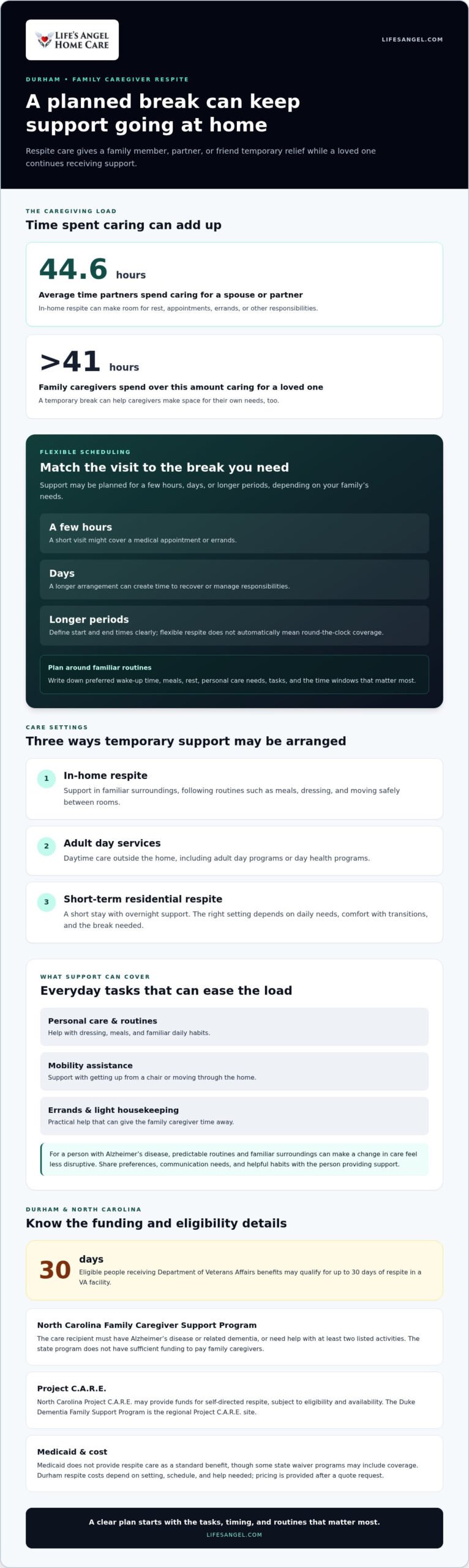
Partners spend an average of 44.6 hours caring for a spouse or partner, and respite care for family caregivers in Durham can offer a temporary break when someone needs support at home. The Durham Center for Senior Life describes caregiver respite care as a break for people caring for loved ones at home. It can help family members, partners, and friends who need time to rest, handle responsibilities, or simply step away from caregiving for a while.
It’s understandable to worry that taking a break means leaving your loved one without care. Respite gives you time to recharge while support continues. Accepting help doesn’t lessen the care and commitment you bring to your family.
This article explains who respite care may help, how support can fit around a few hours or longer periods, and what temporary relief at home can involve. You’ll also find ways to plan for caregiver well-being and choose help that fits your loved one’s routine.
Key Takeaways
- Respite care can give family caregivers temporary relief while their loved one continues receiving support at home.
- Consider the person’s daily routines and support needs when deciding what kind of in-home help may fit.
- Flexible scheduling can help families plan care around the breaks and responsibilities they need to manage.
- Making space for rest and personal responsibilities can be an important part of sustaining your caregiving role.
- Personal care, mobility assistance, errands, and light housekeeping can help ease some everyday caregiving tasks.
Who is Respite Care For?
Respite care can help a family member, friend, or partner who regularly supports an older adult or person with a disability at home. It offers temporary care so the primary caregiver can attend an appointment, run an errand, or rest. Partners spend an average of 44.6 hours caring for a spouse or partner. Home respite can be useful when those responsibilities leave little time for other needs. It can also support a senior who prefers familiar routines and surroundings.
For older adults and people with disabilities, in-home respite provides support in familiar surroundings. Adult day programs offer daytime care outside the home, while residential respite provides a short stay with overnight support. The right setting depends on your loved one’s daily needs, comfort with transitions, and the kind of break you need.
In-home care can follow familiar routines, such as meals, dressing, and moving safely between rooms. Start by listing the tasks your family member needs help with and when they usually happen. For someone with Alzheimer’s disease, predictable routines and familiar surroundings can make a change in care feel less disruptive. Share preferences, communication needs, and helpful daily habits with the person providing support.
Mobility assistance supports everyday movement, such as getting up from a chair or moving through the home. Home modifications change the living space, while assistance helps with daily activities. Note obstacles, such as a crowded walkway, and discuss safer ways to manage movement. Errand assistance can also give you time away while your family member’s routine continues.
Medicaid does not provide respite care as a standard benefit, though some state waiver programs may include coverage. North Carolina’s Family Caregiver Support Program requires the care recipient to have Alzheimer’s disease or related dementia, or need help with at least two listed activities. Eligible people receiving Department of Veterans Affairs benefits may qualify for up to 30 days of respite in a VA facility.
Respite costs in Durham depend on factors such as setting, schedule, and the help needed; the price is provided after a quote request. North Carolina Project C.A.R.E. may provide funds for self-directed respite, subject to eligibility and availability.
Durham caregivers can consider in-home support, adult day services or day health programs, and short-term overnight respite. The Durham Center for Senior Life describes respite as a break for people caring for loved ones at home. The Duke Dementia Family Support Program is the regional Project C.A.R.E. site.
Durham County DSS is not itself a respite program. For caregiver support, North Carolina’s Family Caregiver Support Program and Project C.A.R.E. are named pathways. The state program does not have sufficient funding to pay family caregivers.
Flexible respite care scheduling
Caregiving rarely follows a neat calendar, so start respite planning with the break you need. In Durham, support may be planned for a few hours, days, or longer periods, depending on your family’s needs. A short visit might cover a medical appointment, while a longer arrangement could give you time to recover. In-home respite works best when scheduled around your loved one’s usual meals, rest, and daily routines.
Write down the tasks and time windows that matter most. You might need help with a morning routine or a few hours to handle errands. Include your loved one’s preferred wake-up time, meal schedule, and personal care needs. This outline helps make the schedule practical rather than disruptive and clarifies what the support should cover.
Flexible visits can focus on a specific part of the day or cover a longer stretch. Personal care may fit into a morning visit, while companionship or assistance with everyday routines can shape another schedule. A compassionate plan also allows time for familiar transitions, such as preparing lunch before the caregiver leaves. The visit length should match the planned tasks and the break the family caregiver needs.
Flexible respite doesn’t automatically mean round-the-clock coverage. A few-hour visit, a multiday arrangement, and continuous care are different scheduling needs, so define the required start and end times clearly. In Durham, provider hours depend on the requested visit pattern; waitlists are shaped by staffing and demand, while service areas follow coverage boundaries. List your dates, time windows, and home location to clarify the schedule you need.
If your routine changes, plan around recurring responsibilities first. For example, note a weekly appointment and include the travel and preparation time. List occasional needs separately, such as a family event or a day for rest. This helps distinguish predictable support from one-time requests and makes the schedule easier to adjust as your caregiving responsibilities change.
Local programs and caregiver education can help families understand respite options and plan questions. Before arranging support, write down the tasks, preferred timing, and routines that help your family member feel comfortable. Update the outline as needs change so the schedule reflects daily life.
A clear schedule gives a caregiver and the person receiving support a shared starting point. If you’re considering support shaped around daily routines, describe the tasks and timing that would make a meaningful break possible.
Provider availability depends on the requested visit pattern, waitlists reflect staffing and demand, and service areas are limited by coverage boundaries. Sharing the dates, time windows, and home location helps clarify whether the requested schedule is feasible.
Respite care as temporary relief for family caregivers
Family caregiving can fill most of the day before household tasks even begin. Family caregivers spend over 41 hours caring for a loved one. That time may include helping an older adult get dressed, preparing meals, or keeping appointments organized. A short respite visit can transfer agreed-upon tasks temporarily, giving the caregiver time for sleep, errands, or an uninterrupted meal. The goal is a planned pause, not a change in the family member’s importance or the caregiver’s role.
Short-term relief can address a specific pressure point. You might arrange support during a medical appointment or take a few hours to manage responsibilities outside the home. Before the break, write down the tasks to cover, your loved one’s daily preferences, and whom to contact with routine questions. These details help the temporary caregiver follow familiar patterns and make it easier for your family member to know what to expect.
Stress can build when caregiving leaves little room for rest, social connection, or personal responsibilities. Start a self-care plan with one specific activity during respite, such as attending an appointment, taking a walk, or calling a friend. Choose something restorative instead of filling every available minute with chores. A planned pause can make caregiving more manageable as needs and routines change.
Temporary relief can help you identify which tasks are hardest to manage alone. After a visit, note what worked, what felt unfamiliar, and whether the support covered the planned break. If your loved one needs help with a meal before resting, for example, include that sequence in the next care plan. This review helps you refine support without changing the entire routine.
Durham caregivers seeking dementia-related support can start with the Duke Dementia Family Support Program, the region’s Project C.A.R.E. site. North Carolina Project C.A.R.E. may provide funds for self-directed respite, subject to eligibility and availability. The NC Caregiver Portal also offers free online caregiver and dementia education. These resources can help families understand support options and prepare to discuss arranging a break.
Keep a brief care summary with daily routines, support needs, and the times respite would help most. Include your loved one’s preferences and concerns about receiving help from someone else. Listening to their perspective can make planning more collaborative. A clear summary also helps distinguish immediate relief, such as time for an appointment, from ongoing needs that may call for a broader senior care plan.
Respite is one part of a sustainable routine, not a measure of how much you care. Start by naming the break you need, identifying the tasks to hand over, and exploring Durham-area caregiver resources.
Benefits for caregiver health and well-being
Caregiving can place strain on a person’s time, energy, and emotional health. Roughly 20% of family caregivers in the United States suffer from depression. Respite creates a planned window to rest or attend to personal needs while someone else provides agreed support. It isn’t a promise that stress will disappear, but it can make room for activities that are difficult to fit around daily care. A quiet meal, a walk, or a personal appointment can give the caregiver time to pause.
Choose one restorative activity before each respite visit. You might use the first part of your break to eat and rest, then handle one necessary task. A long list of chores can leave little time to recover. A short plan helps protect the purpose of your break and makes it easier to judge whether the scheduled support gave you enough time for what mattered.
Dementia care can involve repeated decisions and close attention to routines. Before respite begins, write down your loved one’s preferences, such as a familiar meal, daily rhythm, or calming activity. Share the notes with the person providing support. This helps keep care centered on the older adult’s dignity and familiar habits, while giving you space to rest instead of directing every task from afar.
Caregivers have relationships and responsibilities beyond caregiving. A respite period can make it possible to attend a family gathering, talk with a friend, or manage an appointment without rushing. Choose one activity that reconnects you with life outside caregiving. If social contact feels difficult, start with a brief phone call. A specific plan can ensure your break includes personal connection, not just household errands.
Support organizations can help families learn about resources and caregiver education. The NC Caregiver Portal offers free online caregiver and dementia education. The Duke Dementia Family Support Program is the regional Project C.A.R.E. site. Use these resources to learn about dementia-related support and prepare questions for a family member or care coordinator. Keep contact notes and questions together for easier follow-up.
After each respite period, take a few minutes to review what helped. Note whether you rested, attended an appointment, or felt able to return to caregiving with a clearer plan. Record changes in your loved one’s preferences or routine, too. This review helps your family adjust future support and explain your needs when discussing options with a support organization or department.
Temporary respite care for family caregivers
Temporary respite can cover a defined period while a primary caregiver steps away from daily responsibilities. In the United States, unpaid caregivers provide 37 billion hours of care each year. That commitment can leave little room for appointments, family responsibilities, or rest. A temporary plan identifies which tasks another person will handle, when support begins, and what the caregiver needs time to do.
In Durham, respite options include in-home help, adult day services or day health programs, and short-term overnight care. Each setting serves a different purpose: in-home support keeps care in familiar surroundings, while an adult day program provides daytime support away from home. An overnight stay may suit someone who needs a longer break. Your loved one’s comfort, routines, and support needs can guide the choice.
Make a temporary care plan before the first visit or program day. Write down your loved one’s routines, meal preferences, mobility needs, and important contacts. Then specify the break you need, such as time to attend an appointment or rest. A clear handover helps the temporary caregiver follow familiar routines and gives you a defined period away from care duties.
For families supporting someone with Alzheimer’s disease or related dementia, North Carolina Project C.A.R.E. prioritizes the needs, values, and preferences of the person providing care. It may provide funds for self-directed respite, subject to eligibility and availability. These named resources can help caregivers understand dementia-related support and discuss a temporary plan.
Public programs have different purposes and eligibility rules. North Carolina’s Family Caregiver Support Program does not have sufficient funding to pay family caregivers. In the state’s publicly funded programs that let individuals choose their care provider, the person directing or helping decide on care cannot be paid to provide it. Home Care Independence and the Community Alternatives Program are state-run examples of programs that allow individuals to choose whom to hire.
After respite, consider whether the arrangement covered the break you needed and whether your loved one felt comfortable. Note any routine changes, useful instructions, or tasks that still need support. If a daytime program worked well but travel felt tiring, for example, in-home care from a trusted provider like Life’s Angel Home Care may better suit the next temporary break. Reviewing the arrangement helps families adjust support as responsibilities and preferences change.
Temporary respite is a planned handover, not a replacement for your role as a family caregiver. Start with one clear need, choose a setting that suits your loved one, and write down the care details that will make support feel familiar.
Life’s Angel Home Care: Personal Care
Life’s Angel Home Care supports families with personal care and practical help at home. If daily routines are becoming difficult to manage alone, personal care can help with everyday needs, while mobility assistance can support movement around the home. Errand assistance and light housekeeping can also ease specific caregiving responsibilities.
Consider which tasks would make the biggest difference in your loved one’s day. You might identify a mobility-related need or an errand that regularly takes you away from home. Sharing these priorities can help shape support around familiar routines while you remain involved in your family member’s care.
If you’d like to discuss support for your family, contact Life’s Angel Home Care.
Take the Next Step Toward Shared Support
Choosing respite care for family caregivers in Durham can start with one practical decision: identify the daily task you most need help with. This gives you a clear starting point for discussing your loved one’s routine, preferences, and the support that could make caregiving more manageable. You don’t have to plan for every future need at once. Begin with what would help today.
Life’s Angel Home Care offers personal care, mobility assistance, and errand assistance. This support may help when everyday routines or errands have become difficult to manage alone. Share what matters most to your family and take the next step at a pace that feels right.
Contact Life’s Angel Home Care to discuss support for your family. Asking for help is a thoughtful way to care for yourself and your loved one, too.
Frequently Asked Questions
Can respite help when a family caregiver wants to remain involved?
Yes. Respite can add support while you remain your loved one’s primary family caregiver. Share a written routine, agree on which tasks someone else will handle, and stay involved in decisions about meals or daily preferences. Respite care for family caregivers in Durham can help you share practical responsibilities without stepping away from your relationship or role.
What respite care services are available for family caregivers in Durham, North Carolina?
Durham-area options include in-home help, adult day services or day health programs, and short-term overnight respite. In-home support may include personal care, mobility assistance, meal preparation, companionship, and light housekeeping. Errand assistance or an accompanied appointment can address specific needs, too. Consider where your loved one feels most comfortable and which tasks would help you take a planned break.
What should caregivers check for safety, licensing, and quality when choosing respite care in Durham?
Match the type of support to your loved one’s needs, then share relevant routines, mobility concerns, and emergency contacts before care begins. For in-home assistance, Life’s Angel Home Care employs board-certified registered nurses, nursing assistants, and care aides who are BLS and CPR/AED certified. A clear care plan can help everyone understand the agreed tasks, communication preferences, and how updates will reach the family caregiver.
How much does respite care cost in Durham, NC, and what financial assistance is available?
North Carolina Project C.A.R.E. may fund self-directed respite subject to eligibility and availability; some state Medicaid waivers may cover respite, and eligible VA beneficiaries may qualify for up to 30 days in a VA facility.