

A care plan can help organize support for an older adult who needs help with activities of daily living. For families seeking in-home care for dementia patients Durham families trust, the plan can shape daily support around the person’s needs, routines, and abilities. The start time depends on completing the care-planning steps and arranging a schedule that fits.
It’s understandable to want help quickly while worrying about how a new caregiver will fit into familiar routines. In-home care for dementia patients Durham families rely on can be planned around a person’s routines and dignity, while giving family caregivers room to breathe.
This article explains how care plans are created in North Carolina, what daily dementia support may include, and what can affect when care begins. You’ll also learn how companionship and personal care can support everyday life, and how Life’s Angel Home Care can help when your family is ready to explore support at home in Durham.
Key Takeaways
- In North Carolina, a registered nurse writes the care plan when an older adult needs help with activities of daily living.
- Home support can range from non-medical help with daily routines to medical care provided by a licensed health professional.
- Companionship and familiar activities can be shaped around the person’s interests, comfort, and changing needs.
- Care start times depend on the planning steps and the schedule that fits your family’s needs.
- Learn what to discuss when arranging care, including dementia experience, training, references, and backup plans.
Companionship and social engagement
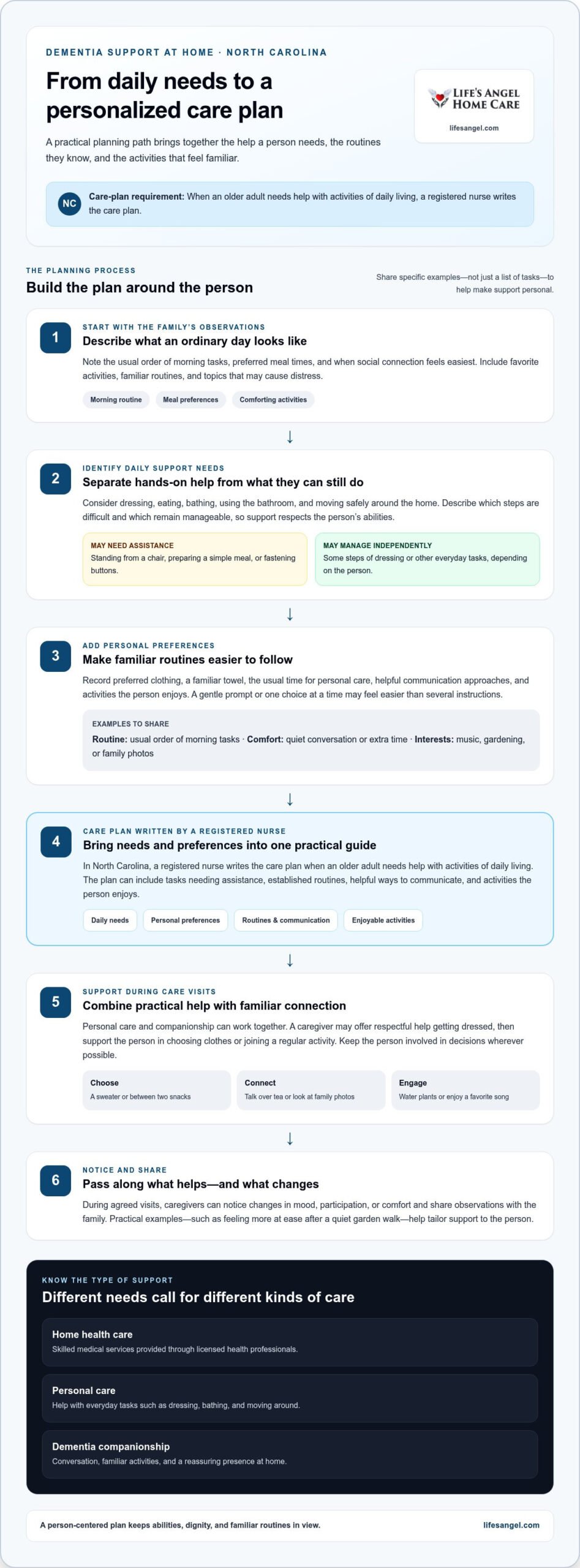
Home health care provides skilled medical services through licensed health professionals. Personal care helps with everyday tasks such as dressing, bathing, and moving around. Dementia companionship focuses on conversation, familiar activities, and a reassuring presence at home. In North Carolina, a registered nurse must write care plans when an older adult needs help with activities of daily living.
Companionship can begin with small, familiar moments. A caregiver might invite someone to look through a family photo album, water plants, or listen to a favorite song. If conversation feels difficult, sitting together over tea can offer connection without requiring answers. A compassionate caregiver can follow the person’s pace and make room for familiar routines.
Personal care and companionship can work together during everyday activities. A caregiver might offer respectful help getting dressed, then support the person in choosing clothes or preparing for a regular morning activity. The person remains involved in decisions wherever possible. Simple choices, such as selecting a sweater or choosing between two snacks, can help preserve a sense of control.
Companion care at home can include activities that reflect someone’s interests and history. A former gardener might sort seed packets, while a music lover may enjoy singing along to familiar tunes. Families can share useful details, such as preferred names, calming topics, and comfortable routines. This gives caregivers practical ways to make visits personal rather than generic.
During agreed care visits, companionship means being present and attentive. A caregiver can notice changes in mood, participation, or comfort and share observations with the family. For example, they might mention that the person seemed more at ease after a quiet walk in the garden. Companionship does not replace skilled medical care, but it can provide a steady human presence.
Respite care gives family caregivers time to attend an appointment, rest, or manage errands while another caregiver stays with their loved one. Before a visit, outline the routine, favorite activities, and what helps during moments of confusion. This handoff can make the visit feel more familiar and give the family caregiver a defined break without making their loved one feel abandoned.
To shape useful home care, note when social connection feels easiest. Record examples, such as enjoying breakfast conversation but preferring quiet afternoons. Share these patterns, favorite activities, and topics that cause distress during care planning. Families seeking dementia support in Durham can use these details to explain what companionship should look like in daily life.
Personal care and activities of daily living
Personal care can support daily tasks while preserving familiar choices and routines. In North Carolina, a registered nurse writes care plans for older adults who need help with activities of daily living.
Daily Living Assistance
Daily living assistance may cover dressing, eating, bathing, using the bathroom, and moving safely around the home. The right support depends on which tasks are difficult and what the person can still do independently. Someone may need help choosing clothes but manage putting them on. Describe these differences so assistance respects the person’s abilities instead of taking over.
When discussing personal care, identify which moments require hands-on help and which steps feel manageable. If standing from a chair is difficult, mobility assistance may help with the transition. If preparing a simple meal is tiring, practical support can make mealtime easier. Clear examples help caregivers understand the person’s routine and the kind of help that feels appropriate.
Hygiene Assistance
Hygiene assistance can include help with bathing, grooming, dressing, and daily cleanliness. These tasks are personal, so explain preferences such as a familiar towel, preferred clothing, or usual time of day. A calm approach, clear explanations, and offering one choice at a time can help loved ones feel included rather than rushed.
Consider what makes each task easier. Laying out a clean shirt and washcloth before starting, for instance, can make the next step easier to follow. Note any discomfort, hesitation, or changes to the routine and share them with the care team. These details help tailor assistance while keeping privacy and dignity central.
Personalized Routines and Activities
A predictable routine can make daily activities easier to recognize. Write down the usual order of morning tasks, preferred meal times, and calming activities. Someone who enjoys music might respond well to a familiar playlist while getting ready. Another person may prefer quiet conversation and extra time between dressing and breakfast.
Personalized activities should reflect the individual’s interests, energy, and comfort. A short walk inside the home, folding towels, or looking through a photo album can offer meaningful engagement. Families can note which activities invite participation and which create frustration. That practical record helps caregivers adapt the day without relying on reminders alone.
Alzheimer’s Care Plans
A personalized Alzheimer’s care plan brings daily needs and personal preferences into one practical guide. Include tasks that require assistance, established routines, helpful communication approaches, and activities the person enjoys. For example, note whether a gentle prompt works better than repeating several instructions. North Carolina’s registered-nurse care-plan requirement applies when an older adult needs help with activities of daily living.
Families can prepare for care planning by listing what goes smoothly and where support is needed. Include examples, such as difficulty fastening buttons or feeling unsettled when a routine changes. As needs evolve, revisit these details with the people involved in care. This keeps assistance focused on the individual rather than treating everyone with Alzheimer’s alike.
Medication reminders
A written routine can help seniors remember when a dose or medical appointment is due. Keep the schedule in one visible place, such as a kitchen calendar, and note who provides each reminder. A family member might call before breakfast, while a caregiver gives a verbal prompt during a planned visit. Reminders support an existing routine; they aren’t a substitute for skilled medication management.
Medication management and nursing care are different from reminders. A caregiver can follow the agreed routine and remind someone to refer to their medication instructions, but medication decisions and clinical questions belong with the appropriate health professional. Keep a current medication list and share updates from the prescriber or pharmacist with those involved in care. If a dose is missed or instructions seem unclear, use the contact details provided by the medical team.
Appointment reminders work best with practical preparation. Add the appointment time and location to the calendar, then prepare needed items, such as questions or relevant paperwork. If mobility makes the trip difficult, plan for help getting ready and traveling. Accompaniment to medical appointments can support the outing, while a family member can share the person’s current concerns with the clinician.
Plan the full appointment routine, not just the reminder. For a morning visit, consider whether the person needs personal care beforehand, time to eat, or help getting from the home to the vehicle. If shopping or errands are also planned, avoid crowding too many tasks around the medical visit. A simple schedule can make preparation easier for loved ones and the person receiving care.
Medicare coverage has specific eligibility criteria. According to the Centers for Medicare & Medicaid Services, Medicare covers certain in-home health care services when a person is homebound, needs skilled professional services, and the services are reasonable and necessary for treatment. These conditions concern covered health care, not a general promise of medication reminders or appointment accompaniment. Families can discuss the ordered skilled services and eligibility with the care team.
For a clear handoff, write down the appointment details, reminder routine, and any mobility support needed. Share schedule changes with everyone helping that day. A calm prompt such as, “Your appointment is after breakfast; let’s get your coat,” offers one next step without overwhelming the person. This preparation can help loved ones coordinate daily support while keeping medical questions with the clinician.
Care consultation and dementia-specific information
A consultation can turn family observations into practical priorities, from bathing support to meal preparation. When considering in-home care for dementia patients in Durham, ask about dementia experience and training, references, and backup care if a caregiver is sick. For skilled home health care, clarify which services are delivered by licensed health professionals.
Local resources include free dementia and caregiver education through the NC Caregiver Portal. The Central NC Project C.A.R.E. office serves Durham County, and the Eldercare Locator can be reached at 800.677.1116 for help finding in-home services.
Care Consultation and Getting Started
Before a consultation, write down what a typical day looks like and where support would help. Include examples, such as difficulty remembering lunch, needing help with bathing, or becoming unsettled when plans change. Describe the person’s preferences and what helps them maintain independence. These details help shape care around real routines rather than broad assumptions.
During the discussion, clarify which tasks are personal care, companionship, or skilled health care. Ask how dementia experience and training inform the caregiver’s approach, and how family observations will be shared. A free in-home consultation, if offered, can be used to walk through the home routine and discuss priorities. Focus on whether the conversation produces clear, useful next steps.
Care Costs and Pricing Consultations
Care pricing depends on the tasks, visit schedule, and level of support; a quote follows a request. A consultation can help families describe those factors clearly, including whether assistance is needed for meals, bathing, or a regular routine. Ask for the proposed schedule and services in plain language, so you can understand what the estimate covers.
A free care consultation can be helpful when offered, but the word “free” doesn’t explain what the meeting includes. Use the time to discuss the person’s needs, caregiver experience, and how a proposed plan could support daily life. Separate questions about non-medical assistance from questions about skilled care, since these describe different kinds of support.
For dementia-specific guidance, bring examples of changes in mood, mobility, or memory that affect daily routines. Alzheimer’s disease can affect personality, mood, and mobility as well as memory. Sharing what the person enjoys, such as familiar music or a preferred meal, can help make a care plan more personal and easier to follow.
Use the consultation to leave with a clear record of agreed tasks, family roles, and the next planning step. The NC Caregiver Portal offers free online caregiver and dementia education, while Project C.A.R.E. may provide funds for self-directed respite care, subject to eligibility and availability. These resources can complement practical planning with ongoing support.
Care availability and start times in Durham
There isn’t one start time that fits every Durham family. Families arranging in-home care for dementia patients in Durham can begin by describing daily needs, then discuss a care plan and schedule around the person’s routines. Start by identifying the support needed, discussing timing, and arranging visits that fit those priorities.
Before discussing care, write down what help is needed, when it matters most, and who currently provides it. For example, note that mornings involve getting dressed, while afternoons are hardest for the family member who usually stays home. These details make the planning conversation specific and help distinguish an occasional task from a recurring need.
The next steps commonly include:
- Describe daily tasks that need support, such as preparing breakfast or getting ready for an appointment.
- Share the person’s preferred routine, communication style, and comfort needs.
- Set out the days and times when family caregivers need help.
- Agree on the support plan and schedule before care begins.
A clear plan helps everyone understand the purpose of each visit. A morning visit might focus on getting ready, while another scheduled time could provide companionship as a family caregiver takes a break. Dementia can affect memory, mood, and mobility, so share what helps the person feel comfortable and what makes transitions harder.
North Carolina has two publicly funded, state-run programs that let individuals choose whom to hire for care. The person receiving care must be able to direct their care or have someone direct it. A person who directs or helps decide the care cannot also be the paid caregiver. This is separate from arranging support through an agency.
For respite, Project C.A.R.E. does not pay caregivers to provide continuous care for a loved one. It may provide funds for self-directed respite care, subject to eligibility and availability. The Central NC Project C.A.R.E. office serves Durham County. Families can consider this resource when they need a planned break from caregiving.
For in-home care for dementia patients in Durham, gather the weekly calendar, daily support needs, and contact details for involved family members. Identify when supervision or hands-on help matters most, then use those priorities to shape the schedule. Include familiar activities so the person feels more comfortable as care becomes part of the home routine.
If you’re ready to discuss practical support for a family routine, take the next step in planning care at home.
Life’s Angel Home Care: Personal Care
Life’s Angel Home Care helps families manage everyday support needs through personal care, mobility assistance, errand assistance, and light housekeeping. These services can help when dementia makes familiar routines, moving around the home, or keeping up with errands more difficult. Support is shaped around daily needs while respecting the person’s preferences and dignity.
For example, personal care can assist with everyday tasks, while mobility assistance can help make moving around the home easier. Errand assistance and light housekeeping can also ease practical demands on family members, leaving more time for meaningful moments together.
If this kind of support could help your family, visit Life’s Angel Home Care.
Take the Next Step at Your Own Pace
Choosing support can start with a conversation about what would make the day easier for your loved one. You don’t need to have every detail settled first. A clear starting point might be one difficult routine, such as getting ready in the morning, or a practical task that is weighing on family members.
For families considering in-home care for dementia patients in Durham, Life’s Angel Home Care supports everyday needs through Personal Care, Mobility Assistance, and Errand Assistance. Share which parts of home life need more support and what matters most to your family to begin the conversation.
Reaching out doesn’t commit you to a particular plan. It opens a thoughtful discussion about care that respects your loved one’s routines, comfort, and independence. Contact Life’s Angel Home Care to begin that conversation and explore a gentle way forward.
Frequently Asked Questions
How are care plans created for North Carolina families?
In North Carolina, a registered nurse writes the care plan when an older adult needs help with activities of daily living. Families can contribute useful details about daily preferences, communication, and difficult tasks. For example, describe whether your loved one prefers choosing clothes independently or needs help preparing for an appointment. This information helps make the plan relevant to real routines and changing needs.
How do you ensure the safety of your clients?
Care is provided by staff that includes board-certified registered nurses, nursing assistants, and care aides. Medical staff are BLS and CPR/AED accredited through the American Heart Association. Help prepare for visits by sharing relevant mobility concerns, emergency contacts, and household routines. For instance, explain which doorway is easiest to use with a walker or where your loved one prefers to sit.
What does dementia care include near me in Durham, NC?
Dementia care in Durham can include practical help at home and companionship, based on the person’s needs. Life’s Angel Home Care offers personal care, mobility assistance, errand assistance, light housekeeping, companionship, meal preparation, and accompaniment to appointments. A family might arrange help with getting dressed and support with a grocery errand. Start by identifying which daily responsibilities are hardest for your loved one.
What kind of activities can your caregivers provide for my loved one?
Caregivers can offer conversation and social stimulation, and help with daily tasks, errands, and housework. Activities can reflect familiar interests and the person’s comfort. Your loved one might enjoy talking while sorting mail or joining an accompanied community outing. Share which subjects, routines, and settings feel familiar to help make time together personal, rather than a set of instructions.
What kind of training do your caregivers receive?
The care team includes North Carolina board-certified registered nurses, nursing assistants, and care aides. The company states that its medical staff are BLS and CPR/AED accredited through the American Heart Association. These credentials are relevant when discussing support and staff qualifications. Share your loved one’s communication preferences and daily routine, too, to help caregivers approach familiar tasks with understanding and respect.
What in-home dementia care services are available in Durham, North Carolina?
Life’s Angel Home Care offers personal care, mobility assistance, errand assistance, light housekeeping, companionship, meal preparation, and accompanied appointments. A family could seek help with mobility around the home or getting to a health care appointment. These are in-home and daily living supports, distinct from emergency ambulance transportation, inpatient hospice care, or continuous live-in skilled nursing.
What does in-home dementia care cost in Durham, NC, per hour or month?
The cost of in-home care depends on the tasks involved, schedule, and level of assistance needed. A plan focused on companionship differs from one involving personal care and mobility support. The proposed services and schedule shape a quote. When requesting one, describe the routines where help is needed and the times family members need support.
Does Medicare, Medicaid, or long-term care insurance cover in-home dementia care in North Carolina?
Medicare covers certain in-home health care services when eligibility criteria are met, including being homebound, needing skilled professional services, and receiving services reasonable and necessary for treatment, according to the Centers for Medicare & Medicaid Services. This does not mean all personal care or companionship is covered. Medicaid and long-term care insurance coverage depends on the applicable program or policy terms, so review what services qualify.