

Recovery at home takes more than a comfortable place to rest. Post-surgery home care in Raleigh can provide practical help with personal care, mobility, meals, light housekeeping, errands, companionship, and rides to follow-up appointments. Support can fit daily routines and discharge instructions, while medical treatment remains with the healthcare team.
It’s understandable to want your loved one to feel safe and comfortable while wondering how the family can manage every task. Personalized help can ease some of that pressure and leave more room to focus on recovery and time together. Here, you’ll learn what everyday support can look like, how it can help with mobility and comfort, and how families can plan for care at home.
Key Takeaways
- Shape recovery support around the person’s discharge instructions, daily routine, and changing needs rather than relying on a one-size-fits-all plan.
- Identify everyday tasks and mobility challenges where a helping hand can make home routines feel more manageable.
- Prepare the home for a calmer return by making key spaces easier to access and involving family in practical ways.
- Learn how personal care, mobility assistance, errands, and light housekeeping can ease the family’s day-to-day caregiving load.
Flexible, personalized care plans
A useful recovery plan connects the procedure, discharge instructions, and the person’s usual routine. It can be adjusted as daily tasks become easier.
Personalized Care Planning
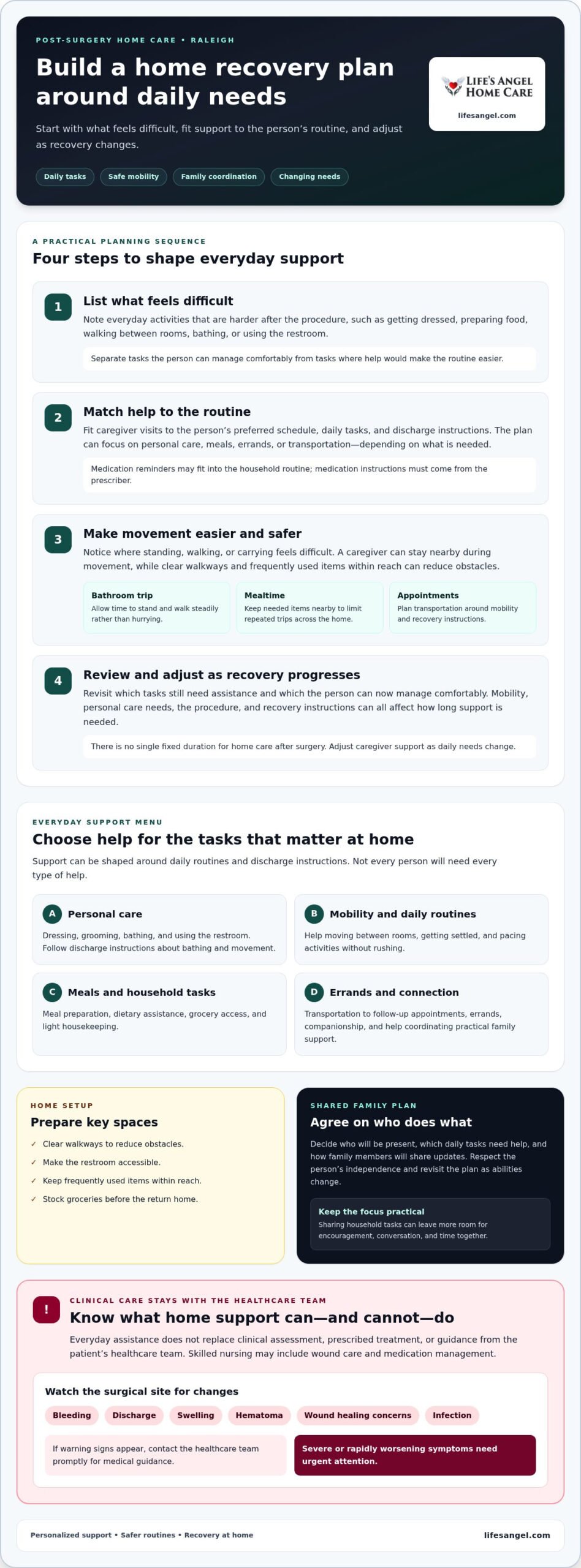
Start by listing activities that feel difficult after the procedure, such as getting dressed, preparing food, or walking between rooms. Match caregiver visits to those needs and the person’s preferred routine. A care provider can use the list to plan practical support, while the patient’s healthcare team directs clinical care.
For example, someone who can manage meals but needs help getting ready may prioritize personal care. Another person may need help with errands or transportation to follow-up appointments. Medication reminders can fit into a household routine, but medication instructions must come from the prescriber.
Hygiene and Bathing Assistance
Personal hygiene and daily activities can include dressing, grooming, using the restroom, and bathing. After a procedure, bending, reaching, or standing for these tasks may be difficult. Identify which steps need support and follow discharge instructions about bathing and movement. This keeps the plan practical and consistent with the patient’s routine.
Post-operative home care can include skilled nursing for wound care and medication management. Nurses may monitor vital signs, care for wounds, and teach patients how to take prescribed medicines. According to the U.S. National Library of Medicine, early recovery includes monitoring surgical sites for bleeding, discharge, swelling, hematoma, wound healing, and infection.
Length of Home Care
There isn’t one fixed duration for home care after surgery. The length depends on the procedure, the patient’s mobility, the personal care tasks they can manage, and their recovery instructions. Someone who needs help bathing or moving around may need a different plan from someone who can manage those activities independently.
Review the plan as recovery progresses. Note which tasks still need assistance, such as dressing or getting to an appointment, and which the patient can manage comfortably. Changes in mobility and daily needs can guide adjustments to caregiver support. Clinical concerns and recovery milestones remain the responsibility of the healthcare team.
Help with daily activities and mobility
After surgery, moving between the bed, bathroom, and kitchen can take more effort than usual. If a healthcare provider recommends limiting activity, caregivers can help with safe movement and everyday tasks. This practical assistance helps adults follow their recovery routine without rushing.
Fall prevention starts with noticing where movement feels difficult. A caregiver can stay close while someone stands, walks to another room, or settles into a chair. Clear walkways and frequently used items within reach can also reduce obstacles. Mobility support can help prevent falls and re-injury during recovery, but it doesn’t replace clinical assessment or prescribed treatment.
- For a trip to the bathroom, allow time to stand and walk steadily rather than hurrying.
- For a meal, place needed items nearby to limit repeated trips across the home.
- For an errand or follow-up visit, plan transportation around the patient’s mobility and instructions.
Companionship can make daily routines feel less isolating. A familiar caregiver can walk alongside the person, talk through the day, and notice when an activity feels tiring. That attention matters when family members can’t be present for every movement or household task. In-home support can help families balance practical assistance with time together.
In Raleigh, post-surgery support may include safe mobility, errands, and help reaching appointments. Focus first on the tasks that require standing, walking, or carrying, then fit assistance around the patient’s usual routine. If mobility help would ease daily recovery, consider mobility assistance at home through Life’s Angel Home Care as one practical part of the support plan.
Post-surgery support in Raleigh may include dietary assistance, grocery access, medication reminders, physical therapy referrals, and help with safe mobility.
After surgery, a senior’s doctor may recommend limiting physical activity during recovery, which can make help with daily tasks such as light housekeeping, bathing, and errands necessary. Inadequate post-surgery help can increase the risk of falls, infections, or missed medications.
Home comfort and family support during recovery
A familiar home can support rest, routine, and family connection after surgery. A clear care plan also helps relatives share practical tasks while respecting the senior’s independence.
Recovery Supervision and Safety
Agree on who will be present, which daily tasks need help, and how family members will share updates. Companionship can ease isolation for a senior recovering alone, while someone nearby can notice changes and relay concerns. This support offers peace of mind without replacing clinical monitoring or treatment by healthcare professionals.
According to the U.S. National Library of Medicine, early recovery includes watching surgical sites for bleeding, discharge, swelling, hematoma, wound healing, and infection. If these warning signs appear, contact the healthcare team promptly for medical guidance. Severe or rapidly worsening symptoms need urgent attention.
Support for Independence
In-home support should help with recovery while leaving room for the person to do what feels manageable. A caregiver might set out clothing, prepare a familiar meal, or offer companionship while the senior rests. Family members can agree on which tasks the person wants to handle independently, then revisit the plan as daily abilities change.
Comfort can come from simple routines, such as resting in a familiar bed or having a relative nearby for conversation. Sharing specific tasks also lets family members focus on encouragement and connection instead of managing every household need alone.
Preparing the Home for Return
Before returning home from the hospital, clear walkways, make the restroom accessible, and stock groceries. Put frequently used items within easy reach, and prepare a comfortable resting area that suits the person’s routine. These steps reduce obstacles and make daily life simpler during recovery.
Ask family members to coordinate practical tasks, such as arranging meals and keeping essential supplies available. A written plan can show who is helping with each task and when. These preparations help the home feel familiar and give relatives a clearer role in recovery.
Post-surgery care at home in Raleigh
Plan home support around discharge instructions, daily needs, and the difference between medical care and practical help. This clarifies recovery tasks and can reduce stress for the client and family.
Insurance Coverage for Home Care
Coverage for post-surgery services depends on the specific care and policy. For Medicare or private insurance, compare the requested care with the policy’s covered services, eligibility conditions, and provider requirements. Distinguish skilled medical care, such as nursing, from practical support, such as meal preparation or help with daily activities. This helps families understand which benefits may apply.
Before reviewing the policy, write down the care needed, the discharge instructions, and any coverage questions. For example, ask whether the benefit applies to a nurse’s visit, household help, or both.
Local Raleigh Recovery Support
Raleigh has 106 home care agencies listed in a directory. Local home care services may help with transportation to follow-up appointments, errands, and everyday recovery tasks. Identify the specific gap first, such as getting to a medical visit or preparing meals, then look for support that addresses that need. Meal preparation can also help make meals easier to manage at home.
Caregiver and Nurse Qualifications
Match qualifications to the task. A registered nurse can provide nursing care, while a caregiver can assist with practical daily needs. For nursing support, consider relevant professional credentials and post-operative experience. For hands-on assistance, ask about training in safe mobility and personal care, as well as current BLS and CPR/AED certification.
During early recovery, the U.S. National Library of Medicine notes that surgical sites are monitored for bleeding, discharge, swelling, hematoma, wound healing, and infection. A caregiver can notice changes and share them with family, while medical assessment and treatment remain with healthcare professionals.
To make meals one less concern during recovery, arrange meal preparation support as part of the home routine.
Life’s Angel Home Care: Personal Care
Life’s Angel Home Care can ease the practical demands of recovery when daily tasks feel difficult after surgery. Personal Care and Mobility Assistance support routines at home, while Errand Assistance helps with essential outings and Light Housekeeping makes the living space easier to manage.
This support can help when family members are balancing work, caregiving, and household responsibilities. It focuses on everyday assistance and comfort alongside medical instructions from the healthcare team. If your loved one needs practical help during recovery, contact Life’s Angel Home Care to discuss support for your family.
Choose Support That Fits the Next Step
As recovery progresses, needs can shift from one day to the next. Talk with your loved one about what would make the coming days more manageable, then share those priorities with family. This keeps support centered on the person’s comfort, preferences, and sense of control.
For families considering post-surgery home care in Raleigh, Life’s Angel Home Care offers Personal Care, Mobility Assistance, and Errand Assistance. These services address everyday needs while helping relatives stay connected and involved. The right support eases a real burden without taking away the person’s voice in recovery.
When you’re ready to discuss practical help for your family, contact Life’s Angel Home Care today. A thoughtful next step can make the path ahead feel more manageable.
Frequently Asked Questions
Seeking Raleigh Caregivers?
Yes, families seeking post-surgery home care in Raleigh can contact Life’s Angel Home Care for in-home support. The agency also serves Durham and Chapel Hill, helping relatives coordinating care across the Triangle discuss practical assistance for a loved one. Consider which tasks are hardest after discharge, such as getting dressed, moving around the home, or completing essential errands, and describe those needs clearly.
What post-surgery home care services are available in Raleigh, NC?
Home care may include Personal Care, Mobility Assistance, Companionship, Meal Preparation, Light Housekeeping, Errand Assistance, and accompanied transportation to appointments. Life’s Angel Home Care provides these practical supports for people recovering at home in Raleigh and nearby communities. Someone who needs help getting dressed but can prepare meals may need a different mix of assistance from a person who needs help attending follow-up appointments.
How do I find and compare post-surgery home care agencies in Raleigh?
Start by listing the daily tasks your family needs help with, then compare them with each agency’s services and staff qualifications. Separate personal support, such as help with bathing or errands, from skilled nursing tasks that require clinical care. Life’s Angel Home Care has registered nurses, nursing assistants, and care aides with BLS and CPR/AED certification. Families in Raleigh, Durham, and Chapel Hill can use these distinctions to describe the support they need.