

Assisted living is not the only supportive option for a parent with arthritis. If you’re considering senior care for parents with arthritis in Chapel Hill, in-home care may suit a parent who wants to stay at home but needs help with daily tasks. Assisted living offers support in a shared residential setting, while hiring a private caregiver means your family manages the arrangement directly.
It’s understandable to feel torn: you want your parent to stay safe and independent, but you may also be carrying more of the daily care than you can manage comfortably. The right choice depends on how arthritis affects your parent’s routines, what help they want, and which setting feels right to them.
This guide compares in-home care, assisted living, and private caregivers, and outlines what to consider when choosing support. You’ll also see how personal care, mobility assistance, meal preparation, and help with errands or appointments can make daily life at home more manageable.
Key Takeaways
- Compare care settings by your parent’s preferences, daily support needs, and the kind of routine that feels comfortable to them.
- Consider how companionship and shared activities can support connection alongside practical help at home.
- Look at which personal care and mobility tasks have become difficult, then identify where respectful assistance could help preserve independence.
- Understand the care team’s experience and the difference between everyday support and nursing care when planning the right level of help.
Is in-home care better than assisted living or hiring a private caregiver?
Choosing senior care for parents with arthritis in Chapel Hill depends on the help your parent needs, their preferred setting, and your family’s ability to coordinate care. In Chapel Hill and nearby Durham, compare the assistance offered, who organizes visits, and whether your parent feels more comfortable at home or in a shared residence.
Comparing Home Care and Other Care Settings
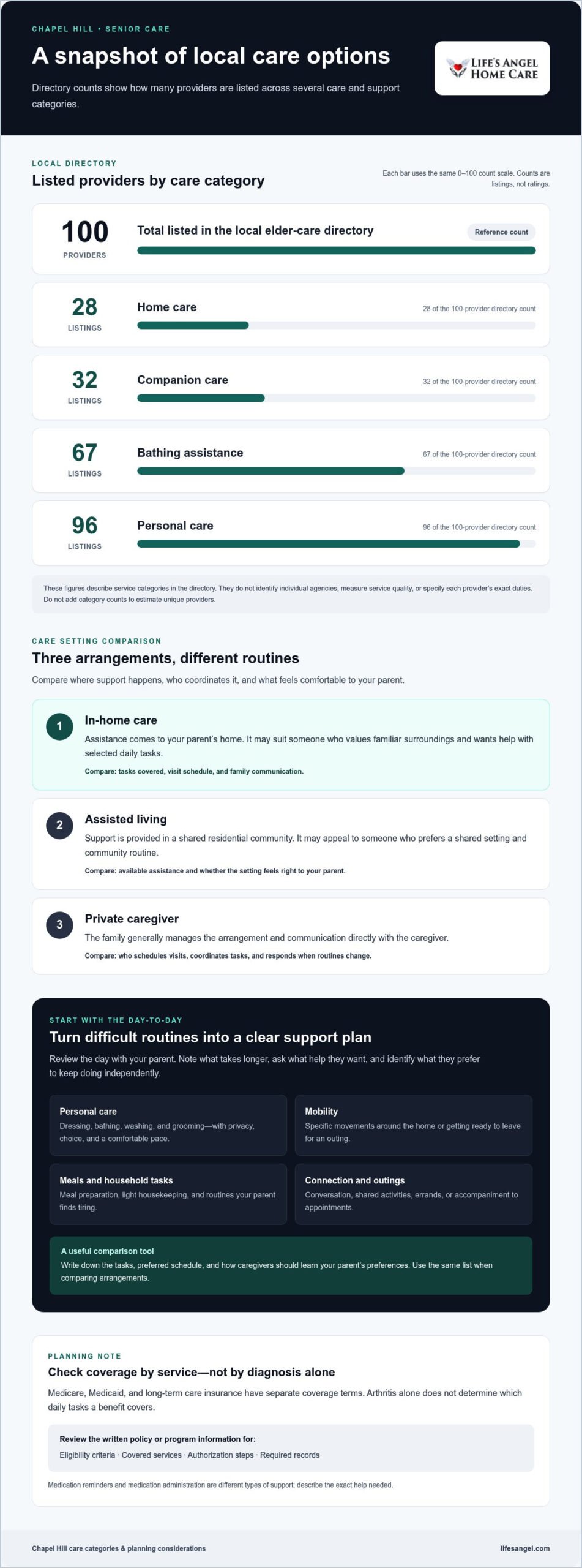
In-home care brings assistance to your parent’s home, while assisted living provides support in a residential community. With a private caregiver, the family generally manages arrangements and communication directly. Compare the tasks covered, how visits are scheduled, and whom you’ll contact if your parent’s routine changes.
These options also differ in setting and daily structure. A parent who values familiar surroundings may prefer support at home, while someone seeking a shared community may prefer assisted living. Discuss those preferences before weighing practical needs, such as help with daily activities or coordinating visits.
Choosing Care for Aging at Home
Start by reviewing your parent’s day in detail. Note which activities take longer or feel difficult, such as getting dressed, preparing a meal, or leaving home for an appointment. Ask which tasks your parent wants help with and which they’d like to keep doing independently. This creates a plan based on their preferences.
When comparing care options, discuss the tasks involved, visit schedules, family communication, and how caregivers learn your parent’s preferences. For senior care for parents with arthritis in Chapel Hill, a clear picture of daily needs helps you compare support and find an arrangement that fits your family’s routine.
Arthritis Care and Daily Activity Support
Chapel Hill has several types of senior care, including home care, assisted living, and privately hired caregivers. The local elder-care directory lists 100 providers, including 28 offering home care and 32 offering companion care. These categories help frame the local landscape, but don’t identify individual agencies by name.
Consider whether Mobility Assistance could help your parent move around at home, or whether Errand Assistance could make outings easier. Families can also discuss a schedule that fits their parent’s routine. A written task list makes options easier to compare and keeps your parent’s preferences at the center.
Why should I consider non-medical home care in Chapel Hill?
Non-medical support can make daily routines easier while helping your parent stay connected at home. It can also give family caregivers practical help with tasks that might otherwise take time away from being together.
Companionship and Social Connection
Companionship can provide conversation, shared activities, and a familiar presence. A caregiver might share a meal, look through family photos, or accompany your parent on an outing. These everyday interactions can help your loved one feel included and respected rather than left to manage a difficult routine alone.
For a parent living with dementia, familiar topics and steady routines can make visits feel more personal. Discuss interests, preferred activities, and the kind of supervision that feels comfortable. A compassionate, trained caregiver can follow those preferences while supporting connection and independence.
Help With Daily Household Needs
Household support can include Light Housekeeping, Meal Preparation, and help with errands or appointments. For example, a caregiver may tidy the kitchen, prepare lunch, or accompany your parent to a local appointment. Choose tasks that arthritis makes tiring, while identifying the routines your parent wants to continue independently.
Medication reminders are different from medication administration, so describe the exact support needed. A written routine can help family members and caregivers understand meal times, errands, and household priorities. If practical support would ease your family’s routine, explore companionship and meal preparation as part of home senior care.
Insurance Coverage for Home Care
Medicare, Medicaid, and long-term care insurance each have separate coverage terms. Arthritis alone does not determine which daily tasks a benefit covers. Review the written policy or program information for eligibility criteria, covered services, authorization steps, and required records.
Make a concise list of the help your parent needs, such as meal preparation, companionship, transportation, or housekeeping. Compare it with the coverage terms before planning household support. This can help distinguish non-medical assistance from other care needs and guide a discussion with your family about the right arrangement.
Personal care, hygiene, and mobility assistance
Arthritis can make familiar routines, such as dressing or bathing, harder to manage. A task-by-task plan can help your parent get support while preserving privacy and choice.
Bathing and Hygiene Assistance
The Chapel Hill elder-care directory lists 67 providers offering bathing assistance and 96 offering personal care. These figures describe service categories, not the quality or exact duties of each provider. Discuss what your parent needs, such as help preparing clothes, washing, or completing grooming tasks.
Before a visit, ask your mother which steps she wants help with and which she prefers to handle herself. Discuss privacy preferences, preferred products, and a comfortable pace. Giving your parent time to make choices helps keep personal care respectful and centered on their dignity.
Mobility and Daily Living Support
Mobility Assistance can support specific routines, such as moving from the bedroom to the kitchen or managing clothing before leaving home. Describe the movements that feel difficult and the help your parent wants. A written list helps caregivers see where assistance is useful without taking over tasks your parent can still do.
Daily support may include Personal Care, help moving around the home, or accompaniment on an errand. Compare this with assisted living, where support is provided in a residential setting, and consider your parent’s preference for home. If they want familiar surroundings, identify which tasks need help and when.
Keep the plan practical: note each task, the preferred kind of help, and any personal choice that matters. This gives family members a shared reference and helps keep care consistent, compassionate, and focused on comfort.
Care team and nursing experience
Chapel Hill’s elder-care directory lists 38 providers offering nursing care. That category helps families see local options, but the right care team depends on the tasks your parent needs help with. Home care and nursing care serve different purposes, so begin by listing daily assistance separately from clinical needs.
A useful care plan names the task, preferred timing, and person responsible. For example, record whether your parent needs help preparing for an appointment, reminders about their routine, or support with household activities. Share changes with the care provider and involved family members, including friends who help regularly. Clear roles reduce confusion and support peace of mind.
Ask how care is coordinated and who will communicate with your family if needs change. Care teams may include care aides, nursing assistants, and registered nurses, depending on the services involved. Discuss each person’s responsibilities in plain language, especially if your parent needs both everyday support and nursing care. Make sure everyone understands who handles each part of the plan.
A nursing home provides care in a residential setting, while home care takes place where your parent lives. Compare the setting with the support needed, your parent’s preference, and your family’s ability to coordinate daily routines. If arthritis makes particular activities difficult, describe those tasks rather than relying on a general label. This helps clarify the type of care you’re considering.
To take a practical next step, write down your parent’s priorities and the questions your family wants answered about home care. Discuss your parent’s home care needs as you consider support that respects their routines and choices.
Life’s Angel Home Care: Personal Care
Life’s Angel Home Care supports families when arthritis makes everyday routines harder to manage at home. Personal Care and Mobility Assistance can help with daily tasks and moving around, while Errand Assistance and Light Housekeeping can ease practical demands.
Consider reaching out when your parent wants to stay at home but needs help with particular activities, or when family caregiving feels difficult to balance. Sharing specific examples, such as difficulty moving around the home or keeping up with household tasks, can help shape a conversation about the support your family needs.
Contact Life’s Angel Home Care to discuss support for your family.
Choose a Supportive Next Step
Choosing senior care for a parent with arthritis in Chapel Hill can begin with a calm conversation. Ask your parent what feels hardest today, what they want to keep doing independently, and what kind of help would feel respectful. Their answers can guide a manageable first step, without requiring your family to plan for every future need at once.
Write down the daily tasks you’d like help with and share the list with your family. A clear starting point makes it easier to discuss Personal Care, Mobility Assistance, or help with errands, and decide what fits your parent’s routine. Revisit the plan as needs or preferences change.
If you’re ready to discuss practical support, contact Life’s Angel Home Care. A thoughtful conversation can help your family consider the next step with care and confidence.
Frequently Asked Questions
Why choose home care instead of managing things on your own?
Home care can share recurring tasks so family members aren’t carrying every responsibility alone. For example, a caregiver can help your parent get ready for an appointment while you focus on work or spend unrushed time together afterward. Start by naming the task that causes the most strain, then consider whether regular assistance would make your family’s routine more manageable.
Can your in-home caregivers help with specific health issues?
In-home support can focus on everyday activities affected by a health condition, while medical needs may require a different kind of care. For arthritis, describe which movements make dressing, getting around, or running errands harder. That helps clarify practical support needs. Share care instructions from your parent’s healthcare team with family members involved in their routine.
Looking for Senior Care Options?
For senior care in Chapel Hill and Durham, start with the living arrangement your loved one prefers and the daily tasks that need support. Write down what your parent can manage independently, what they’d like help with, and which routines matter most. That list can guide a focused conversation about suitable care.
NEED CARE TODAY?
If someone needs urgent medical attention, contact emergency services. For a non-emergency care need, contact Life’s Angel Home Care directly and describe the tasks, timing, and location. Clear details help your family discuss the support needed without confusing an urgent health crisis with a home-care request.
What kinds of day-to-day home care services do you offer?
Day-to-day support includes Personal Care, Mobility Assistance, Errand Assistance, Light Housekeeping, Companionship, Meal Preparation, and Accompanied to Appointments. Your parent might need help getting ready for an outing and traveling to an appointment, while another family may prioritize companionship during a regular visit. Describe the routine you want help with to keep the conversation specific.
What steps do you take to ensure my senior loved one is safe at home?
Safety planning starts by discussing home routines that feel difficult and identifying where support is needed. For example, point out a narrow route between the bedroom and kitchen, or explain where your parent prefers to keep essential items. Agree on how caregivers should help with those routines, and share relevant changes with family members involved in care.