

A nursing home isn’t the only way to arrange support. Families in Chapel Hill can consider assisted living, independent living, adult family homes, and boarding homes, or combine a housing option with help at home. The right mix depends on how much daily assistance your loved one needs and where they feel most comfortable. These alternatives to nursing homes in Chapel Hill offer different balances of independence, support, and shared living.
It’s understandable to want dependable care without giving up the familiar routines and choices that matter to your loved one. This guide compares common housing options and explains what to review in services and agreements, helping your family weigh the choices clearly.
You’ll also learn how support services can complement different living arrangements. We’ll cover assisted living, independent living, adult family homes, and boarding homes, then review practical details to help your family decide what may fit.
Key Takeaways
- Match the living arrangement to the kind and amount of everyday support your loved one needs.
- Compare what housing fees include, how care can change, and what the contract says about transitions.
- Understand how adult family homes and boarding homes differ from larger residential settings.
- Consider whether independent living can be paired with help at home as needs evolve.
Assisted living
Assisted living offers a residential setting with personal assistance, meals, and support while residents retain some independence. Whether it fits depends on the facility’s ability to meet your loved one’s daily needs.
Supportive Housing and Personal Assistance
Supportive housing combines a place to live with services such as meals and personal assistance, while encouraging independence and dignity. For someone who needs help with everyday routines but not round-the-clock skilled nursing care, assisted living may be a middle ground between living alone and nursing care. Compare the facility’s assistance with specific needs, such as dressing, bathing, or getting around. Ask how transportation and health care arrangements work, and whether the support suits the person’s routine.
Financial Assistance Options
Financial assistance can reduce the burden of care, but the type of support depends on the program and setting. Medicaid may cover home care and some care in assisted living facilities, with coverage potentially depending on state waivers of federal rules. The stated individual Medicaid HCBS income limit is $2,901 per month. PACE eligibility includes people age 55 or older who meet the program’s other requirements, according to the Centers for Medicare & Medicaid Services. Consider how eligibility, covered services, and facility fees affect the overall plan before choosing a retirement setting.
Care Level and Cost Comparisons
Home care brings assistance to a person’s home, adult day care provides support during the day, assisted living combines housing with support, and nursing homes provide skilled nursing care. Costs depend on the setting, level of assistance, and services included, so compare what each arrangement covers rather than relying on a single fee. Someone who needs help with meals and errands may need a different level of care from someone requiring ongoing skilled nursing.
In North Carolina, licensing governs facility operations, while admission depends on whether a setting can meet the person’s needs. Ask how the facility responds to changing care needs and what its agreement includes. For respite around Chapel Hill and Orange County, compare caregiver-support programs and adult day care by eligibility, schedules, and transportation options.
Evaluating housing options and contracts
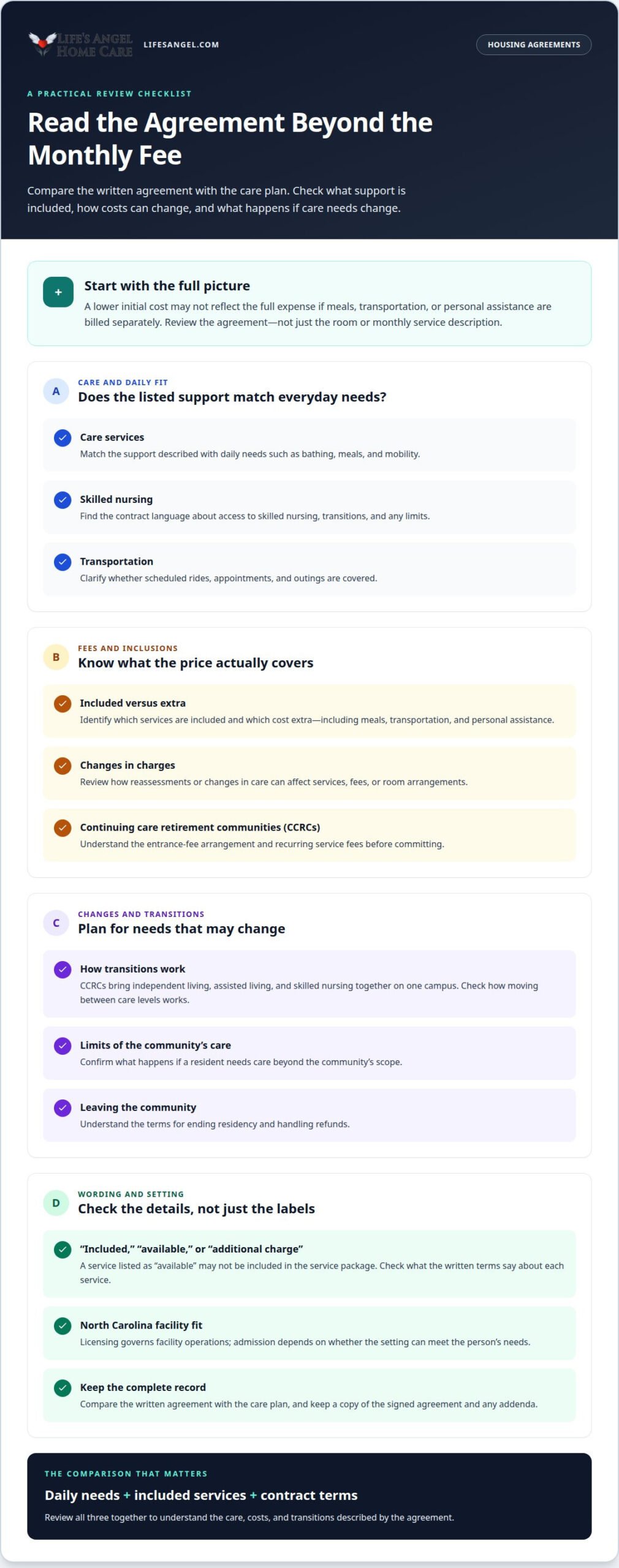
A housing agreement sets out which services residents receive, what they pay for, and how care may change. Review it alongside the care plan to make sure the arrangement reflects your family member’s daily needs.
Continuing care retirement communities, or CCRCs, bring independent living, assisted living, and skilled nursing together on one campus. Residents may move between levels as their support needs increase. This can provide continuity, but the contract determines how transitions work, which services are included, and what happens if a resident needs care beyond the community’s scope.
Compare the full agreement, not just the room or monthly service description. A lower initial cost may not reflect the full expense if meals, transportation, or personal assistance are billed separately. Identify what is included, which services cost extra, and how charges can change. If considering a CCRC, understand the entrance-fee arrangement and recurring service fees before committing.
- Care services: Match listed support with daily needs, such as bathing, meals, or mobility.
- Skilled nursing: Find the contract language describing access, transitions, and any limits.
- Transportation: Clarify whether scheduled rides, appointments, and outings are covered.
- Changes in care: Review how reassessments affect services, fees, or room arrangements.
- Leaving the community: Understand the contract’s terms for ending residency and handling refunds.
Pay close attention to terms such as “included,” “available,” and “additional charge.” For example, a contract may list transportation as available without including every trip in its service package. Compare the written terms with the care plan, and keep a copy of the signed agreement and any addenda.
Consider how the arrangement supports both current routines and possible future needs. Nursing homes provide a different level of care from independent senior living, so confirm that the agreement describes the services the resident will receive. Clear terms help families compare options and make decisions based on care needs, community life, and contract details.
Adult family homes and boarding homes
Smaller residential settings may feel more familiar than a large facility, but the support they provide varies. The key is matching assistance with daily living to a senior’s needs.
Adult day care costs in Chapel Hill depend on the schedule and services used. Availability also depends on program schedules, eligibility, and transportation arrangements. These details determine whether daytime support fits a family’s routine.
Adult Family Home Settings
An adult family home is a private residence arranged to house a small group of adults and provide support with daily living. Adult foster care settings generally house fewer than six older adults, and one described arrangement houses 1 to 6 adults in a private residence. A smaller household may suit a senior who prefers shared routines and a comfortable, home-like setting. Consider whether the daily assistance meets the person’s needs.
Support may include help with activities of daily living, household chores, and medications. Adult foster care providers are not medical professionals, so a senior who needs moderate to extensive daily medical support may need another setting. Compare the available assistance with specific needs, such as getting dressed or keeping up with household tasks.
Boarding Home Arrangements
A boarding home generally combines a place to live with meals and shared household arrangements, but the amount of personal assistance can vary. Room and board alone may not cover help with bathing, medication routines, or other activities of daily living. Clarify in the written agreement which support is included and which needs require a separate arrangement.
Residential care homes commonly have between 2 and 10 residents, offering a smaller group setting than a large senior facility. Compare the home’s daily routines, privacy, meal arrangements, and approach to changing needs. For example, a person who needs reminders and household help may have different requirements from someone who needs extensive medical care.
Adult day care is not the same as long-term care or residential housing: it supports someone during the day while they live elsewhere. In Chapel Hill and Orange County, compare local schedules, services, eligibility, and transportation to see whether daytime care complements a residential arrangement. The right mix can preserve familiar home routines while providing caregivers with structured support.
Independent living
Independent living gives older adults a home of their own, with fewer built-in care services than assisted living. Senior apartments may suit someone with mobility difficulties who can still manage daily life independently. An apartment can support independence, but it does not provide nursing home care simply because it is part of a senior community.
A familiar routine can help determine whether this arrangement fits. Someone who can prepare meals, manage medications, and move safely around their apartment may value independent living. If stairs, shopping, or housekeeping become difficult, the support arrangement can change without moving straight to a nursing home.
Older adults in senior apartments may use local home care if they need assistance and don’t have a life-threatening medical condition. This can help someone remain in a familiar home while getting support with specific daily tasks. Consider which tasks need help: getting dressed, preparing meals, and traveling to appointments each call for a different plan. Match assistance to actual routines instead of assuming every resident needs the same care.
- Daily routine: Note which tasks the resident manages alone and where support would help.
- Mobility: Consider entrances, hallways, and the route to shared spaces such as a community center.
- Changing needs: Identify how added assistance could fit without disrupting familiar routines.
- Continuing care: Consider whether a future move or added home support may become necessary.
Independent living differs from continuing care arrangements, where housing may connect to assisted living and skilled nursing on one campus. Review the contract to understand which apartment services are included and which require separate arrangements. A resident who needs occasional help can remain independent while adding support; someone requiring ongoing skilled nursing needs a different level of care.
If daily tasks are becoming harder, plan practical support at home around the routines that matter most.
Life’s Angel Home Care: Personal Care
Life’s Angel Home Care supports older adults who want to remain at home but need help with everyday routines. Personal Care and Mobility Assistance provide help with personal tasks and moving safely through daily activities. Errand Assistance and Light Housekeeping can ease practical demands at home, while family members remain involved in decisions and care.
This support may suit someone who needs assistance with daily living but not the skilled nursing care of a nursing home. It can also complement independent living when errands, mobility, or household tasks become harder to manage. The goal is respectful help that fits familiar routines and honors your loved one’s comfort and choices.
If you’re considering support at home, contact Life’s Angel Home Care to discuss your family’s needs.
Choose the next step that feels right for your family
Finding alternatives to nursing homes in Chapel Hill means considering more than where your loved one will live. It also means deciding what support could make everyday life safer and more manageable while honoring their preferences. Start with a practical conversation: what would they like help with, and what would they prefer to keep doing independently?
Life’s Angel Home Care offers Personal Care, Mobility Assistance, and Errand Assistance for people who need support at home. These services can address hands-on needs and everyday tasks while your family considers which arrangement fits best. Start with a discussion about the routines that matter and where extra help could ease pressure for everyone.
Contact Life’s Angel Home Care to talk about support for your family. Each thoughtful step can help you build a care plan around comfort, dignity, and the life your loved one wants to keep living.
Frequently Asked Questions
Can I Use a Combination of Care Alternatives for My Elderly Parent?
Yes, families can combine housing and care to support different parts of the week. For example, a parent might live in a senior apartment, attend adult day care, and get help at home with errands. Coordinate schedules, transportation, and responsibilities so support is dependable and your parent’s routines remain consistent.
How Do I Determine the Best Care Option for My Elderly Loved One?
Start by identifying what your loved one can do safely and where they need help. A brief daily record can reveal patterns, such as difficulty preparing breakfast, managing stairs, or getting to appointments. Include your loved one in the conversation, then compare their needs with the supervision, personal assistance, and health care each setting provides.
How Do I Ensure the Quality of Care in Non-Nursing Home Settings?
Look for clear written expectations about daily tasks, staff responsibilities, and how changes in a resident’s needs are handled. Clarify who helps with meals and personal routines, how concerns are shared with family, and how the care plan is updated. A consistent schedule and respectful communication make it easier to judge whether support meets your loved one’s needs.
What Are the Alternatives to Nursing Homes?
Options include assisted living, independent living, adult family homes, boarding homes, home care, adult day care, and PACE. These alternatives to nursing homes in Chapel Hill differ in whether they provide housing, daytime support, or assistance at home. PACE serves eligible people who meet its program requirements; the Centers for Medicare & Medicaid Services says eligibility includes people age 55 or older.
What alternatives to nursing homes are available in Chapel Hill, NC?
Alternatives to nursing homes in Chapel Hill include assisted living, independent living, adult family homes, boarding homes, home care, and adult day care. The right fit depends on whether an older adult needs housing, daytime supervision, or help with specific routines. Community-based support may also suit people who meet program eligibility requirements and want care while living at home.
What home care agencies serve Chapel Hill, NC, and what are their hourly rates?
Life’s Angel Home Care provides in-home support in Chapel Hill, including personal care, mobility assistance, and help with errands. Hourly rates depend on the requested care and schedule, so a general figure may not reflect your family’s needs. Contact Life’s Angel Home Care to discuss the support you need and receive pricing based on the care requested.