

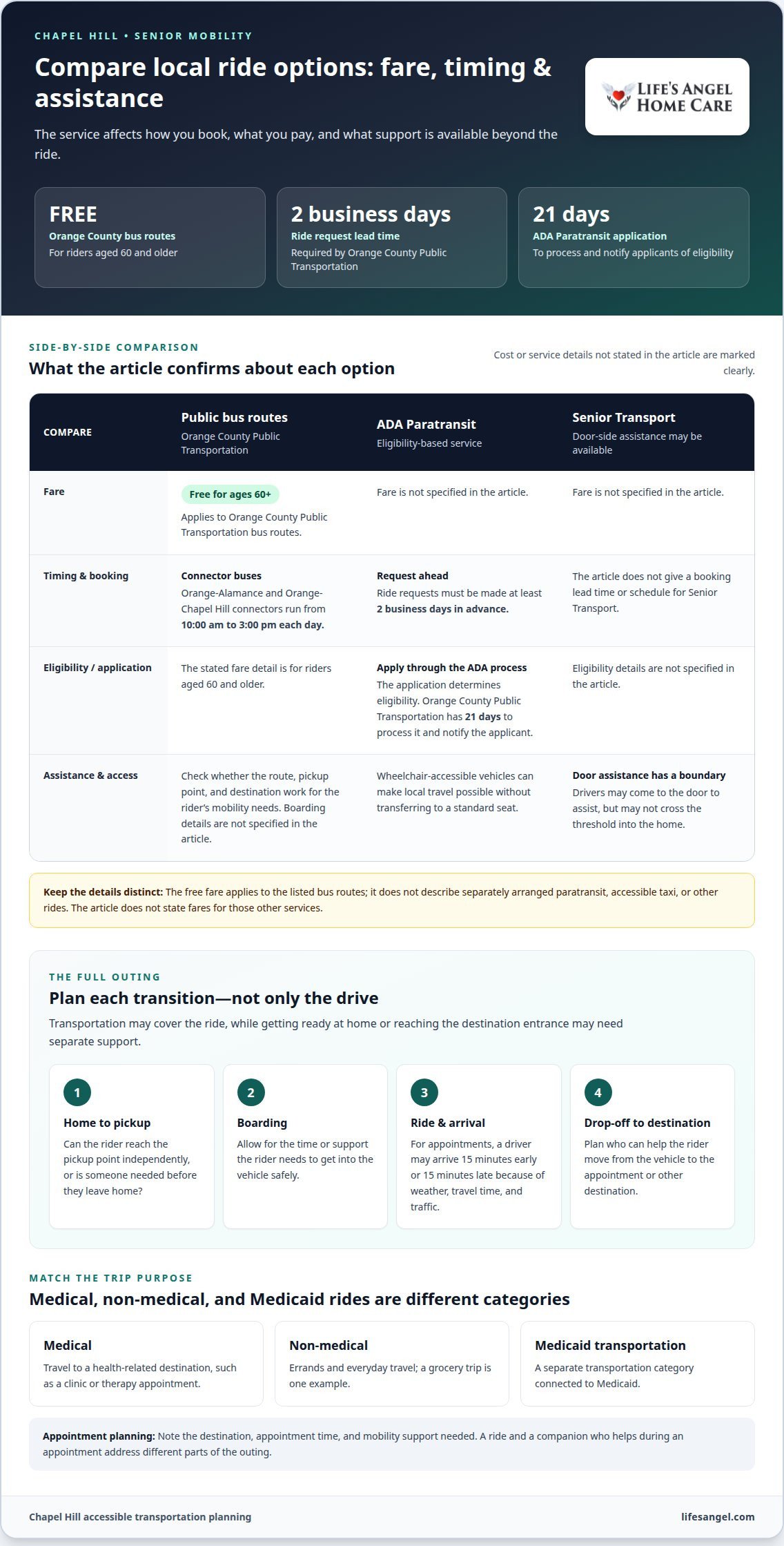
A wheelchair-accessible ride needs to work for the whole trip, not just the time spent on the road. In Chapel Hill, wheelchair-accessible transportation for seniors can include paratransit and Senior Transport vehicles; Orange County Public Transportation requires ride requests at least 2 business days in advance, and ADA Paratransit applications take 21 days to process and notify applicants of eligibility.
It’s understandable to want clear answers before arranging wheelchair accessible transport for seniors in Chapel Hill, especially when getting in and out of a vehicle takes care and attention. The right option depends on the trip, the rider’s mobility needs, and whether they need help beyond the ride.
This guide explains accessible wheelchair transportation, non-medical rides, and the assistance that may be available when entering or exiting a vehicle. You’ll also learn how paratransit works in Chapel Hill and how in-home mobility support and accompanied appointments can make outings more manageable.
Key Takeaways
- Understand what help a driver may provide when you’re entering or exiting a vehicle, and where that assistance may stop.
- Choose a non-medical ride plan that accounts for the trip purpose, mobility needs, and possible traffic or weather delays.
- Learn how wheelchair-accessible vehicles and paratransit can support local trips, and what the application process involves.
- See how in-home mobility assistance and help with errands can complement transportation when getting ready to go out is difficult.
Driver assistance entering and exiting vehicles
For a ride in Chapel Hill, clarify where driver assistance begins and ends. Senior Transport drivers may come to the door to assist riders, but may not cross the threshold. This matters when an older adult needs help preparing inside the home before reaching the vehicle. A family member or caregiver may need to help with that part of the departure.
Boarding and exiting involve several steps: getting from the home to the pickup point, approaching the vehicle, and settling in for the ride. The same steps happen in reverse at the destination. People who use a wheelchair or need support walking may need different assistance at each stage. Don’t assume that help at the door includes assistance inside the home.
Before a trip, map the route from the front door to the vehicle. Note whether the rider can reach the pickup point independently or needs someone to accompany them. Also plan for what happens after the vehicle arrives. Transportation may cover the ride, while getting from the drop-off point to an appointment entrance is a separate need.
- At pickup: Identify whether the rider can get from the doorway to the vehicle without help.
- At the vehicle: Consider whether the rider needs time or support to board safely.
- At drop-off: Plan who will help the rider continue from the vehicle to the destination.
Thinking through each step helps families distinguish driver assistance from personal support throughout an outing. If a senior needs help standing, walking, or transferring between a wheelchair and a seat, plan for that need rather than assuming a driver can provide it. Clear expectations can make the handoff calmer for the rider and those helping them.
For someone who needs help beyond the vehicle door, mobility assistance can support movement during daily activities. Getting ready to leave and reaching an errand destination are different parts of the same outing. Planning for each transition helps families arrange support that respects the rider’s comfort, abilities, and dignity.
Non-medical transportation for seniors and people with mobility limitations
For each Chapel Hill trip, identify its purpose, the assistance needed, and the type of service. Medical appointments, errands, and other scheduled outings may call for different transportation arrangements.
Medical and non-medical rides
Medical transportation takes a person to a health-related destination, such as a clinic or therapy appointment. Medicaid transportation is a separate category connected to Medicaid, while non-medical rides can support errands and everyday travel. The trip’s purpose helps clarify the arrangement: a grocery trip is non-medical, while a visit with a clinician is medical.
Consider the full journey, not just the drive. A scheduled ride may get someone to an appointment, but the rider may also need help moving through the destination or returning home. Those needs are separate from transportation. Identifying them helps families plan for the person’s mobility and the assistance they require.
Medical appointment transportation
For an appointment at a Chapel Hill clinic, plan around the scheduled arrival time and the rider’s needs at both ends. A driver may arrive 15 minutes early or 15 minutes late because of weather, travel time, and traffic. Allowing flexibility can help reduce pressure before check-in, especially when the rider needs extra time to get ready.
Write down the destination, appointment time, and any mobility support needed during the outing. For example, a senior may need a ride to a medical visit and a companion to help with the appointment. Accompanied appointment support can address that personal assistance alongside the travel plan.
Fare information
Orange County Public Transportation bus routes are free for riders aged 60 and older. Orange County’s Orange-Alamance and Orange-Chapel Hill connector buses run from 10:00 am to 3:00 pm each day. These details apply to those bus routes, so distinguish them from separately arranged paratransit or other accessible rides when planning a trip.
When planning a senior’s travel budget, first identify the service and route. A free bus route and an individually arranged ride are different options. The trip purpose, pickup needs, and destination can help narrow the choices. If preparing to leave home is difficult, mobility assistance can support that part of the outing.
Wheelchair-accessible paratransit vehicles
Wheelchair-accessible vehicles can make local travel possible without transferring to a standard seat. In Chapel Hill, the service type affects the fare, booking process, and ride arrangements.
Cost and convenience comparisons
Orange County Public Transportation routes are free for riders aged 60 and older. Accessible taxis and medical transportation are different options, so compare them by trip purpose, pickup arrangements, and how directly they serve the destination. A public route may suit a rider traveling along its route, while a scheduled ride may better match an appointment time.
Convenience depends on the full journey. Consider whether the rider can reach the pickup point, board the vehicle, and get from the drop-off point to the destination. A clinic visit, for example, may need more planning than a familiar errand nearby. Compare options based on the whole trip, not just the vehicle.
Eligibility and applications
Seniors seeking public paratransit apply through Orange County Public Transportation’s ADA Paratransit process. The application determines eligibility, and Orange County Public Transportation has 21 days to process it and notify the applicant.
Age alone should not be treated as the application decision. An applicant follows the ADA Paratransit process, then uses the eligibility notice to understand whether that service fits their travel needs. For a planned ride, requests must be made at least 2 business days in advance.
Wheelchair securement and ride rules
Senior Transport vehicles are wheelchair accessible. When arranging a particular ride, explain whether the passenger will remain in the wheelchair during travel or transfer to a vehicle seat. This helps clarify the boarding plan and the securement arrangement needed.
Attendants and service animals also affect the ride plan. Mention them when arranging transportation, along with the destination and mobility needs. A passenger traveling with an attendant may need space for both people, while a service animal accompanies its handler. Sharing these details helps the transportation service plan and avoid surprises at pickup.
Accessible wheelchair transportation
Chapel Hill options include Orange County Public Transportation routes, ADA Paratransit, and wheelchair-accessible Senior Transport vehicles. The right fit depends on the route, the rider’s mobility needs, and the pickup arrangement.
Available accessible transportation services
Orange County Public Transportation routes serve local trips, and ADA Paratransit is another public transportation option for eligible riders. Senior Transport vehicles are wheelchair accessible and can suit trips requiring an accessible vehicle. These services differ in how rides are arranged and where they travel.
Match the trip to the service by considering the destination, pickup location, and whether the rider needs a wheelchair-accessible vehicle. A trip along a public bus route may suit one rider, while another may need paratransit. A disability that affects walking or transfers can also shape the plan.
Plan the whole journey, including getting from the drop-off point to the destination. A ride may cover vehicle travel without providing support inside a building. Identifying each transition helps families plan for the rider’s mobility and the purpose of the outing.
Accessible taxis and rideshare
Accessible taxi and rideshare trips depend on having a wheelchair-accessible vehicle available for the requested pickup. Don’t assume a standard taxi or rideshare vehicle can accommodate a wheelchair. The key factor is the vehicle itself, not whether the trip is booked through an app or by phone.
For a Chapel Hill trip, consider whether the rider needs to remain in the wheelchair during travel or can transfer to a seat. This affects which vehicle can meet the need. Also account for the pickup location and destination: the vehicle must serve the planned journey.
Compare options by accessibility, route, and scheduling. An appointment with a set arrival time calls for planning around pickup and travel, while a flexible errand may allow more choice. Matching these details to the rider’s needs helps narrow the options.
Life’s Angel Home Care
Life’s Angel Home Care supports the parts of an outing that happen before or after a ride. If getting ready to leave, moving around the home, or running an errand is difficult, personal care, mobility assistance, and errand assistance can help. Light housekeeping can also ease everyday tasks at home, giving families more room to focus on transportation arrangements.
These services complement accessible transportation; they don’t replace a wheelchair-accessible vehicle or paratransit ride. A senior can arrange a suitable ride separately and receive help with mobility or an errand. To discuss how Life’s Angel Home Care can support your family in Chapel Hill, contact the team.
Plan the next outing with confidence
Planning wheelchair accessible transport for seniors in Chapel Hill can start with one practical step: decide what support would make the outing manageable from departure to return. A clear plan helps families coordinate the ride with the person’s comfort, routine, and needs at home, without rushing decisions.
Life’s Angel Home Care provides personal care, mobility assistance, and errand assistance to support daily needs around an outing. These services can complement a separately arranged accessible ride, whether help is needed before leaving home or with an errand. Support is tailored to the individual rather than based on a one-size-fits-all plan.
If you’re considering what kind of help may suit your family, contact Life’s Angel Home Care to discuss the next step. A thoughtful plan can make it easier to approach future outings with care and confidence.
Frequently Asked Questions
What local nonprofits or senior programs provide wheelchair-accessible rides in Chapel Hill or Orange County?
Orange County Public Transportation and Senior Transport are local options for wheelchair-accessible transport for seniors in Chapel Hill. A rider going to a familiar destination, for example, can compare a public route with a wheelchair-accessible vehicle service. The practical choice depends on where the trip begins and ends, and whether the rider needs help beyond the ride.
How can seniors arrange wheelchair-accessible transportation to medical appointments in Chapel Hill?
For wheelchair-accessible transport for seniors in Chapel Hill, seniors can request an Orange County Public Transportation ADA Paratransit ride or arrange another accessible ride. Make the paratransit request at least 2 business days ahead. Have the clinic address and appointment time ready, and plan the return trip too. Include whether the rider will remain in their wheelchair during travel and whether someone will accompany them.
Who qualifies for Chapel Hill Transit EZ Rider paratransit, and how do seniors apply?
Seniors apply through Orange County Public Transportation’s ADA Paratransit process, which determines eligibility. The application is processed and the applicant is notified within 21 days.