

A respite break doesn’t have to disrupt the familiar routines that help your loved one feel settled. In Durham, temporary caregiver services can provide in-home support for a few hours, days, or longer periods, depending on your family’s needs. That support may include help with mobility, transportation to appointments, meal preparation, and medication reminders, while giving you time to rest or manage other responsibilities.
It’s understandable to want practical help without making home feel unfamiliar. The right support can fit around the person’s everyday preferences and offer steady assistance with the tasks that matter most. Here, you’ll learn what respite care in Durham can include, how scheduling works, and what to consider when arranging temporary help. We’ll also explain how mobility assistance, appointment transportation, meals, and medication reminders can fit into daily care, so you can picture what a calmer, more supported routine might look like.
Key Takeaways
- See how respite support can give family caregivers a break while care continues at home.
- Learn what information helps shape a schedule around familiar routines and daily needs.
- Explore how medication reminders and meal assistance can support a steadier day.
- Understand how to match temporary in-home help with needs such as mobility, errands, and personal care.
How Do Professional Caregivers Schedule Respite Care Services?
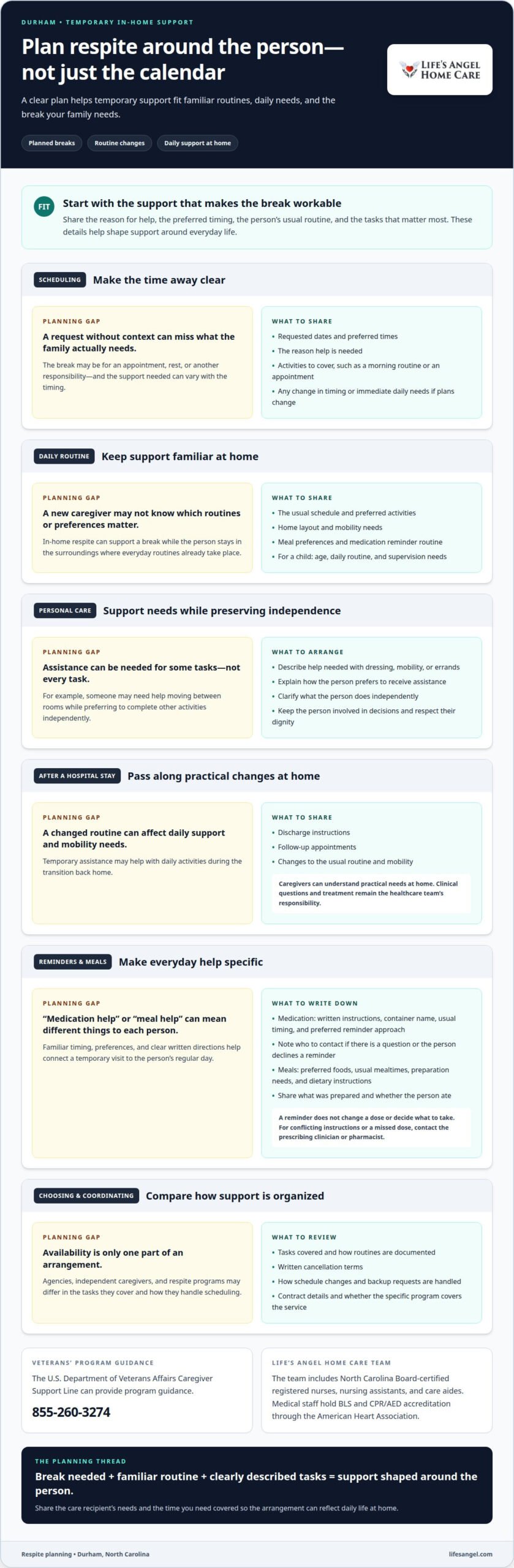
For seniors and adults with disabilities, temporary care can include personal care, mobility assistance, and help with errands. For a child, families should describe the child’s age, daily routine, and supervision needs when requesting an arrangement. Share the care recipient’s schedule, support needs, preferred times, and any changes after a hospital stay so the care plan can fit everyday life.
Start by identifying why your family needs help. A caregiver might provide assistance while you attend an appointment or support a morning routine while you rest. Explain which activities matter most, such as dressing, moving safely around the home, or getting to an appointment. This helps tailor support to your loved one’s regular habits.
For personal care and daily activities, describe the assistance needed and how your loved one prefers to receive it. For example, someone may need mobility assistance between rooms but prefer to complete other tasks independently. A compassionate approach respects that distinction, supports dignity, and keeps the person involved in decisions.
After a hospital discharge, share the discharge instructions, follow-up appointments, and changes to the person’s usual routine. Temporary assistance can help with daily activities and mobility during this transition. Clinical questions and treatment remain the healthcare team’s responsibility; clear communication helps a caregiver understand practical needs at home.
Home care involves different professional roles. Life’s Angel Home Care’s team includes North Carolina Board-certified registered nurses, nursing assistants, and care aides. Medical staff hold BLS and CPR/AED accreditation through the American Heart Association. Describe the tasks involved so the support can be planned around your loved one’s needs.
Veterans’ families seeking program guidance can call the VA Caregiver Support Line at 855-260-3274, according to the U.S. Department of Veterans Affairs. For other respite arrangements, share the requested dates, daily activities, mobility concerns, and appointment needs during the scheduling conversation. These details help organize support around the person, not just the calendar.
What is respite care near me in Durham, NC?
Respite care gives family caregivers temporary relief while a loved one receives support at home. In Durham, in-home assistance can fit a planned break or a change in your family’s routine.
Respite Care for Family Caregivers
Temporary respite care lets a family caregiver step away to rest, attend appointments, or manage other responsibilities. The person receiving care can continue with agreed daily activities and familiar routines. Before arranging support, identify the break you need and your loved one’s priorities, such as mobility assistance or help preparing a meal. A clear plan can help preserve usual mealtimes and routines.
Scheduled and Emergency Respite
For a planned break, share your preferred schedule, your loved one’s routine, and the specific tasks involved. A visit might cover an afternoon appointment or an evening commitment. If plans change, explain the new timing and the person’s immediate daily needs. These practical details help Life’s Angel Home Care understand what support your family is seeking.
Temporary In-Home Respite Care
In-home respite brings support into the familiar setting where a person’s routines already take place. Families can describe the home layout, mobility needs, medication reminders, meal preferences, and activities that matter during the visit. For example, a care plan might include help moving between rooms and companionship during lunch. This approach can suit families who want a break without changing the loved one’s usual surroundings.
Comparing Care Providers and Local Programs
Compare agencies, independent caregivers, and respite programs by the tasks they cover, how they document routines, and their written cancellation terms. Ask how scheduling changes and backup requests are handled, and review contract details before choosing. Insurance, Medicaid, and veterans’ benefits depend on the specific program and covered service; VA caregiver-program guidance is available through its support line at 855-260-3274, according to the U.S. Department of Veterans Affairs. For Durham families, local in-home providers can arrange respite, while veterans can use that VA line for program guidance. Share the care recipient’s needs and the break you require to identify a suitable arrangement.
Medication reminders and meal assistance
For seniors receiving home care in Durham, a consistent routine can make daily support easier to coordinate. Write down medication times, the name on each container, and the reminder approach that feels familiar. A caregiver can follow the information provided and prompt the person at the agreed time. This does not include changing a dose or deciding what to take. If instructions conflict or a dose is missed, contact the prescribing clinician or pharmacist rather than improvising.
Before a visit, organize the details that shape a medication reminder routine: current written instructions, usual timing, and the person’s preferences. For example, a family might explain that a reminder works best alongside breakfast. Note who should be contacted if the person has a question or declines a reminder. Clear directions help keep visits consistent and medication questions with the appropriate healthcare professional.
Meal assistance also benefits from specific guidance. Share preferred foods, usual mealtimes, preparation needs, and any dietary instructions the family follows. For example, a caregiver can prepare a familiar lunch and set it out where the person usually eats. They can also note what was prepared and whether the person ate, giving family members a clear update. These details connect a temporary visit to the person’s everyday routine.
In Durham and surrounding North Carolina communities, families can plan meal and reminder support around the visit’s purpose. A brief visit might focus on a meal and one agreed reminder; a longer visit may include additional daily assistance. Put the priorities in order, such as meal preparation first, then mobility support before the next activity. This helps the caregiver use visit time thoughtfully without taking over tasks the person can manage independently. Specific written preferences also make handoffs between family members and care providers clearer.
The Program of Comprehensive Assistance for Family Caregivers: phase one included eligible Veterans serving on or before May 7, 1975; phase two began October 1, 2022, for service between May 7, 1975, and September 11, 2001.
Durham In-Home, Respite, and Backup Care Agencies
In Durham, families can look at home-care agencies, independent caregivers, and respite programs for temporary support. These options differ in how they organize schedules, share care instructions, and handle changes. Start by identifying the practical help needed. For example, someone needing mobility support and an errand may need a different arrangement from someone seeking clinical care.
An agency can coordinate visits using a description of the person’s needs and requested tasks. An independent caregiver may arrange support directly with the family, while a respite program may have its own scheduling process. Compare how updates are shared and how changes to a visit are handled. Review contract terms and cancellation policies in writing before making an arrangement.
For backup care, explain the immediate need, preferred timing, and essential tasks, such as help moving around the home. Durham, Chapel Hill, and Raleigh are the local communities relevant to this care search. A clear priority list can help distinguish daily assistance from skilled nursing or emergency transportation, which require different services.
Before choosing, review the care plan, communication process, and written agreement together. Clarify who receives updates and how changes in routine are shared. If the main need is help with mobility or errands at home, explore temporary in-home care options.
Life’s Angel Home Care
Life’s Angel Home Care supports families in Durham, Chapel Hill, and Raleigh with practical in-home assistance. Whether you need time for a planned break or to manage other responsibilities, support can be shaped around your loved one’s routines and priorities.
Depending on daily needs, help can include personal care, mobility assistance, errand assistance, or light housekeeping. For example, help moving safely around the home and running an essential errand can ease a demanding day. These services provide practical daily assistance; urgent medical needs require appropriate medical care.
If temporary support would help your family maintain a more manageable routine, contact Life’s Angel Home Care to discuss your needs.
Choose Support That Fits Your Family’s Next Step
Planning temporary caregiver services in Durham can begin with one practical question: which part of the day would benefit most from added support? Identifying a priority helps your family discuss an arrangement that respects your loved one’s preferences and gives you room to manage your responsibilities.
Life’s Angel Home Care provides Personal Care, Mobility Assistance, and Errand Assistance for everyday needs at home and beyond. These services can help when familiar routines are becoming difficult to manage alone or when a family caregiver needs practical support. Sharing what matters most helps make the conversation focused and personal.
You don’t have to have every detail settled before taking a next step. Consider the routines or tasks where assistance would make the day easier, then contact Life’s Angel Home Care today to discuss your family’s needs. A thoughtful conversation can help you move toward care that feels respectful, manageable, and suited to your loved one.
Frequently Asked Questions
Are Your Caregivers Qualified?
Yes. Life’s Angel Home Care’s team includes North Carolina Board-certified registered nurses, nursing assistants, and care aides. Medical staff hold BLS and CPR/AED accreditation through the American Heart Association. To discuss the practical support your family needs, describe daily tasks such as dressing, moving around the home, or keeping up with household routines.
What temporary caregiver services are available in Durham, North Carolina?
Life’s Angel Home Care provides in-home support for seniors and adults with disabilities in Durham, Chapel Hill, and Raleigh. Services include personal care, mobility assistance, errand assistance, light housekeeping, companionship, meal preparation, and accompaniment to appointments. Someone who needs help getting ready and traveling to a scheduled visit may need different support from someone who mainly wants companionship and help with errands.
How quickly can Durham caregiver agencies arrange short-term or same-day care?
Short-term scheduling starts with the requested start time, the tasks involved, and the person’s daily needs. For a same-day request, share the immediate priorities first, such as assistance moving around the home or accompaniment to an appointment. Details about the routine and the support required help the agency organize the request. A concise description makes the first scheduling conversation more useful for your family.
Does insurance, Medicaid, or veterans benefits cover temporary caregiver services in Durham?
Coverage depends on the specific program and covered service. Veterans can call the VA Caregiver Support Line at 855-260-3274 for program guidance.