

Daily support can take place at home and fit around a person’s routines and needs. Assisted living at home services in Chapel Hill can include personal care, mobility assistance, meal preparation, companionship, errands, light housekeeping, and accompaniment to appointments. The goal is practical help that supports someone in familiar surroundings while respecting their choices.
It’s understandable to want dependable help without giving up the comfort and independence of home. When daily tasks become harder for someone you love, support with those routines can ease pressure on the family while keeping the person’s preferences at the center.
This guide explains what in-home daily care can involve, how to decide what support may fit, and what to consider when arranging it. You’ll also learn how Life’s Angel Home Care supports everyday needs with personalized care at home in the Chapel Hill area.
Key Takeaways
- Notice changes in personal care, balance, or movement that may signal a need for more daily support.
- Consider how companionship and meaningful activities can support connection alongside practical care at home.
- Plan appointment rides and errands as part of a routine that helps everyday responsibilities feel more manageable.
- Understand how home-based support differs from assisted living communities so you can weigh which setting best fits your family’s needs.
Personal care and mobility assistance
Personal care can support bathing, dressing, grooming, and other daily routines while respecting privacy and choice. Mobility assistance can help with moving between a bed, chair, bathroom, and other familiar rooms. For example, a caregiver can provide support during a transfer and follow the person’s established routine. The assistance should reflect the individual’s abilities, preferences, and home environment.
Changes in bathing habits or personal hygiene, difficulty moving or falls, sensory decline, unexplained weight changes, memory problems, missed appointments, or loneliness may suggest that an older adult could benefit from in-home support. Consider how the person manages daily activities, moves around the home, and uses existing support. This can help families decide whether personalized assistance at home fits their current needs.
What licenses, background checks, and training should Chapel Hill home care providers have? Credentials depend on the caregiver’s role and the tasks involved; families should look for relevant qualifications, background screening, and training for assigned duties. For hands-on support, clear training in personal care and safe mobility matters. Which Chapel Hill home care agencies provide personal care, meals, medication reminders, and companionship? Agencies’ offerings vary; personal care and companionship are common home-care categories, while meals and medication reminders are separate services to ask about when comparing care plans.
How do caregivers consider whether a senior can remain at home safely in Chapel Hill? They can discuss daily tasks, mobility, the home’s layout, and the support already available to identify where assistance may help. When arranging in-home care in Chapel Hill, NC, expect to discuss routines, priorities, and the tasks that need support. This conversation helps shape care around those details.
Companion care can add conversation and company to daily routines, while respite care gives family caregivers time away as another caregiver provides support. Specialty arrangements may center on family preferences, rehabilitation routines, or veterans’ needs, with assistance matched to the person’s circumstances. Families considering assisted living at home services in Chapel Hill can discover which daily tasks need help and discuss them with a provider serving the area.
Activities and social engagement
Familiar activities can add structure to the day and create opportunities for conversation. Someone might enjoy sorting photographs, tending a small garden, listening to music, or sharing a meal. The right activity depends on personal preferences, energy, mobility, and comfort. A companion can encourage participation without taking over, helping a person maintain meaningful routines at home.
Community outings can also support social connection. Someone may want to attend a neighborhood gathering, visit a public park, or join a local class. An escort can help with the outing and getting around, while mobility assistance can make navigating a doorway or path more manageable. Choose activities that suit the person’s interests and abilities rather than following a generic schedule.
In the Chapel Hill area, 40% of the assisted living communities listed offer fitness activities. That figure describes those listed communities, not every local option. At home, gentle movement might instead mean a short walk, stretching, or chair-based activity chosen to match the person’s routine. A family can identify preferred activities, while a caregiver helps make participation practical and enjoyable.
Daily activities can affect whether someone has the time and energy for social plans. Dressing, eating, bathing, and moving around are everyday tasks that may require support. For instance, help getting ready can make it easier to attend a visit or enjoy a hobby. A care plan can also allow time for rest and meals, so activities feel comfortable rather than rushed.
Keep the plan specific: choose an activity, note what support makes it accessible, and decide how it fits the day. A conversation about companionship and errand assistance can help families consider practical support for social routines and nearby outings.
Transportation to appointments and errands
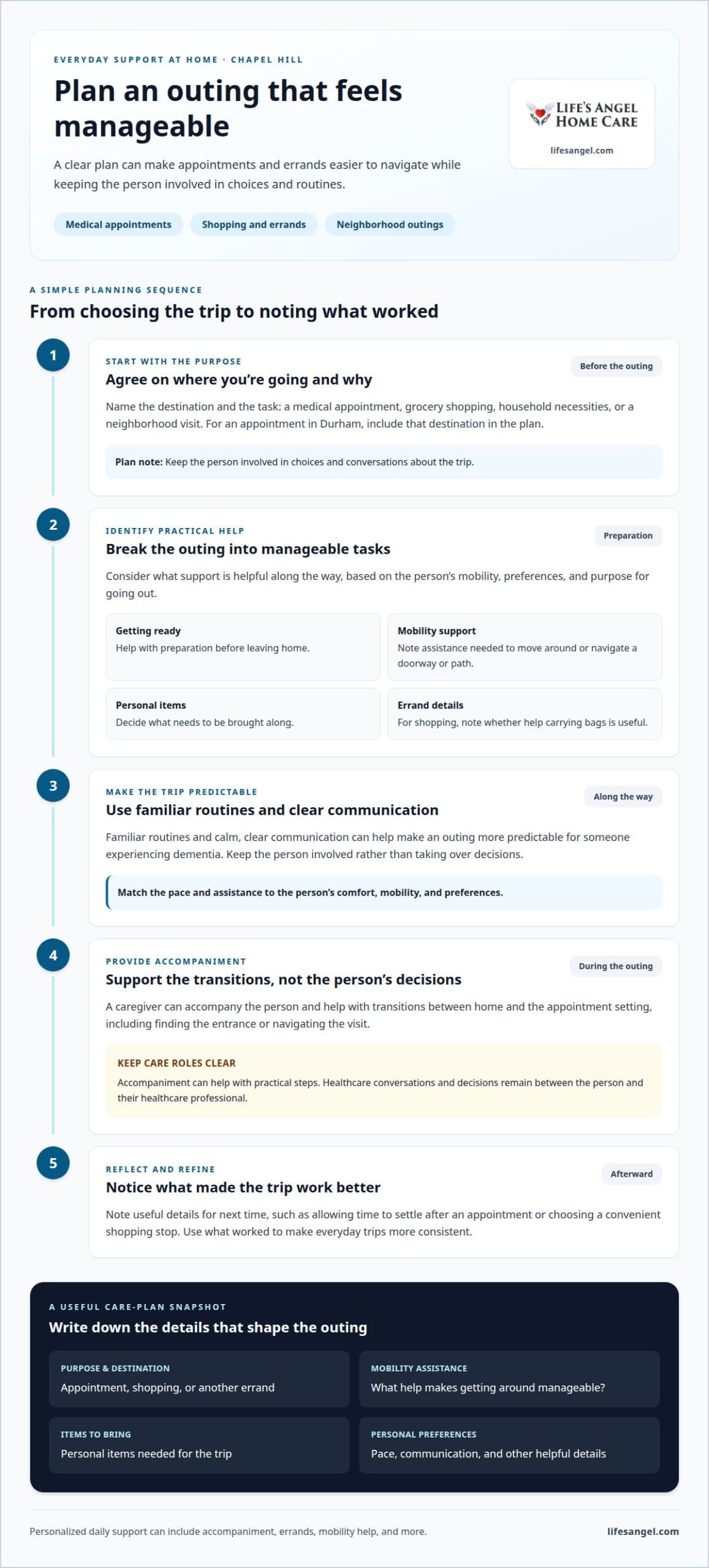
An appointment can involve more than getting to a clinic. An older adult may need help getting ready, carrying personal items, finding the entrance, or navigating the visit. Accompaniment can support each transition while leaving healthcare conversations and decisions between the person and their healthcare professional. In Chapel Hill, a care plan can note the destination, mobility needs, and assistance that will make the outing manageable.
Errands can help people maintain familiar routines. Shopping for groceries, picking up household necessities, or visiting a nearby neighborhood may be harder when going out alone becomes difficult. Errand assistance can help with the practical steps of an outing and provide accompaniment. The approach should reflect the person’s preferences, mobility, and purpose for the trip.
For an appointment in Durham, start by considering the destination and the person’s needs along the way. A caregiver can help with preparation, accompany the person, and support transitions between home and the appointment setting. Familiar routines and calm, clear communication can help make an outing more predictable for someone experiencing dementia. Keep the person involved in choices and conversations.
A useful care plan describes the task rather than relying on a broad label such as “transportation.” It can specify whether the outing is for a medical appointment or shopping, what mobility assistance is helpful, and which personal items to bring. Families can also share preferences, such as a quieter pace or help carrying bags. These details make support more consistent across everyday trips.
Before an outing, agree on its purpose, destination, and the kind of accompaniment needed. Afterward, note what worked, such as allowing time to settle after an appointment or choosing a convenient shopping stop. Thoughtful transportation assistance combines practical planning with patience and genuine passion for preserving an older adult’s independence. It helps keep essential appointments and familiar errands connected to daily life.
Assisted living services in Chapel Hill
“Assisted living at home” usually means receiving daily help in a private residence, rather than moving into a residential community. The distinction matters: at home, support can follow existing routines, while a community provides a shared setting. Chapel Hill has 8 assisted living communities, and 3 are rated above 8. Those figures offer local context, but the right setting depends on the person’s needs and preferences.
Home care can be arranged around specific tasks, such as getting dressed, preparing a meal, or moving around the home. A care plan can outline priorities, preferred routines, and the support needed for each task. For example, someone who prepares meals independently may mainly need help with personal care and moving around the house.
What risks and safety considerations come with receiving assisted living services at home? Consider a difficult bathroom transfer, cluttered walking paths, or support that does not match the person’s daily needs. A practical plan identifies potential challenges, clarifies which tasks the caregiver will handle, and notes where family involvement is needed.
In North Carolina, home care and residential assisted living serve different needs. Home care may suit someone who values familiar surroundings and needs help with selected routines. A residential setting may be more suitable when someone needs a shared environment or support beyond the home arrangement. Match the setting to daily needs, mobility, preferences, and available family support.
Before arranging care, list the tasks that are becoming difficult and when help is needed. Specific examples make it easier to shape a useful care plan than a general request for “help.” Note details such as morning dressing support or help moving between rooms so the arrangement reflects daily life.
If you’re considering support at home, discuss a home care plan shaped around those daily needs.
Life’s Angel Home Care
Life’s Angel Home Care supports Chapel Hill families with practical help when everyday tasks at home become harder. Personal care, mobility assistance, errands, and light housekeeping can address different needs while fitting into familiar routines.
A family may need help with getting dressed, moving safely around the home, or keeping up with household tasks. Discussing which activities are challenging can clarify what support would help and how it can fit the person’s preferences.
In-home support can be a helpful next step when someone needs assistance with daily routines but wants to remain at home. If you’re considering care for yourself or someone you love, contact Life’s Angel Home Care to discuss which tasks need support.
Make the Next Step Feel Manageable
Choosing assisted living at home services in Chapel Hill starts with identifying the daily task that feels hardest right now. It may be getting ready in the morning, moving around the home, or keeping up with an essential errand. Naming a priority can make the care decision clearer for you and your family.
Life’s Angel Home Care provides personal care, mobility assistance, and errand assistance to support daily life at home. Consider what kind of help would make the greatest difference to your loved one’s routine, then share that priority when discussing care.
You don’t have to map out every detail before taking a first step. Contact Life’s Angel Home Care to talk about the support your family is considering. A thoughtful conversation can help you move forward with greater clarity and care.
Frequently Asked Questions
NEED CARE TODAY?
If someone needs care today, first distinguish an urgent medical problem from a need for routine daily support. In immediate danger, seek emergency assistance. For everyday help, contact Life’s Angel Home Care and describe the person’s location, the task, and when support is needed. Examples include getting dressed, moving around the home, or attending a scheduled appointment. This gives the conversation a clear starting point.
What are some common tasks that a senior caregiver performs?
A senior caregiver can help with personal routines and practical tasks, depending on the care arrangement. Support may include bathing, dressing, grooming, moving between a bed and wheelchair, companionship, meal preparation, light housekeeping, and errands. A caregiver can also accompany someone to a healthcare appointment. Describe priorities, such as morning grooming or help carrying grocery bags, to clarify what assistance would be useful.
What’s Included?
Support depends on the services arranged and the person’s daily needs. Life’s Angel Home Care provides personal care, mobility assistance, companionship, errand assistance, light housekeeping, meal preparation, and accompaniment to appointments. One arrangement may combine grooming help with grocery errands, while another focuses on mobility and companionship. Sharing which tasks feel hardest helps keep care centered on the person’s routines and preferences.
What in-home assisted living services are available in Chapel Hill, NC?
Families considering assisted living at home in Chapel Hill can arrange daily support without moving into a residential community. In-home options include personal care, mobility assistance, companionship, meal preparation, light housekeeping, errands, and accompaniment to appointments. For example, someone recovering after an illness may need help with household routines and getting to follow-up appointments while regaining confidence at home.
What are the hourly rates and minimum shift requirements for in-home care in Chapel Hill?
Rates and minimum shifts depend on the care arrangement, and pricing is provided after a quote request. Cost factors include the type of support, scheduled hours, and whether assistance involves appointment accompaniment or several daily tasks. Care is billed hourly or on scheduled shifts. Sharing the support needed and the preferred schedule helps clarify the arrangement and its cost.
Does North Carolina Medicaid cover in-home personal care services in Chapel Hill?
North Carolina Medicaid may cover some home-care services, but coverage depends on the service and the person’s benefits. Do not assume every arrangement or agency is covered. Review the person’s benefits with their Medicaid plan or program before relying on coverage. Private pay is a common way to pay for senior home care, while some services may be covered through other benefits.