

What if the most difficult part of your aging parent’s morning isn’t physical stiffness, but the quiet sting of struggling with a simple button? Watching someone you love lose confidence during basic daily routines can turn once-peaceful mornings into exhausting cycles of frustration, worry over bathroom slips, and silent guilt. Thoughtful dressing and grooming assistance for seniors isn’t about taking away their independence. Instead, it offers the patient, steady support that protects their self-esteem while keeping their daily autonomy intact.
You deserve mornings defined by warmth rather than hurried stress, and your parent deserves to feel comfortable and respected in their own home. You’ll discover how compassionate dressing and grooming support preserves senior dignity, simplifies daily routines, and prevents caregiver burnout. We will walk through practical ways to create a safe, unhurried morning environment, adaptive self-care techniques, and how to recognize when a gentle helping hand can restore peace to your family relationship.
Key Takeaways
- Recognize how physical challenges like arthritis and balance changes turn ordinary morning self-care into daily sources of frustration.
- Learn practical adjustments to bedroom and bathroom spaces that support safe, seated dressing while reducing fall risks.
- Discover gentle hygiene techniques that protect delicate, thinning senior skin and support daily self-confidence.
- Understand how professional dressing and grooming assistance for seniors helps relieve family burnout and restores the parent-child bond.
- Find thoughtful conversation strategies to discuss in-home personal care collaboratively without threatening your loved one’s autonomy.
What Is Dressing and Grooming Assistance for Aging Adults?
Every morning begins with personal rituals we take for granted until our bodies begin to change. Dressing and grooming assistance is hands-on, non-medical support designed to help older adults manage essential morning self-care safely and comfortably. These tasks form the core of what clinicians classify as Activities of Daily Living (ADLs), which represent the daily self-care activities required for independent community living.
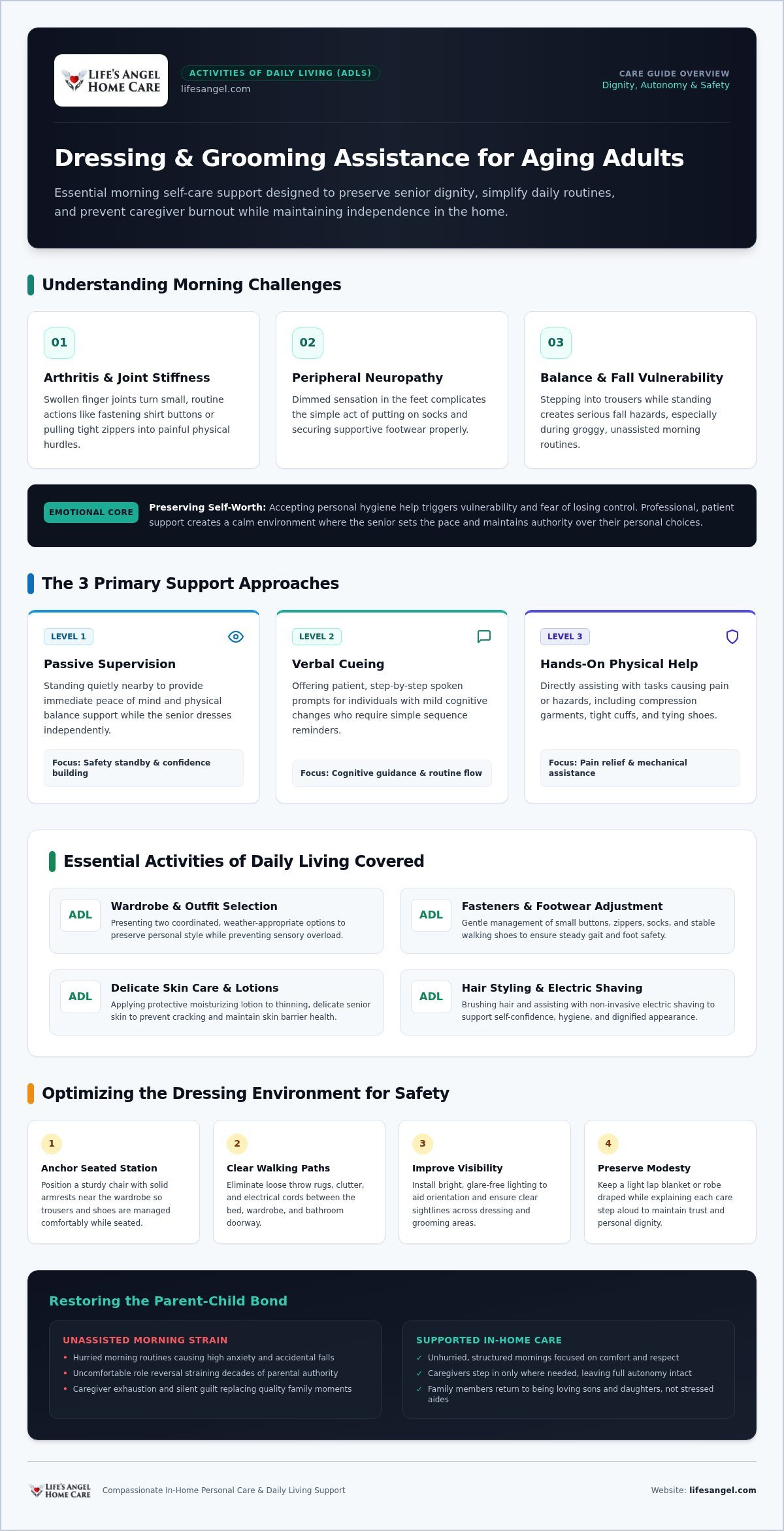
Physical hurdles often turn these simple habits into daily battles. Swollen finger joints from arthritis can make fastening a small shirt button nearly impossible. Peripheral neuropathy dims sensation in the feet, turning the act of pulling on socks into a frustrating chore. When balance wavers, stepping into a pair of trousers while standing creates a serious fall risk. How we look directly influences how we feel. When an older adult cannot style their hair, shave comfortably, or wear clothes that express their personality, their mental health and self-worth can quietly erode.
Effective dressing and grooming assistance for seniors meets someone exactly where they are through three primary approaches:
- Hands-on physical help: Stepping in directly with tasks that cause physical pain or safety hazards, such as sliding on compression garments, tying shoes, or buttoning tight cuffs.
- Verbal cueing: Offering patient, step-by-step spoken prompts for individuals with mild cognitive changes who simply need a reminder of what step comes next.
- Passive supervision: Standing quietly nearby to provide balance support and immediate peace of mind while your loved one dresses independently.
Preserving autonomy remains the central goal of this care. A compassionate caregiver never takes over a task out of convenience. If your parent can brush their own hair or pull their favorite sweater over their head, they should always be encouraged to do so. True support means offering a steady hand only where it is genuinely needed.
Everyday Activities of Daily Living Covered in Morning Care
Morning routines involve thoughtful details that help someone feel like themselves. Care aides assist in selecting comfortable, weather-appropriate outfits that honor personal style and daily plans. They provide gentle help fastening buttons, securing zippers, pulling on socks, and adjusting footwear for maximum walking stability. Morning personal care also extends to brushing hair, applying moisturizing lotion to delicate skin, and assisting with non-invasive electric shaving.
The Emotional Weight of Accepting Personal Hygiene Help
Accepting assistance with intimate hygiene triggers understandable vulnerability. Many aging parents experience deep embarrassment and fear that accepting help signals a permanent loss of control. Having an adult child button their shirt often strains the family dynamic, as it reverses decades of parental authority. True dressing and grooming assistance for seniors creates a calm, unhurried space where the senior remains in charge, choosing their own clothing and setting the pace for their morning.
How to Create a Safe and Dignified Daily Dressing Routine
Mornings feel best when they follow an unhurried, familiar cadence. Rushing through dressing often leads to heightened anxiety or accidental stumbles, especially when your parent wakes up with stiff joints or low energy. A structured approach to dressing and grooming assistance for seniors allows your loved one to begin each day with composure. You can simplify decisions without taking away control by presenting two coordinated outfits rather than an entire closet. As care strategies from the Alzheimer’s Association on dressing and grooming assistance suggest, reducing options prevents sensory overload while preserving autonomy. Modesty matters just as much. Keeping a light lap blanket or robe draped over your parent while explaining each step out loud helps them feel informed and respected throughout the process.
Optimizing the Bedroom and Dressing Environment for Fall Prevention
Physical surroundings directly influence both safety and self-reliance. Setting up an accessible dressing area transforms a potentially hazardous morning into a calm, supported ritual:
- Anchor a seated station: Place a sturdy chair with solid armrests near the closet so your loved one can sit comfortably while managing pants and footwear.
- Clear walking paths: Remove loose throw rugs, clutter, and extension cords between the bed, wardrobe, and bathroom doorway.
- Improve visibility: Install glare-free, bright lighting around closets, vanities, and mirrors to assist with depth perception.
- Position items at waist level: Store frequently worn garments in mid-height drawers to eliminate risky overhead reaching or deep bending.
Practical Adaptive Tools and Accessible Clothing Choices
Smart wardrobe choices minimize physical strain and eliminate the frustration of stiff buttons or stubborn zippers. Look for garments featuring magnetic closures, flat velcro tabs, and gentle elastic waistbands that slide easily over hips. Everyday dressing aids like long-handled shoehorns, button hooks, and sock pullers allow seniors to handle wardrobe steps independently without straining sore joints. Breathable, stretchy fabrics also reduce friction against fragile skin. When these morning steps begin to cause physical strain or tension at home, gentle personal care support can restore safety and ease to your family’s morning routine.
Routine Grooming Care: Hair, Skin, Shaving, and Oral Hygiene
Looking in the mirror and feeling fresh sets the emotional tone for the entire day. Grooming routines do far more than tidy someone’s appearance; they safeguard physical health, prevent hidden infections, and revive personal dignity. As our loved ones age, their daily physical needs require specialized, gentle techniques. Nails thicken, skin becomes paper-thin, and oral sensitivity increases. Providing intentional dressing and grooming assistance for seniors means approaching these intimate morning habits with patience, steady hands, and deep respect.
Nails demand careful attention. Thickened toenails and fingernails often become difficult to manage safely at home due to reduced circulation or fungal changes. Soaking hands and feet in warm water softens tissue before gentle filing, while regular observation prevents painful ingrown edges and cuts that heal slowly in aging bodies.
Gentle Skin Care and Facial Hair Grooming Techniques
Aging skin loses natural moisture and elasticity, making it vulnerable to tears and deep bruising from the slightest friction. A soothing skin routine protects this delicate barrier through gentle, consistent habits:
- Seal in hydration: Apply rich, fragrance-free moisturizers immediately after washing while skin remains slightly damp to prevent cracking and itchiness.
- Switch to electric razors: Use an electric shaver instead of manual blades to eliminate the risk of nicks or cuts, especially for seniors with mild tremors or unsteady hands.
- Perform daily skin checks: Observe pressure points, heels, elbows, and skin folds during morning care to catch persistent redness before it develops into irritation.
Supporting Safe Oral Hygiene and Denture Management
Oral health links directly to overall well-being, influencing everything from cardiovascular health to proper nutrition. Painful gums or decaying teeth often lead older adults to skip meals silently. Swapping a standard toothbrush for an electric model or adding a wide foam grip to a soft-bristled brush helps arthritic fingers clean teeth thoroughly without strain. For parents with dentures, establishing a consistent daily cleaning and soaking schedule prevents fungal buildup and maintains a secure fit. Watching for dry mouth, a frequent side effect of daily prescriptions, keeps your loved one comfortable and protects their natural smile.
Family Caregiving vs. Professional In-Home Personal Care
Caring for an aging parent is an act of deep devotion, but shifting from daughter or son into the role of a personal hygiene aide carries unexpected emotional weight. When quiet mornings turn into tense negotiations over buttons, zippers, or balance, the parent-child bond easily becomes strained. Professional dressing and grooming assistance for seniors lifts that physical and emotional burden, creating space for you to step back into your natural role as a loving child rather than an exhausted morning attendant.
The Physical and Emotional Impact on Family Caregivers
Managing an adult’s morning routine without proper transfer techniques frequently leads to physical injury. Leaning awkwardly over beds, lifting heavy limbs, or catching someone who wobbles during dressing puts severe strain on a caregiver’s lower back, shoulders, and wrists. The emotional toll cuts just as deep. Intimate personal hygiene tasks reverse decades of family hierarchy, often leaving aging parents feeling vulnerable and exposed. That discomfort frequently manifests as stubbornness, irritability, or morning arguments. Over time, family caregivers face chronic exhaustion, creeping resentment, and overwhelming guilt as their own health quietly slips away.
Key Advantages of Certified CNA and In-Home Aide Support
Professional aides bring a steady combination of objective calm, safe body mechanics, and genuine warmth to daily routines. Certified nursing assistant home care provides trained aides who utilize gentle transfer techniques, infection control standards, and basic life support knowledge to protect frail seniors from painful joint twisting or sudden balance loss. Because an aide is outside the immediate family circle, older adults often accept hands-on physical help with far less embarrassment. This emotional neutrality preserves your loved one’s dignity and protects their personal pride.
Scheduled morning visits also offer vital respite hours, giving family caregivers time to rest and focus on their own well-being. If morning struggles are straining your family relationship, reach out to Life’s Angel Home Care to arrange compassionate morning personal care.
Arranging Compassionate Daily Living Support for Your Loved One
Introducing someone new into your parent’s home requires patience and emotional care. Taking those first steps often feels daunting because parents worry about losing their privacy or independence. When approached with empathy, bringing in professional dressing and grooming assistance for seniors feels less like an intrusion and more like a supportive partnership. Building that trust gradually gives your loved one time to adjust, ensuring their morning routine remains a source of comfort rather than conflict.
The transition works best when you start small. You don’t have to jump immediately into hands-on hygiene support on day one. Inviting a caregiver to assist with lighter morning routines, such as preparing breakfast, tidying the bedroom, or simply sharing a cup of tea, allows a natural bond to form. Once your parent feels secure in their presence, transitioning toward gentle morning dressing assistance happens naturally and without embarrassment.
How to Discuss In-Home Personal Care Without Triggering Resistance
Starting this conversation requires thoughtful framing so your parent feels heard rather than managed. You can foster a constructive dialogue by keeping a few core principles in mind:
- Emphasize energy conservation: Frame support around saving their stamina for enjoyable activities, like gardening or visiting grandchildren, rather than highlighting physical deficits.
- Suggest a temporary trial: Propose trying morning care for a few weeks as an experiment to see if it makes their start to the day easier.
- Include them in the choice: Involve your parent directly in conversations and interviews so they retain ownership over who enters their living space.
Personalized Daily Living Support with Life’s Angel Home Care
Every individual brings unique morning preferences and personal histories to their daily care. Under board-certified registered nurse supervision of care plans, the care aides and CNAs certified in BLS and CPR/AED at Life’s Angel Home Care deliver respectful daily living support tailored specifically to your loved one’s pace. Their team assists seniors experiencing arthritis or mobility limits across Durham, Chapel Hill, and Raleigh with quiet dedication. If you want to replace stressful morning routines with warmth and safety, connect with Life’s Angel Home Care to explore personalized support for your family.
Restoring Peace and Confidence to Your Loved One’s Mornings
Mornings should begin with comfort rather than conflict. By adapting bedroom spaces, choosing accessible clothing, and respecting individual preferences, daily self-care becomes an empowering ritual rather than a source of anxiety. Compassionate dressing and grooming assistance for seniors bridges the delicate gap between physical safety and self-worth, ensuring your parent looks and feels their best while keeping cherished family bonds intact.
You don’t have to navigate the emotional weight and physical demands of morning care alone. Backed by board-certified registered nurse clinical oversight, our devoted team of care aides and CNAs certified in BLS and CPR/AED provides dependable, dignified personal care across Durham, Chapel Hill, and Raleigh. Explore compassionate personal care with Life’s Angel Home Care today, and help your loved one greet every new day with security, joy, and lasting peace of mind.
Frequently Asked Questions
How do I know when my aging parent needs help with dressing and grooming?
Clear signs include mismatched buttons, backward clothing, soiled garments worn repeatedly, or unbrushed hair and neglected oral care. You might notice your parent avoiding outings because getting dressed feels exhausting, or taking over an hour to complete simple routines. Physical indicators like trembling hands, difficulty bending toward shoes, or wobbling when stepping into trousers also signal that morning tasks are no longer safe to do alone.
What should I do if my parent refuses dressing assistance out of embarrassment?
Start by validating their feelings and acknowledging that accepting hands-on help feels deeply uncomfortable and invasive. Rather than forcing the issue, suggest introducing an objective professional care aide, as seniors often feel far less embarrassed with an outside helper than with their own adult children. You can also frame the help as a short trial designed to save their energy for fun activities like family visits or hobbies.
Can an in-home care aide help with clothing choices and laundry as well?
Yes, professional aides often assist with daily outfit selection, closet organization, and light housekeeping tasks like senior laundry. Aides can lay out comfortable clothes matched to the day’s forecast, ensure frequently worn pieces sit at convenient waist levels, and wash delicate garments. This supportive routine keeps bedrooms organized and eliminates morning clutter for families across Durham, Chapel Hill, and Raleigh.
How does adaptive clothing make morning routines easier for seniors with arthritis?
Adaptive clothing replaces tricky small buttons, tight hooks, and stiff zippers with easy magnetic closures, flat velcro tabs, and gentle elastic waistbands. These adjustments remove painful fine-motor strain on swollen finger joints. Front-closing undergarments, side-opening trousers, and generous necklines also allow aging adults to dress with minimal arm reaching or shoulder twisting, preserving their ability to dress themselves with ease.
What safety training do certified nursing assistants have for personal care?
Certified nursing assistants complete formal training in ergonomic transfer mechanics, fall prevention, skin integrity observation, and hygiene infection control. At Life’s Angel Home Care, our care aides and CNAs maintain active BLS and CPR/AED certifications and work under registered nurse supervision. This clinical background ensures they handle restricted joints gently, steady unexpected balance losses, and navigate sensitive morning personal care safely. Families who want to understand exactly what this training covers can learn more about what to expect from certified nursing assistant home care in 2026.
How do professional caregivers protect senior modesty during hygiene routines?
Caregivers maintain modesty by using careful draping methods, keeping your loved one covered with bath towels or lightweight robes and uncovering only the area being washed or dressed. In providing thoughtful dressing and grooming assistance for seniors, aides explain each step aloud before touching garments. This unhurried communication preserves personal privacy and ensures the senior sets the pace of care.
Can dressing assistance be scheduled just for morning wake-up hours?
Yes, you can schedule dressing and grooming assistance for seniors tailored specifically to your loved one’s morning waking routine. Many families in the Durham and Raleigh areas book targeted shifts focused on getting out of bed, managing morning hygiene, dressing safely, and preparing a fresh breakfast. Flexible scheduling gives your parent the hands-on help they need during peak hours without paying for unneeded support.