

What if the safest transfer is the one you pause to prepare for? If you’re unsure how much help your loved one needs, or worry that a small misstep could lead to a fall, you’re not alone. Providing mobility transfer assistance at home can feel difficult when you’re coordinating movement while protecting someone’s comfort and dignity.
A safer approach begins before anyone stands or moves: check how the person is feeling, clear the path, and agree on what will happen next. This guide covers practical preparation for common transfers, general safety principles, and when to stop and seek professional guidance rather than risk an injury.
You’ll find steps for getting ready, communicating calmly, and adapting support to the person’s needs. You’ll also learn why a transfer that feels uncertain, painful, or beyond your ability is a reason to pause. With thoughtful preparation and the right level of help, everyday movement can feel more respectful and reassuring for everyone involved.
Key Takeaways
- Assess balance, strength, alertness, pain, and ability to follow cues before deciding how much support a transfer may require.
- Use a simple prepare-and-check routine: communicate, ask permission, clear the path, and check that any equipment is suitable.
- Adapt preparation to bed-to-chair, seated-to-standing, and wheelchair-to-toilet transfers instead of relying on one approach for every situation.
- Pause if the person seems unwell, uncomfortable, or unable to participate, or if you’re unsure you can help safely. Ask a clinician or trained care professional for guidance.
- Individualized mobility transfer assistance at home may support everyday routines when family caregivers need additional help.
Mobility transfer assistance at home: assess safety before moving
A transfer is movement from one surface to another, such as from a bed to a chair, wheelchair, or toilet. It may take only a moment, but a person’s ability to move safely can change with fatigue, illness, or pain. Activities of daily living include transferring, showing how closely this everyday movement is connected to independence and personal care.
Mobility transfer assistance at home means providing the physical support a person needs to move between surfaces. Hands-on help involves physical contact to support movement; standing nearby is supervision, not hands-on assistance. The appropriate level depends on the person’s balance, strength, alertness, pain, and ability to understand and follow cues. This guide offers general education, not an individualized transfer assessment or a substitute for professional advice.
How can you tell what help someone needs?
Start with a calm conversation. Ask whether the person feels pain, dizziness, fatigue, or fear, and how they usually manage this transfer. Listen and observe whether they’re alert, can follow simple directions, and can bear weight reliably. Don’t assume yesterday’s ability is unchanged today. If their mobility is new, changing, or uncertain, ask a clinician or trained care professional to assess the situation and recommend an appropriate approach.
When should you pause instead of attempting a transfer?
It’s safer to pause than to push through uncertainty. Stop if the person reports new pain, feels faint, or can’t follow directions. Also pause if you’re unsure they can bear weight or you can’t provide the support the situation requires. Never attempt a lift that exceeds your ability or use equipment you haven’t been shown how to operate.
If the person seems ready but you’re not confident about the transfer, keep them in a safe, comfortable position and seek professional guidance before trying again. For an urgent medical concern, contact local emergency services. This guide isn’t emergency care, and an attempted transfer should never delay urgent help.
- Check in: Ask about pain, dizziness, fatigue, and fear.
- Observe: Notice alertness, ability to follow cues, and reliable weight-bearing.
- Be realistic: Consider whether you have the ability and appropriate equipment to help safely.
- Pause: Seek professional advice when anything feels different or uncertain.
Prepare Person and Room for Safe Home Transfers
Preparation can make a transfer calmer and more respectful, but a checklist can’t confirm that an unassessed transfer is safe. Use this sequence to slow down and notice what the person needs, not as a substitute for individualized instruction.
- Explain: Tell the person what you plan to do and ask permission before touching or repositioning them.
- Prepare: Clear the route and arrange the destination and any prescribed mobility aid.
- Position: Set up the person and destination according to their care plan or clinician’s instructions.
- Check: Confirm the person understands, is willing to continue, and still seems ready.
- Pause: Stop if anything changes, feels unsafe, or causes concern.
What should you check in the room first?
Walk the intended route before starting. Move clutter, loose rugs, cords, and other obstacles. Check that the destination seat is stable and positioned where the person needs it. Make sure lighting is adequate, especially at night, and keep any prescribed mobility aid within reach without blocking the path.
Clear pathways and secure, appropriate footwear help reduce avoidable obstacles during a transfer. Check the person’s care plan before asking them to change footwear, since what’s suitable can depend on their needs. A tidy room can make movement easier to manage, but it doesn’t mean every transfer is appropriate to attempt. For a room-by-room approach to spotting household hazards, a fall prevention mobility support at home checklist can help you identify manageable risks before they become a concern.
How can you prepare and communicate with the person?
Speak calmly and use plain language. Explain one step at a time, then give the person time to respond instead of rushing to move them. Ask before touching, steadying, or repositioning them, and respect a request to wait or stop. This supports trust and can help you notice discomfort or uncertainty.
Follow any clinician-provided instructions for mobility aids and assistance. Don’t improvise with equipment or change the plan because a transfer seems routine. For information on caregiver body mechanics, the American Academy of Orthopaedic Surgeons offers guidance on proper lifting techniques. General advice isn’t a substitute for being shown an approach suited to the person and transfer.
These preparations can help you approach mobility transfer assistance at home with care while keeping the person involved in decisions about their movement. If you need support with routine mobility in Durham, Chapel Hill, or Raleigh, you can discuss your needs with Life’s Angel Home Care’s mobility assistance team.
Common home transfers: adapt support to the person and situation
Each transfer has different demands. A person may manage a familiar move with little help but need more support in another setting. Consider their current ability, the space available, and the destination rather than assuming one technique fits every transfer. Good mobility transfer assistance at home starts with understanding the specific move and following guidance suited to the person.
What changes between a bed, chair, and wheelchair transfer?
For a bed-to-chair transfer, consider the height and stability of both surfaces, the space available, and whether the person can participate as expected. A seated-to-standing move also depends on the person’s ability to rise and remain steady. For a wheelchair-to-toilet transfer, privacy, bathroom space, and the layout of the destination may affect what support is appropriate.
If a wheelchair is involved, check its brakes and footrests according to the manufacturer’s instructions before proceeding. Explain what you plan to do and give the person time to respond. These checks don’t replace an individualized plan, and you shouldn’t lift or reposition someone using a method you haven’t been taught.
Do transfer aids make every move safer?
No single aid is right for every person or situation. A transfer board, gait belt, or other mobility aid needs to suit the person, the transfer, and the caregiver’s training. An aid used incorrectly, or one that doesn’t match the person’s needs, may make the transfer more difficult.
Some familiar mobility aids may be used as part of an existing care plan. Other equipment may require professional fitting, demonstration, or specific instructions. Before introducing an unfamiliar aid, ask a qualified clinician to confirm whether it’s suitable and show you how to use it. If the person’s ability or needs have changed, seek updated guidance instead of relying on an old routine.
For a broader look at mobility considerations and family planning, explore this senior mobility family guide. The goal isn’t to rank transfers by difficulty, but to recognize what changes from one setting to another and choose support that respects the person’s safety, comfort, and dignity.
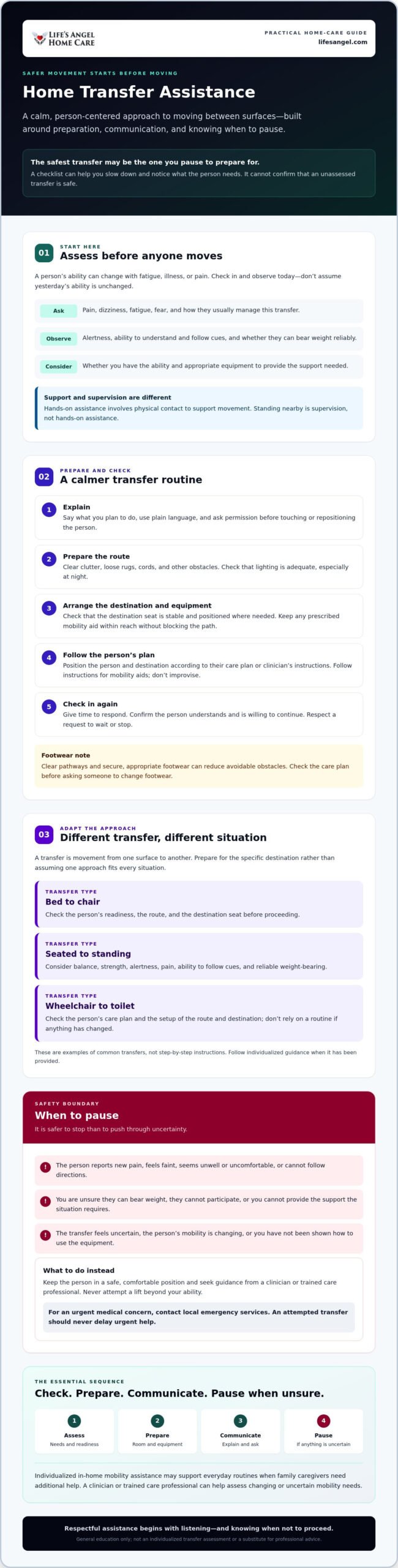
Practical Checklist for Safer Home Transfer Assistance
A brief pause before each move gives you a chance to notice changes and decide whether the plan still fits. Use this checklist as a decision aid, not as proof that a transfer is safe. The person’s condition, abilities, and surroundings can vary from day to day.
What should a caregiver check before each transfer?
Before starting, confirm the person feels ready and hasn’t developed new symptoms that call for a pause. Ask permission, explain the next step, and give them time to respond. Then check the route, destination, footwear, and any prescribed mobility equipment against the person’s care instructions.
- Readiness: Are they alert, comfortable, and willing to continue?
- Space: Is the route clear, and is the destination stable and accessible?
- Equipment: Is any prescribed aid available and being used as instructed?
- Your capacity: Can you provide the planned assistance without straining or losing your balance?
The safest plan is the one matched to the person’s current abilities. If the person needs more support than you can provide, or you’re unsure how to help, don’t try to make the transfer work by improvising.
How should you respond when a transfer does not feel safe?
Pause. Help the person remain as comfortable as possible without attempting a risky lift, then consider what has changed. If the concern continues or you’re uncertain about the right approach, ask a clinician or trained care professional to assess the situation and demonstrate an appropriate method. Seek guidance before using unfamiliar equipment or trying a different technique.
If there’s an immediate emergency, contact local emergency services. Routine in-home mobility assistance isn’t emergency response, and seeking home-care support should never delay urgent medical help.
Transfer concerns may be part of a broader need for help with everyday activities. Learn more about fall prevention and mobility support at home as you consider what support could fit your family’s routine. If you’re looking for help with routine mobility, contact Life’s Angel Home Care to discuss mobility assistance.
When in-home mobility assistance can support safer daily routines
When routine movement takes more effort or feels uncertain, family caregivers don’t have to work out every support need alone. Planned in-home mobility assistance may help with everyday movement as part of a person’s routine, while keeping their preferences and abilities at the center. It isn’t a substitute for clinical assessment when someone’s mobility changes or a transfer needs specific instruction.
Life’s Angel Home Care provides in-home mobility assistance for seniors and adults with disabilities in Durham, Chapel Hill, and Raleigh. Ask the agency about current service coverage and availability. Home-care assistance is not emergency transport or 24/7 live-in skilled nursing care. For an urgent medical concern, contact local emergency services.
What can families discuss when arranging mobility help?
A useful conversation can start with the person’s usual movement and the transfers that feel difficult or uncertain. Share any existing recommendations from a clinician, what the person can generally manage, and where family caregivers may need support. Explain their routines, comfort, communication preferences, and what helps them feel respected and involved.
You can also ask whether the agency provides the routine mobility assistance you’re seeking, what scheduling options may be available, and whether the home is within its current service area. Clear questions help everyone understand what support may fit without assuming a particular arrangement or outcome.
How can families take a gentle next step?
Start with the person’s goals for daily life. Perhaps they want to feel more comfortable moving between rooms or would appreciate support with routine transfers. Include them in the conversation wherever possible, and share what matters to them, not only what feels difficult. Their voice and dignity should guide any plan.
If you’re considering mobility transfer assistance at home, a conversation with a provider can help you explore whether routine support may be appropriate. You can discuss broader daily needs and confirm the services, scheduling, and coverage available. You don’t need to have every answer before asking a question.
Talk with Life’s Angel Home Care about in-home support and share what would help your loved one feel more comfortable and supported in their daily routine.
Make the Next Transfer a More Thoughtful One
Safer transfers start with a pause: consider how your loved one is feeling, prepare the space, explain what you plan to do, and check that the support needed is within your ability. Bed, chair, and toilet transfers each have different demands, so don’t rely on one approach for every situation. If someone’s mobility changes or a move feels uncertain, seek guidance from a clinician or trained care professional rather than improvising.
Providing mobility transfer assistance at home can feel like a lot to manage, especially when you’re balancing safety with your loved one’s comfort and dignity. You don’t have to decide alone what routine support may fit. Life’s Angel Home Care lists mobility assistance among its services, and its care team includes registered nurses, nursing assistants, and care aides. Ask the agency about current services and availability that may suit your needs.
Talk with Life’s Angel Home Care about in-home support and share what would help your loved one feel more comfortable in daily life. A calm conversation can be a reassuring first step toward finding support that respects their needs and preferences.
Frequently Asked Questions
What is mobility transfer assistance at home?
Mobility transfer assistance at home is support for moving between surfaces, such as a bed, chair, wheelchair, or toilet. Depending on a person’s abilities, help may involve hands-on support or supervision nearby. The appropriate level can vary with balance, strength, alertness, pain, and ability to follow cues. If abilities have changed or you’re unsure what support is appropriate, ask a clinician or trained care professional for individualized guidance.
How do you help someone transfer from a bed to a chair safely?
There isn’t one safe method for every person. Before attempting a bed-to-chair transfer, explain what you plan to do, ask permission, and check that the route and destination are clear and stable. Follow clinician-provided instructions and use prescribed equipment as directed. If you haven’t been shown an appropriate approach, or the person’s ability is uncertain, pause and ask a qualified professional to assess and demonstrate the transfer.
Can one person help someone transfer at home?
Sometimes, but it depends on the person’s current abilities, the transfer, available equipment, and the helper’s capacity. Don’t assume one helper is enough just because a transfer worked that way before. If the person can’t reliably participate, needs more support than you can provide, or you’re unsure how to assist without straining, stop and seek professional guidance. A clinician or trained care professional can help determine an appropriate plan for that individual.
What equipment can help with transfers at home?
Depending on the person and situation, mobility aids may include a walker or wheelchair, while some transfers may involve a transfer board or gait belt. Equipment isn’t automatically suitable just because it’s available. Confirm that it matches the person’s needs and the transfer, and follow the manufacturer’s directions and any clinician instructions. Ask a qualified professional to demonstrate unfamiliar equipment or advise whether a specialized aid needs fitting or training.
What should you do if someone starts falling during a transfer?
If someone begins to fall, don’t try to catch or lift them in a way that could injure either of you. Follow any specific fall-response instructions you’ve been given and call local emergency services if there’s an immediate emergency, serious injury, or urgent medical concern. If they’re on the floor, avoid moving them if an injury may have occurred unless they’re in immediate danger. Follow emergency dispatcher guidance.
When should a caregiver stop a transfer attempt?
Stop if the person reports new pain, feels faint, can’t follow directions, or seems less able to participate than expected. Pause as well if the route, equipment, or available support doesn’t feel adequate, or if you would need to lift beyond your ability. Keep the person as comfortable as possible and seek advice from a clinician or trained care professional. For an urgent medical concern, contact local emergency services.
Can in-home caregivers help with mobility transfers?
In-home caregivers may provide routine mobility assistance, depending on the service offered, the person’s needs, and the caregiver’s training. Life’s Angel Home Care lists mobility assistance among its services for seniors and adults with disabilities in Durham, Chapel Hill, and Raleigh. Ask the agency directly about current coverage, scheduling, and the type of assistance available. In-home care isn’t emergency response or a substitute for individualized clinical assessment when needed.