

The hourly rate is only one part of making home care affordable. Finding affordable hourly home care in Chapel Hill starts with matching the schedule and type of assistance to a person’s daily needs, so families can plan for meaningful support rather than focusing on a number alone.
It’s understandable to want a clear budget while making sure someone you love feels safe, respected, and comfortable at home. Costs depend on the schedule, tasks, and level of assistance needed. Life’s Angel Home Care provides a quote based on the requested support.
This article explains how to assess hourly home care costs in Chapel Hill, identify relevant everyday support, and decide whether home care fits your family’s needs. Use these practical steps to weigh care needs, household routines, and affordability with greater peace of mind.
Key Takeaways
- Estimate a care budget by mapping the hours of help needed and the tasks those hours would cover.
- Consider whether support at home fits the person’s routines and needs better than a move to assisted living.
- Identify where companionship, personal care, or mobility assistance could make daily life safer and more comfortable.
- Household help such as meal preparation, errands, and light housekeeping can be part of an in-home care plan.
- Assess a provider by how clearly its services align with the person’s needs and preferred routine.
How much does home care cost in Chapel Hill, NC?
These market figures offer a budgeting reference. The schedule and type of help needed shape an individual care plan.
Chapel Hill Rate Comparisons
These figures are market comparisons, not a quote from a specific provider. A provider’s price depends on the schedule, tasks, and support needs. Life’s Angel Home Care provides a quote based on the requested care.
Medicare and Medicaid Coverage
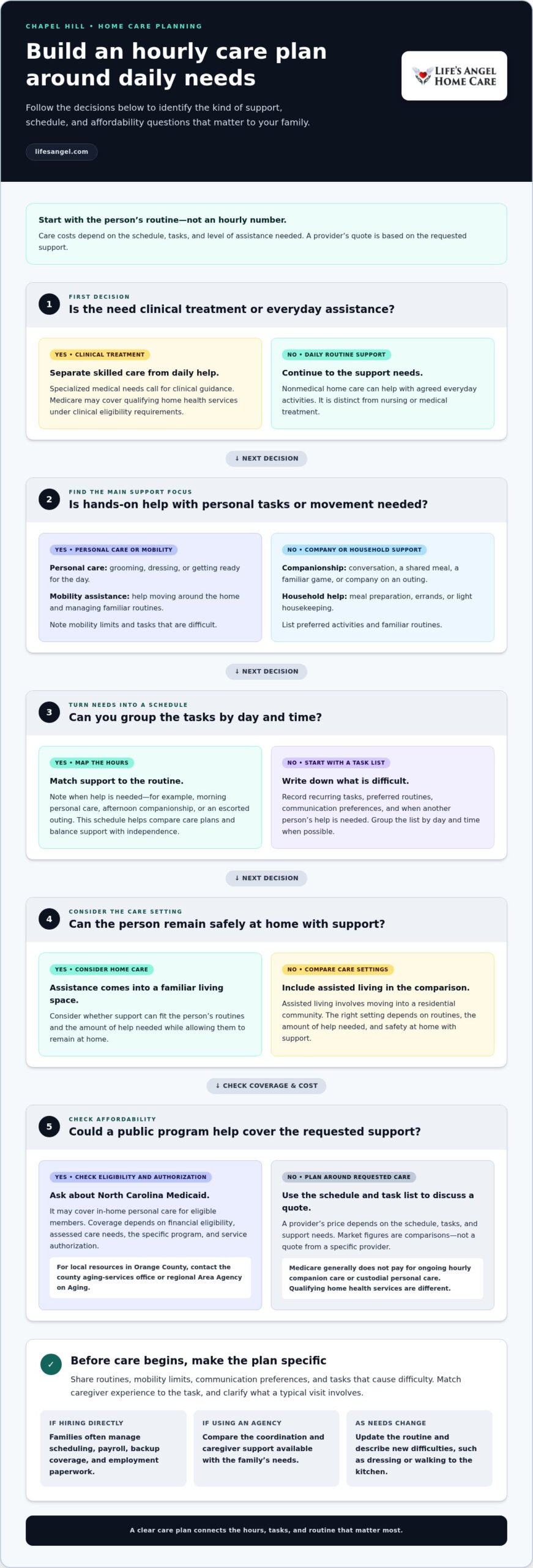
North Carolina Medicaid may cover in-home personal care for eligible members, depending on financial eligibility and assessed care needs. Ask about the specific Medicaid program and service authorization involved, since coverage depends on both eligibility and the type of support requested.
Medicare generally doesn’t pay for ongoing hourly companion care or custodial personal care. It may cover qualifying home health services under clinical eligibility requirements, but that differs from regular help with conversation, errands, or daily routines.
Companion care focuses on social connection and practical support, rather than nursing or medical treatment. A companion might share a meal, talk, play a familiar card game, or accompany someone to a community activity. These visits can help maintain independence while giving relatives time for work or other responsibilities.
Companionship can also make outings feel more manageable. A caregiver might accompany an older adult to a local appointment or community activity, help with getting ready, and provide company during the outing. Families can identify preferred activities and familiar routines when planning personalized support.
Personal care and mobility assistance address different needs. Help with everyday personal tasks can support comfort and dignity, while assistance with movement can help someone manage familiar routines at home. These nonmedical services are distinct from skilled nursing, which involves clinical care.
To estimate the hours needed, write down tasks that require another person’s help, such as afternoon companionship, morning personal care, or an escorted outing. Group the needs by day and time. This schedule gives families a practical basis for comparing care plans and balancing support with independence.
Can your in-home caregivers help with specific health issues?
Home caregivers can assist with everyday routines affected by health needs, but nonmedical support differs from nursing treatment. Someone with limited mobility may need help moving around the home, while a person with memory changes may benefit from familiar routines and steady companionship.
For seniors with limited income, North Carolina Medicaid’s home- and community-based care options are worth exploring. Eligibility depends on the program’s financial rules and an assessment of care needs. Distinguish help with daily activities from clinical treatment when considering support.
In Orange County, start with the county’s aging-services office or the regional Area Agency on Aging. Ask about local caregiver resources, public assistance options, and ways to locate lower-cost support. These organizations can help identify relevant programs and explain the next steps.
Home Care, Assisted Living, and Private Caregivers
Home care brings assistance into a familiar living space, while assisted living involves moving into a residential community. The right setting depends on daily routines, the amount of help needed, and whether the person can remain safely at home with support.
Privately hiring a caregiver and arranging care through an agency also involve different responsibilities. Families who hire directly often manage scheduling, payroll, backup coverage, and employment paperwork themselves. Compare those duties with the coordination and caregiver support available through an agency.
Qualifications, Skills, and Matching
Match caregiver experience to the task. Mobility assistance calls for comfort supporting movement, while patience and clear communication matter when someone needs reminders or repeated explanations. A skills assessment can focus on safe routines, communication, and respectful assistance.
Care teams can include board-certified registered nurses, nursing assistants, and care aides with BLS and CPR/AED certification. Credentials indicate relevant training, but the care plan should still distinguish daily assistance from medical services that require clinical judgment.
Before support begins, write down the person’s routines, mobility limits, communication preferences, and tasks that cause difficulty. Use that list to guide caregiver matching and explain what a typical visit involves. For help with movement around the home, mobility assistance can address a specific day-to-day need.
Supporting Caregivers and the Care Relationship
Family caregivers also need a workable routine. List recurring tasks, such as meal setup, appointment preparation, or help moving between rooms, then identify which tasks another caregiver can handle. Clear boundaries can reduce confusion and support a respectful relationship.
Specialized medical needs call for clinical guidance, while home caregivers can assist with agreed daily activities. If needs change, update the routine and describe the change clearly, such as new difficulty getting dressed or walking to the kitchen. This helps keep assistance focused on comfort and independence.
What kinds of day-to-day home care services do you offer?
Day-to-day support can focus on tasks that make a senior’s routine harder. Personal care may include help with grooming, dressing, or getting ready for the day, while household support addresses practical needs at home. A personalized plan starts with the person’s preferences, abilities, and priorities.
Activities of daily living are a useful way to describe routine personal tasks. Someone may need assistance choosing clothes, while another person may benefit from a calm, steady presence during a morning routine. Personal care should respect privacy and let the person manage each step they can do independently.
Household support can make everyday life more manageable. Meal preparation, light housekeeping, and errands address different needs: preparing a familiar lunch, tidying a commonly used room, or picking up household essentials. Be specific. “Help with lunch” is clearer than “help around the house” and gives a care plan a practical focus.
Care can also include companionship, appointment accompaniment, or mobility assistance, depending on a person’s needs. A senior who feels uneasy walking through a busy entrance, for instance, may value steady support on the way to an appointment. Emotional comfort and practical help can overlap, so plans should account for both.
Start a personalized home care plan with a simple inventory. Write down difficult routines, tasks the person prefers to handle alone, and the times support would help most. Then group tasks by visit, such as morning personal care, meal preparation before lunch, or help getting ready for an outing.
A schedule also helps families discuss affordability without assuming a fixed rate. The individual price depends on the requested schedule, tasks, and level of assistance. Life’s Angel Home Care provides a quote based on those needs. Describe care priorities and the visit pattern, rather than asking for a plan based only on a broad label such as “senior care.”
Good support is not about having a longer task list. It is care that fits a person’s daily life. A caregiver can follow familiar preferences, such as setting out clothing in a chosen order or preparing a preferred meal. These details help make care consistent and respectful, while leaving room to adjust the plan as needs change.
Before arranging support, note which tasks need hands-on help and which mainly call for time or company. This distinction helps separate personal care from household assistance and makes the routine easier to understand. A clear plan can support independence while easing the practical and emotional work carried by family members.
Home care costs and pricing assessment
Hourly care costs depend on the schedule and help needed during each visit. To assess support needs, describe the tasks, timing, and person’s mobility and comfort requirements.
Hourly Rates and Pricing
Compare pricing beyond the hourly figure: clarify which tasks the schedule covers and how often support is needed. A plan focused on morning personal routines, for example, differs from visits for companionship or household help.
Write down the requested tasks and when they matter most. This makes it easier to compare care plans on the same basis, rather than judging a rate without understanding what the hours include.
To estimate the support needed, map a typical week. Note when help is needed with getting ready, moving around the home, preparing meals, or attending appointments. Separate tasks that need hands-on assistance from those where company or a reminder would help. This gives you a clearer schedule to discuss.
Consider whether needs vary during the week. One family may need support during work hours, while another prioritizes appointments or daily routines. The community can also shape practical considerations: someone living in Chapel Hill may have different travel needs from someone in Durham or Raleigh.
Pricing Inquiries and Assessment
A pricing inquiry is most useful when it includes the person’s routine, requested tasks, and preferred schedule. The individual price depends on those needs. Life’s Angel Home Care provides a quote based on the requested support. Share examples, such as help moving between rooms or getting ready for an outing.
During an assessment, describe what the person can do independently and where help would make daily life easier. This distinction helps match the plan to actual needs, without adding unnecessary tasks or overlooking important support.
Before discussing a plan, prepare a short list:
- Daily tasks that require assistance, such as dressing or moving safely at home.
- Household tasks that would help maintain comfort, such as meal preparation.
- Preferred visit times and any routines that should remain consistent.
- Changes in mobility or daily needs that affect the type of support requested.
Knowing these details helps families ask focused questions and understand what a proposed schedule covers. If the person’s needs change, revisit the task list and schedule so the plan reflects the new routine. A clear assessment connects the requested hours with practical support while keeping the person’s preferences at the center.
Chapel Hill home care providers
Choosing home care in Chapel Hill means weighing the support arrangement, not just the hourly rate. Families can compare agency-arranged care, an independent caregiver, or assisted living based on routines, safety needs, and the help their loved one needs at home.
These local market figures provide a reference point, not a guaranteed rate for an independent caregiver or a specific provider.
Caregiver registries and directories can help families find independent caregivers, but they may not provide the same employment or care coordination as an agency. Families may take on scheduling, payment, and finding backup support. Compare those responsibilities with the coordination offered through an agency care plan.
The rate alone won’t show whether an arrangement fits. Consider the person’s daily needs, preferred routines, and how much coordination relatives can manage. Someone needing occasional companionship, for example, has different support needs from someone who needs help moving safely through the home and preparing for appointments.
Assisted living is a residential option, while home care supports routines in a person’s own home. A familiar setting may matter to someone who values established habits and personal space. The key question is whether the person can receive the needed assistance at home while maintaining comfort and dignity.
Use a short comparison list to make the choice clearer:
- Write down the daily tasks that need support, such as dressing or moving between rooms.
- Describe the preferred schedule and routines, including appointment days.
- Consider who will coordinate visits, communicate changes, and arrange backup.
- Compare the proposed support with the person’s comfort, privacy, and independence.
For a caring relationship, explain preferences in practical terms. “Please allow time to choose clothes” gives a caregiver clearer direction than “be patient.” A note about favorite activities or communication style can also help visits feel familiar and respectful.
Families seeking affordable hourly home care in Chapel Hill can use the local rate range as a starting reference, then consider the schedule and tasks involved. A thoughtful plan can help loved ones remain at home with dignity while making the family’s role more manageable. If in-home support feels like the right direction, explore home care support as a next step.
Life’s Angel Home Care: Personal Care
Life’s Angel Home Care supports everyday routines when personal tasks, mobility, or household responsibilities become harder to manage alone. Personal care can help with daily needs, while mobility assistance supports movement around the home. Errand assistance and light housekeeping can ease practical demands for individuals and families.
This support may suit someone who wants to remain at home but needs help with specific parts of the day. A family might identify getting ready, moving safely between rooms, or managing essential errands as priorities. Sharing those needs helps shape support around familiar routines and personal preferences.
If this support would make daily life easier for someone you love, contact Life’s Angel Home Care to discuss the next step.
Start with a care plan that feels workable
The next step can be a calm conversation with your loved one about what would make life at home easier. Ask which routines they want to preserve, where they welcome help, and which choices should remain theirs. Those preferences can guide a care plan that respects dignity and helps family members share responsibilities.
As you consider affordable hourly home care in Chapel Hill, focus on the support that would make the greatest difference in everyday life. A short list of priorities can turn a difficult decision into a practical starting point, without asking your family to solve everything at once.
If you’re ready to discuss those priorities, contact Life’s Angel Home Care. A thoughtful first conversation can help you consider a path forward with care and confidence.
Frequently Asked Questions
NEED CARE TODAY?
If you need support today, first write down the specific task and timing, such as help getting dressed, preparing a meal, or attending an appointment. Note mobility concerns and the person’s preferred routine so the care need is clear. For urgent medical symptoms or immediate danger, seek emergency assistance rather than relying on nonmedical home care.
What steps do you take to ensure my senior loved one is safe at home?
Start with a practical home-safety review focused on your loved one’s daily movements. Notice where support may be needed, such as transferring from bed, navigating a hallway, or reaching a frequently used room. Keep mobility aids accessible, clear everyday paths, and share relevant routine details with caregivers. Life’s Angel Home Care’s nursing staff includes North Carolina Board-certified registered nurses, and its nursing assistants and care aides hold BLS and CPR/AED accreditation.
Why choose home care instead of managing things on your own?
Home care can share recurring responsibilities while relatives remain involved in decisions and family life. Support with an appointment, an errand, or a daily personal task can make a demanding week easier to organize. It also helps families identify which responsibilities they can manage and where assistance would help preserve a loved one’s familiar routines and dignity.
What is the average hourly rate for nonmedical home care in Chapel Hill, NC?
For families comparing affordable hourly home care in Chapel Hill, market rates are a budgeting reference, not a quote for a particular care plan. The amount depends on the schedule, requested tasks, and level of assistance. Distinguish nonmedical help, such as companionship or daily routines, from clinical home health services when comparing costs, since they address different needs and may involve different arrangements.
What are the minimum shift lengths and hourly rates charged by Chapel Hill home care providers?
Minimum shift lengths and provider charges depend on the care arrangement and requested schedule. A brief visit for a specific daily task differs from support scheduled around several routines. To assess the practical fit, outline the tasks, preferred visit times, and how often help is needed. Compare plans with the same schedule and scope, rather than treating the hourly rate alone as the full picture.
How do private-pay home care rates compare with home health agencies and independent caregivers in Chapel Hill?
Private-pay home care, skilled home health, and independent caregiving are different arrangements, so compare the services before comparing charges. Home care may cover personal routines or companionship, while skilled home health addresses clinical needs. Hiring independently can also leave families responsible for schedules and backup. A useful comparison records what each arrangement includes and who coordinates the care.
What questions should families ask when comparing home care agencies, licensing, insurance, and background checks?
Compare each agency’s caregiver screening process, insurance and licensing information, staff qualifications, and care responsibilities. Ask how caregivers are matched to daily needs and how families receive updates about changes. Life’s Angel Home Care employs North Carolina Board-certified registered nurses, nursing assistants, and care aides with BLS and CPR/AED accreditation. Consider these credentials alongside the agency’s services and approach to care.