

What would make a caregiver feel right for your mom, and what will home care cost? Finding a compassionate caregiver for your mom in Chapel Hill starts with understanding the help she needs each day and how often she needs it. Costs depend on the schedule and type of assistance, while a good match should respect her routines, comfort, and dignity.
It’s natural to want reassurance about a caregiver’s qualifications and whether their approach will suit your mom. This article explains the kinds of daily assistance available, what affects home care costs, which nearby communities may be served, and how private-duty caregiver matching works in Chapel Hill. You’ll also learn what caregiver credentials can tell you, so you can consider support with greater clarity and peace of mind.
Key Takeaways
- See how a home-care schedule and the kind of help needed shape the overall cost, including support with errands and appointments.
- Learn what to consider when arranging in-home care in Chapel Hill and nearby communities, so support can fit your mom’s routines.
- Explore how personal care and mobility assistance can help with everyday activities while honoring your mom’s comfort and dignity.
- Understand how private-duty caregiver matching can take your family’s needs and preferences into account when finding a supportive fit.
What Is the Cost of Home Care Services in Chapel Hill?
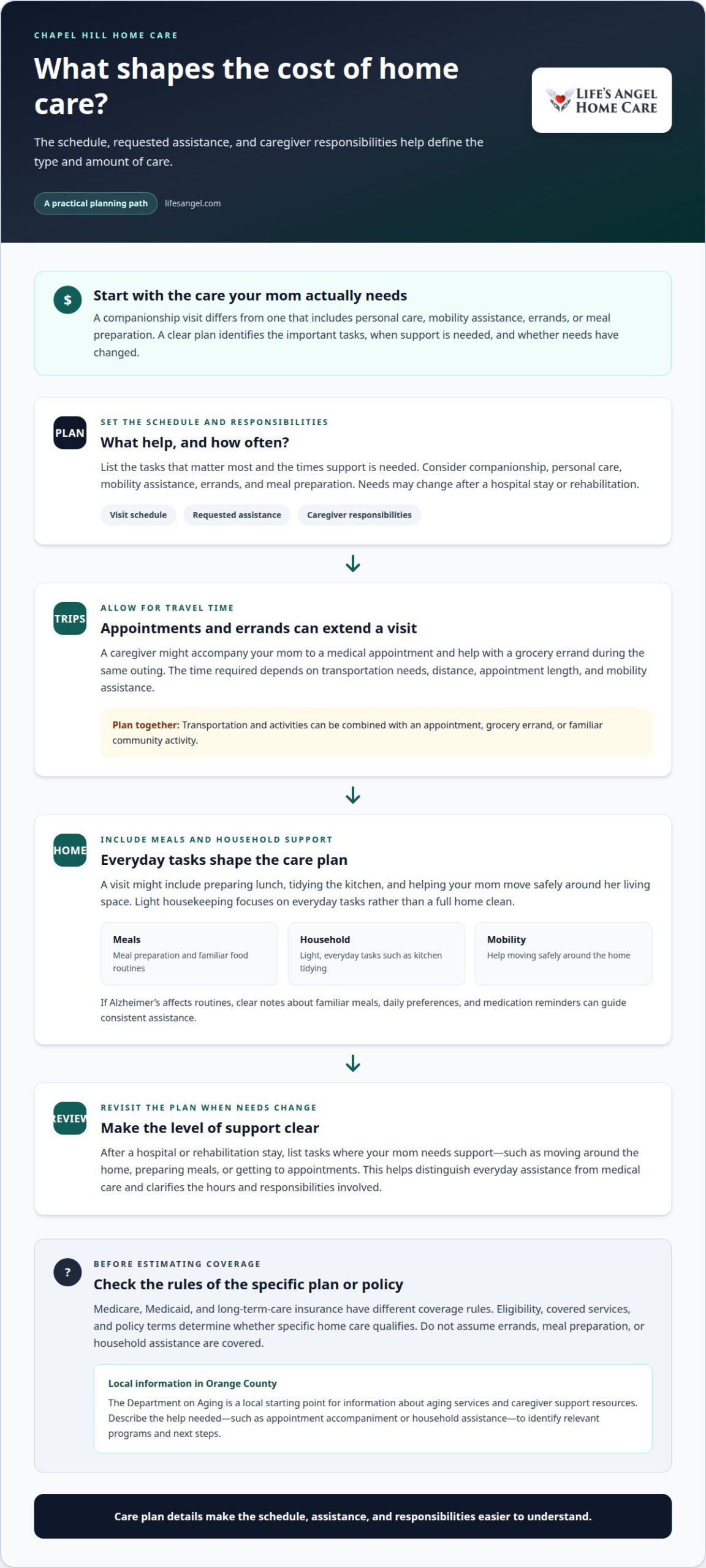
Home care costs in Chapel Hill depend on the schedule, requested assistance, and caregiver responsibilities. A visit focused on companionship differs from one that includes personal care, mobility assistance, errands, or meal preparation. A useful care plan identifies the tasks that matter most, when support is needed, and whether needs have changed after a hospital stay. Those details help define the type and amount of care.
Errands and medical appointments can add travel time to a care schedule. For example, a caregiver might accompany your mom to an appointment and help with a grocery errand during the same outing. Appointment accompaniment and errand assistance can make it easier to coordinate trips. Transportation needs, distance, appointment length, and mobility assistance all affect the time required.
Meals and household support also influence the care plan. A visit might include preparing lunch, tidying the kitchen, and helping your mom move safely around her living space. Light housekeeping can focus on everyday tasks rather than a full home clean. If Alzheimer’s affects routines, clear notes about familiar meals, daily preferences, and medication reminders can guide consistent assistance.
Medicare, Medicaid, and long-term-care insurance have different coverage rules. Eligibility, covered services, and policy terms determine whether specific home care qualifies. Don’t assume that errands, meal preparation, or household assistance are covered; the applicable plan or policy determines benefits.
In Orange County, the Department on Aging is a local starting point for information about aging services and caregiver support resources. Families can describe the help they need, such as appointment accompaniment or household assistance, to identify relevant programs and next steps.
After a hospital or rehabilitation stay, your mom’s care schedule may need to change as she returns home. List the tasks where she needs support, such as moving around the home, preparing meals, or getting to appointments. This helps distinguish everyday assistance from medical care and gives your family a clearer picture of the hours and responsibilities involved.
Transportation and activities can be planned together. A caregiver might accompany your mom to an appointment, run a grocery errand with her, or support a familiar community activity. Share her mobility needs, preferred routines, and any Alzheimer’s-related changes when planning care. These details help shape practical support around her daily life.
In-home senior care in Chapel Hill and nearby communities
Home care can help a senior remain at home while easing family responsibilities. The right arrangement depends on daily routines, changing needs, and where support is most useful.
Care Plans and Caregiver Matching
A personalized plan should spell out the tasks that matter at home, such as laundry, meal routines, or help moving safely. It should also reflect your mother’s preferences, communication style, and familiar habits. In Chapel Hill and nearby communities, travel needs can affect how visits fit into the day. Revisit the plan when her abilities or family support change.
Choosing and Starting Care
During an initial conversation, agencies may ask about mobility, personal routines, preferred activities, and the schedule your family needs. They may also ask what qualities would help a caregiver connect with your mother. A useful matching discussion covers experience with the requested tasks and how updates will be shared. Starting time depends on the care plan, schedule, and caregiver match; the process generally moves from an initial discussion to planning and arranging care.
When choosing a home care agency in Chapel Hill, look for one that listens to your mother and family, explains how care is arranged, and communicates clearly. Compassion shows in respectful attention to her preferences and dependable follow-through.
Signs that care quality needs attention can include missed visits, unfinished tasks, repeated communication gaps, or changes in your mother’s comfort around a caregiver. Note specific concerns and raise them with the agency so the care plan and communication can be addressed.
Schedules can change as family availability and daily needs shift. Susan used agency care for her mother around the clock for a week, then had a private caregiver for a few hours weekly. These examples show how different schedules can suit different family circumstances.
Palliative, hospice, and end-of-life care involve needs beyond everyday household assistance. If your family is arranging home care alongside clinical or hospice support, clarify which daily tasks the caregiver will handle.
For a gentle next step, explore in-home support options that can fit your family’s routines.
Personal care and assistance with daily activities
Daily routines can become harder when your mother needs help with personal tasks or moving around her home. A thoughtful care plan identifies the assistance she wants, respects her preferences, and keeps her involved in everyday choices. She may, for example, want help getting ready before breakfast and prefer quiet time afterward. These details make personalized care more comfortable and dignified.
Personal care can support routines such as dressing and grooming, while mobility assistance can help your mother move through familiar spaces. A caregiver can learn which chair she prefers, where she keeps everyday items, and how she likes to start the day. Clear instructions help care feel familiar rather than rushed. The plan should describe the support she needs while preserving her independence.
In-home assistance can also cover practical tasks that make daily life easier. A caregiver might help your mother keep items within reach, prepare a meal, or accompany her on an errand. Companionship can be part of the same visit, through conversation, a shared activity, or time spent on a hobby she enjoys. Each task should reflect her priorities and the care plan.
Family observations help make the plan more complete. Note which tasks take longer, where mobility is challenging, and what your mother prefers to do herself. Share useful reminders about routines, such as setting out clothing the night before or keeping a favorite book nearby. These details help a caregiver understand what support looks like in your home.
Needs can shift after an illness, a change in mobility, or a new daily routine. Update the care plan when tasks change, and explain what should stay consistent. A conversation with your mother can clarify whether she wants more help, a different routine, or greater privacy. Regular communication keeps assistance aligned with her comfort and choices.
Private-duty caregiver matching in Chapel Hill
A strong caregiver match considers more than a calendar and a task list. Your mother’s routines, communication preferences, and support needs all matter.
Matching With a Private Caregiver
Start by describing the help your mother needs and what helps her feel at ease. For example, note whether she needs dementia-aware companionship, mobility support, or transportation to familiar activities. Include her preferred routines, communication style, and any tasks that require extra patience. These details give the agency a clearer picture of caregiver fit than availability alone.
Independent Caregivers and Agencies
An independent caregiver is generally engaged directly by a family, which means the family coordinates the relationship and schedule. An agency typically arranges care through its own process, helping organize caregiver matching and communication. The practical difference is who manages coordination when needs shift. Consider whether your family wants to handle scheduling directly or prefers an agency to be part of that process.
The difference between an independent caregiver and a home care agency in Chapel Hill is how care is organized. With an independent arrangement, the family coordinates care; an agency organizes support through its service process. The right fit depends on how much scheduling and communication support your family needs.
For dementia-related needs, describe specific moments that may require patience, such as confusion during a familiar morning routine. For transportation, explain whether your mother needs help getting ready or staying comfortable during an outing. Clear examples make planning more practical and help the caregiver understand what support looks like at home.
Ask how the caregiver’s experience fits your mother’s needs and how updates will be shared. If hospice or other specialized support is involved, clarify which daily companionship or household tasks the caregiver will handle. This keeps responsibilities clear and helps your family coordinate different kinds of support.
To discuss a care arrangement shaped around your family’s needs, connect about caregiver support.
Life’s Angel Home Care
Life’s Angel Home Care can support your mother with everyday routines at home. Personal care, mobility assistance, errands, and light housekeeping can ease practical tasks while respecting her comfort and independence. This support can help when family members need assistance with daily care or coordinating errands.
Consider which routines are hardest to manage, such as getting around the home, running errands, or keeping up with light household tasks. Sharing these priorities helps shape support around your mother’s needs and familiar preferences, without adding unnecessary changes to her day.
To discuss in-home support for your family in Chapel Hill, contact Life’s Angel Home Care.
Take the Next Step Toward Support at Home
Choosing a compassionate caregiver for your mom in Chapel Hill is a personal decision. Start with a calm conversation about what would make daily life easier. Think about the routines your mother values, when she could use an extra hand, and what helps her feel respected and comfortable. Sharing these priorities gives a care discussion a meaningful starting point.
You don’t need every detail settled before reaching out. A thoughtful discussion can help your family clarify what support fits your mother’s needs and how care can work alongside family routines. It can also help you feel prepared to choose an arrangement that honors her independence and leaves you room to focus on being family.
When you’re ready to talk through possible support, contact Life’s Angel Home Care. One conversation can help you take a steady, caring step forward.
Frequently Asked Questions
Are Your Chapel Hill Caregivers Certified and Background Checked?
Life’s Angel Home Care staff includes North Carolina board-certified registered nurses, nursing assistants, and care aides. Medical staff hold BLS and CPR/AED accreditation through the American Heart Association. These credentials describe professional qualifications and training; they are separate from background screening. Consider credentials and screening as distinct topics when assessing caregiver qualifications.
Can I Customize a Care Plan for My Loved One in Chapel Hill?
Care can be organized around your loved one’s routines and the tasks that matter most. A plan might prioritize getting dressed before a favorite morning activity, then set aside time for companionship. You can also identify tasks your loved one wants to handle independently. Clear priorities keep support relevant, while changes in mobility or daily habits may signal that it is time to update the arrangement.
What types of in-home caregiving services are available for seniors in Chapel Hill, NC?
In-home support can include personal care, mobility assistance, companionship, meal preparation, light housekeeping, errands, and accompaniment to appointments. Life’s Angel Home Care provides these daily-living services for seniors and adults with disabilities in Durham, Chapel Hill, and Raleigh. For example, care might combine help getting ready with meal preparation, or include accompaniment to an appointment. The right mix depends on the person’s routines and where assistance is useful.
What is the hourly cost of in-home senior care in Chapel Hill, NC?
The hourly cost depends on the requested schedule and the assistance involved, and pricing is provided after a quote request. Factors include how long visits need to last, whether support involves personal care or mobility assistance, and whether appointment accompaniment or transportation is part of the arrangement. A schedule centered on companionship may involve different tasks than one supporting several daily routines.
How do home care agencies find and vet a compassionate caregiver for my mother in Chapel Hill?
Matching starts with understanding your mother’s needs, preferences, and daily routines. Share how she likes to communicate, which tasks require assistance, and whether she is comfortable with transportation or outings. This information helps shape a care plan that fits her. For example, a preference for quiet conversation may matter as much as experience with a particular daily task.
Do Chapel Hill caregiver agencies provide background checks, training, and supervision?
Background screening, training, and supervision are distinct parts of caregiver practices. Life’s Angel Home Care staff includes registered nurses, nursing assistants, and care aides, with medical staff holding BLS and CPR/AED accreditation. These qualifications describe training and professional background, but do not by themselves establish screening procedures or supervision arrangements. Separating these topics helps families understand what each credential or process means.