

A prescription pickup is only as dependable as the handoff that follows. When driving, walking, or keeping up with errands becomes harder, a pharmacy trip can weigh on an older adult and the family coordinating it. Errand and prescription pickup for seniors can help keep essentials within reach, but clear instructions matter just as much as getting to the pharmacy.
It’s understandable to want help that makes errands easier without disrupting familiar routines or taking away your loved one’s choices. This guide explains how to arrange prescription and everyday errand support, compares pharmacy delivery, family help, and in-home assistance, and offers practical steps for a safe, clear handoff. The aim is to keep the older adult’s preferences and dignity at the center, whether help is occasional or part of a recurring routine.
Key Takeaways
- Errand and prescription pickup for seniors can be planned around an older adult’s routines, priorities, and preferred level of support.
- Clear instructions, a plan for completing the errand, and confirmation of the handoff can help prevent avoidable confusion.
- Family help, pharmacy delivery, and caregiver assistance offer different levels of personal accompaniment and flexibility. The right fit depends on the senior’s needs and the specific errand.
- A shared plan for timing, errand details, and family updates can make recurring support easier to coordinate in Durham, Chapel Hill, and Raleigh.
- Errand assistance can complement companionship and other in-home support while helping older adults manage everyday needs with dignity.
Errand and Prescription Pickup for Seniors: When Extra Help Makes a Difference
A pharmacy trip can become harder to manage when an older adult drives less often, has difficulty getting around, or would rather not go out alone. Family members may be willing to help, but work and other responsibilities can make regular pickups hard to fit into the week. In these situations, errand and prescription pickup for seniors can provide practical support without taking over the senior’s decisions or routines.
Errand assistance means help with everyday tasks a person wants or needs to complete, such as picking up a prescription or stopping for household essentials. This support can also include companionship or mobility assistance, so the older adult can keep familiar routines with help suited to their preferences. Broader elderly care can include different kinds of daily support, but running an errand is not the same as providing clinical care.
Prescription pickup is the practical task of collecting a prescription. Clinical medication advice is guidance about how or whether to take it. Keeping that distinction clear helps everyone understand what the errand involves and where medication questions belong.
Signs pharmacy trips are becoming difficult to manage
There may be no single turning point. A family might notice that a planned pickup gets postponed, a shopping trip is repeatedly moved, or the senior needs more help getting to and from the car. These changes don’t automatically signal a crisis. They may simply mean the current errand routine no longer feels comfortable or manageable.
- Driving feels tiring or is no longer part of the senior’s routine.
- Walking through a store or waiting in line takes more effort than it used to.
- A family member’s schedule makes it difficult to handle regular trips.
Support should reflect what the older adult wants. They may welcome a ride or a helping hand while still choosing which pharmacy to use, what items to buy, and when errands fit into the day.
What errand assistance can mean for a senior
For a planned errand, the senior and family can agree on what needs to be done, share the details, and decide how to confirm the task is complete. A pharmacy pickup might be combined with another routine stop if that suits the person. Clear instructions help prevent guesswork without shifting control away from the senior.
For example, a person may want help collecting a prescription but prefer to choose the pickup day and handle medication questions directly with the pharmacy or their healthcare professional. Errand help covers the practical task, not decisions about treatment, dosage, or whether a medication is appropriate.
Families looking for local support can explore errand services for seniors in Durham as one way to make everyday tasks more manageable. The right arrangement respects the senior’s choices and makes the family’s role more sustainable, whether assistance is occasional or part of a regular routine.
How Senior Prescription Pickup Works: From Clear Instructions to Home Handoff
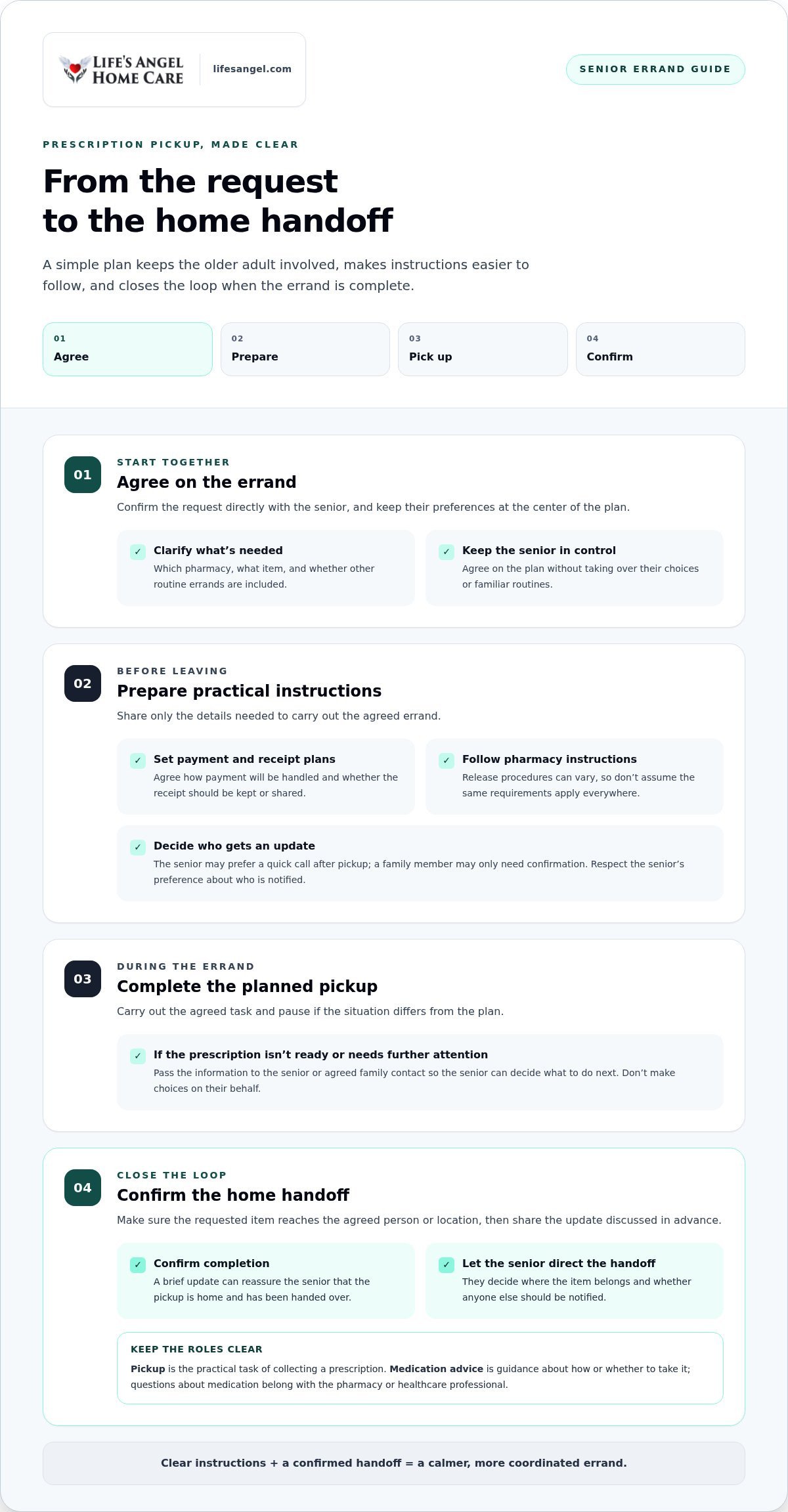
A calm pharmacy errand starts before anyone leaves home. Agreeing on the task, sharing the necessary details, and deciding how to confirm completion can prevent mix-ups and make the handoff reassuring. For families arranging errand and prescription pickup for seniors, a simple plan also helps keep the older adult involved at each step.
What to prepare before a pharmacy pickup
Start by confirming the pickup request directly with the senior. Clarify which pharmacy they mean, what they want collected, and whether there are other errands to include. Agree on how payment should be handled and whether the receipt should be kept or shared. Pharmacy release procedures can vary, so follow the pharmacy’s instructions rather than assuming the same requirements apply everywhere.
Before the errand, decide how updates will reach the senior and, if they wish, a family member. The senior may prefer a quick call after pickup, while a family member may only need confirmation that the errand is complete. Keep the plan simple and share only the details needed to carry it out. If the pharmacy says the prescription isn’t ready or needs further attention, the helper can pass that information along so the senior can decide what to do next.
How to make the home handoff clear
At the end of the errand, confirm that the requested item reached the agreed person or location. A short update such as “The pharmacy pickup is home and has been handed to you” can provide reassurance without sharing unnecessary personal information. The senior should remain part of the handoff, including deciding where the item belongs and whether anyone else should be notified.
- Agree on the errand. Confirm the senior’s request and whether it includes only a pharmacy stop or other routine items.
- Share practical instructions. Note the pharmacy location, the agreed payment approach, any other requested stops, and how the senior wants to receive an update.
- Complete the planned pickup. Follow the pharmacy’s instructions. If something differs from the plan, pause and pass the information to the senior or agreed family contact before making choices on their behalf.
- Confirm the handoff. Let the senior know the errand is complete and make sure the item reaches the agreed person or place. Share a receipt or further update as previously discussed.
That final check closes the loop. It can be especially helpful when family members are coordinating from a distance, but updates should respect the older adult’s preferences about who receives them. Clear communication supports the errand; it doesn’t give a helper authority to make decisions about treatment.
Pickup assistance is not dosage guidance or a substitute for advice from a pharmacist or healthcare professional. If the senior has a question about how to take a medication, or the prescription seems different than expected, leave the decision with them and direct the question to an appropriate professional. Thoughtful errand assistance and in-home support can help families organize practical tasks while keeping the senior’s choices at the center.
Family Help, Delivery, or Caregiver Errands: Which Option Fits Best?
There isn’t one right arrangement for every older adult. The best fit depends on whether the senior wants company or hands-on help, how often errands come up, and what family members can comfortably coordinate. One option may work for an occasional pickup, while another may suit a regular routine or an outing where in-person support would help.
This comparison can clarify the differences. It’s a starting point, not a ranking: the senior’s preferences, mobility, and the details of each errand all matter.
| Support option | Personal accompaniment | In-person help | Routine flexibility | Family coordination |
|---|---|---|---|---|
| Family-run errands | Possible, depending on the family plan | Yes, when a family member accompanies the senior | Depends on family schedules and the senior’s preferences | Family arranges timing, details, and updates |
| Delivery service | Usually not part of a drop-off | Limited to the delivery interaction | Depends on the service’s coverage, timing, and pharmacy process | Someone may need to place the order and coordinate delivery details |
| Caregiver-supported errands | A caregiver can provide in-person support during an outing | Yes, practical help can accompany an errand | Can be planned around the senior’s needs and routine | Errand details can be coordinated with the senior and family |
When family coordination or delivery may be enough
For an occasional pickup, a relative or friend may be able to fit the trip into a familiar routine, especially when the senior doesn’t need someone beside them during the outing. Delivery can work well for a straightforward drop-off when the older adult is comfortable receiving it without in-person accompaniment. Coverage, timing, and pharmacy procedures depend on the service used, so make sure the arrangement fits the specific errand.
These options still require some coordination, such as placing an order, arranging access for a delivery, or agreeing who will follow up. If family schedules are already stretched, decide in advance who is handling each task instead of relying on last-minute arrangements.
When caregiver-supported errands may be a better fit
Caregiver help may suit a senior who benefits from someone’s presence while getting around, wants support with several stops, or appreciates a familiar person accompanying them. Unlike a delivery drop-off, in-person assistance can include practical help during an outing and companionship along the way. It may also fit alongside other daily support at home, rather than treating each errand as a separate task. Families comparing in-home options may find this private duty caregiver guide for Durham families helpful for understanding what broader support can include.
For example, a planned pharmacy stop might fit into a broader outing that includes help with grocery shopping for seniors, if that matches the older adult’s wishes. The senior can still guide the choices, such as what to buy and which stops matter most.
Match the support to the need: choose delivery for a simple drop-off, family help when schedules allow, and caregiver assistance when in-person support or a steadier errand routine matters. A plan for errand and prescription pickup for seniors can change as mobility, preferences, or family availability changes, so it’s reasonable to revisit the arrangement over time.
Plan a Safe, Respectful Errand Routine for Seniors in the Triangle
In Durham, Chapel Hill, and Raleigh, family members may be coordinating errands around different schedules and neighborhoods. A little planning can make support easier to organize without turning the senior’s day into a fixed list of tasks. Start with the older adult’s priorities and leave room for their preferences to change.
Use this checklist to shape a plan that feels helpful rather than imposed:
- Prioritize the errands. Ask which tasks matter most, such as a pharmacy pickup, groceries, or household essentials.
- Choose a comfortable time. Consider the senior’s preferred part of the day and allow flexibility if plans change.
- Separate recurring and one-time needs. Plan a regular errand as part of a routine, while handling an unusual request on its own.
- Write down practical instructions. Include the destination, requested items, and details needed to complete the errand.
- Agree on updates. Decide who should receive a completion message and whether receipts should be kept or shared.
- Protect privacy. Share only information needed to coordinate the errand, and respect the senior’s wishes about what the family is told.
Build a routine around the senior’s preferences
Ask the older adult how they want each task handled, not just what needs doing. They may prefer to choose the store, select items themselves, or keep some errands separate. Grouping suitable stops can reduce repeated planning and travel, but convenience shouldn’t override the senior’s comfort. A brief update after a planned task can keep family informed without creating unnecessary messages or sharing extra personal details.
For instance, a routine might group a pharmacy stop with a household errand on a day the senior already prefers to go out. Another person may find separate outings less tiring. Treat the plan as a guide, not a rule, and revisit it if the older adult’s needs or preferences shift.
Coordinate errands with other everyday support
Errand assistance can complement companionship or mobility support, helping an older adult with practical activities while offering a familiar, attentive presence. It can also sit alongside broader daily help at home when that would make routines more manageable. A pharmacy errand remains a practical task, not a medical assessment or treatment. Questions about medication belong with a pharmacist or healthcare professional.
For families considering a wider mix of support, explore errand assistance and personal care services in Durham to see how everyday help may fit together. The goal is a plan that makes essentials easier to manage while preserving the senior’s choices and sense of control.
How Life’s Angel Home Care Supports Errands for Seniors
Coordinating everyday tasks can take time and energy, especially when a pharmacy trip is difficult for an older adult or family schedules are full. Life’s Angel Home Care provides errand assistance as part of in-home support for seniors and adults with disabilities. Practical help can make errands fit more comfortably into a person’s routine while keeping their preferences central.
For families in the Durham area, including Chapel Hill and Raleigh, errand and prescription pickup for seniors can be part of a broader plan for making daily life easier. A senior may need help with a pharmacy pickup, another routine task, or several errands planned around their comfort. Support should reflect what the person wants, rather than assuming every older adult needs the same kind of help.
Errand assistance within a broader care relationship
Errands don’t always stand alone. An older adult may appreciate mobility assistance getting ready to go out, a companion during an outing, or other daily support at home. Life’s Angel Home Care offers in-home assistance for seniors and adults with disabilities, including practical help alongside companionship and mobility support.
That support has a clear scope: an errand helper can assist with the practical task, but a pharmacy pickup does not include medication management, treatment, or clinical advice. Questions about a prescription or how to take a medication should go to a pharmacist or healthcare professional. This distinction helps families plan useful assistance while keeping health decisions with the appropriate professional and the older adult.
Families can describe what the senior prefers, which errands feel difficult, and whether assistance would be occasional or part of a regular routine. That helps shape support around the person’s day, including familiar timing and the level of help they welcome. Coordinating with family can also clarify which tasks need attention without taking away the senior’s say in their own choices.
A gentle next step for families
If you’re exploring help, start with the everyday details. Which errands are becoming stressful? Does your loved one want someone nearby during an outing, or mainly need help completing a routine task? What timing feels comfortable, and what would they like family members to know afterward? Sharing these preferences gives everyone a thoughtful place to begin.
Planning can start with a conversation about practical needs and support that may fit your loved one’s routine. There’s no need to have every detail figured out first. A calm discussion can help you consider how errand assistance and other in-home support might ease the load while respecting the senior’s dignity. Talk with Life’s Angel Home Care about the errands creating the most stress and the kind of help your family is considering.
Make the Next Errand Easier to Plan
A helpful next step doesn’t need to be a complicated care plan. Start by talking with your loved one about the one or two errands that feel hardest right now and what kind of help they would welcome. That conversation gives your family a clearer place to begin while keeping the senior’s voice at the center.
For families considering support in the Durham area, Life’s Angel Home Care provides errand assistance as part of in-home help. Its team includes registered nurses, nursing assistants, and care aides. Errand and prescription pickup for seniors can be planned around practical needs and personal preferences, with the understanding that medication questions belong with a pharmacist or healthcare professional.
You don’t have to solve every scheduling challenge at once. A small, thoughtful change can make everyday routines more manageable for your loved one and your family. Talk with Life’s Angel Home Care about supportive in-home help and take a first step toward a routine that feels right.
Frequently Asked Questions
Can a caregiver pick up a prescription for a senior?
Often, yes, if the pharmacy’s pickup process allows it and its instructions are followed. Before arranging the trip, learn what the person collecting the prescription should bring or know. This is especially helpful if the prescription is new, the pharmacy needs to speak with the senior, or the pickup request has changed. A caregiver can help with the errand, but medication decisions remain with the senior and their healthcare professionals.
Is prescription pickup the same as medication management?
No. A pickup is a practical errand; medication management involves handling questions or decisions about taking a medicine. If the label seems different from what the senior expected, a helper shouldn’t guess or interpret the instructions. The senior or family can contact the pharmacist or another appropriate healthcare professional. Keeping this boundary clear helps everyone understand what support is being requested and where clinical questions should go.
What information should a family prepare for a prescription pickup?
Prepare the pharmacy’s name and location, the senior’s request, and any pickup instructions the pharmacy has provided. It can also help to note who will pay, who should keep the receipt, and whom to notify if the order isn’t ready. Avoid sharing unrelated personal details. If the pharmacy requests additional information or the plan changes, the helper can pause and relay the request so the senior or family can decide how to proceed.
Can errand assistance include more than prescription pickup?
Yes. Depending on the person’s needs and the plan, an errand outing may include other practical stops, such as picking up household essentials. A short list can help the senior set priorities and decide which tasks belong together, while leaving room to skip a stop if they feel tired. Families planning a grocery trip can also use a separate guide to help with grocery shopping for seniors for ideas specific to that errand.
How can families make prescription pickup feel comfortable for an older adult?
Ask the senior what would make the trip feel comfortable, including whether they’d like company, prefer a particular time, or want to be present for the handoff. Offer choices rather than presenting help as a decision already made. For instance, you might ask, “Would you like someone to go with you, or would you prefer help with the pickup?” A respectful invitation can make support feel collaborative and protect the older adult’s sense of independence.
Is delivery or caregiver errand help better for a senior?
It depends on whether the senior needs a drop-off or support from a person. Delivery may work for a straightforward order if the older adult is comfortable receiving it and the service can meet the timing and location needs. Caregiver assistance may be a better fit when mobility support, companionship, or in-person help with errands matters. Family help can also suit occasional trips, especially when someone can coordinate the timing comfortably.
Can families arrange recurring errand help in Durham, Chapel Hill, or Raleigh?
Life’s Angel Home Care provides errand assistance as part of its in-home support for seniors and adults with disabilities in the Durham area, including Chapel Hill and Raleigh. To plan recurring help, it can be useful to note which tasks come up regularly, what timing the senior prefers, and what kind of assistance feels welcome. That gives the family and senior a practical starting point for fitting everyday support into the routine.