

Every year, millions of older adults experience a fall, according to the Centers for Disease Control and Prevention. In Raleigh, fall prevention caregiver services can help address everyday risks by reducing home hazards, supporting safer movement, and adapting assistance to a senior’s needs and routines. A safer home often begins with small, practical changes and attentive support.
It’s understandable to worry when a loved one feels unsteady, has had a close call, or is less confident moving around. This guide explains how to spot common hazards, make the home easier to navigate, and support mobility without taking away a senior’s independence. Personalized in-home care can also provide respectful help with daily routines, helping families feel more prepared and loved ones more comfortable at home.
Key Takeaways
- Learn how to spot household hazards that can make everyday movement less safe, and which practical changes may help.
- See how steady mobility support and appropriate activity can help seniors feel more confident moving around.
- Understand how care plans can reflect a senior’s routines, abilities, and changing support needs.
- Explore ways to make bathing and moving between rooms safer while preserving comfort and independence.
1. Home hazards and safety modifications
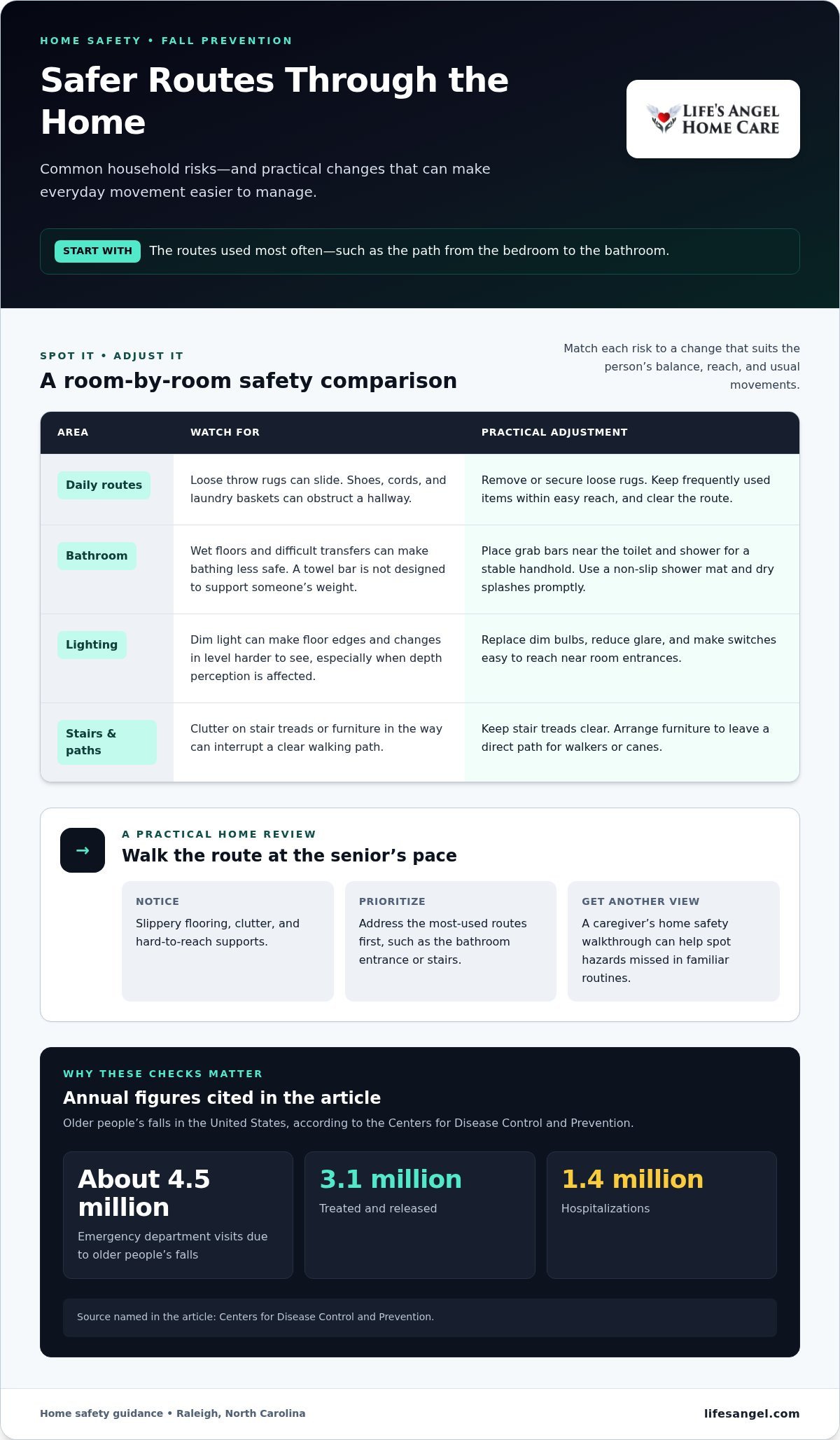
Start with the routes your loved one uses every day, including the path from the bedroom to the bathroom. Loose throw rugs can slide, while shoes, cords, and laundry baskets can obstruct a hallway. Remove or secure loose rugs, and keep frequently used items within easy reach. A caregiver’s home safety walkthrough can help families spot hazards that are easy to miss during familiar routines.
Bathrooms need particular attention because wet floors and difficult transfers can make bathing less safe. Grab bars near the toilet and shower offer a stable handhold when someone sits, stands, or steps over a threshold. A towel bar is not designed to support someone’s weight. A non-slip shower mat can improve footing, and drying splashes promptly helps reduce slippery patches. Choose changes that suit the person’s balance, reach, and usual movements.
Lighting matters in hallways, on staircases, and along the route to the bathroom. Replace dim bulbs, reduce glare, and make switches easy to reach near room entrances. Low light can make floor edges and changes in level harder to see, especially when depth perception is affected. Keep stair treads clear, and arrange furniture to leave a direct path for walkers or canes. These adjustments can make familiar spaces easier to navigate.
The scale of the problem makes these checks worthwhile: according to the Centers for Disease Control and Prevention, each year, there are about 4.5 million emergency department visits due to older people falls, resulting in 3.1 million treated and released and 1.4 million hospitalizations. Walk through each room at the senior’s pace, noting slippery flooring, clutter, and hard-to-reach supports. Then address the most-used routes first, such as the bathroom entrance or stairs. This practical review helps turn broad safety concerns into clear household changes.
2. Mobility assistance and gentle exercise
Support movement at the senior’s pace, in a way that fits their abilities and routine. A caregiver can stay close during transfers, such as standing up from a chair, and offer a steady arm when needed. Encourage the person to pause after standing, find their balance, then start walking with their usual cane or walker. Don’t pull them upright by the hands or rush them through a doorway. Choose familiar, gentle movements for exercise, and stop if the person feels unwell or unsteady.
After a fall or close call, fear may lead someone to avoid walking, errands, or favorite activities. Gradual, supported movement can help maintain familiar routines without pressuring a senior to do more than feels safe. A caregiver may accompany someone in a familiar hallway or on an errand, watching for fatigue and helping with transitions. This mobility assistance supports participation while taking the person’s ability that day into account.
What questions should I ask when comparing Raleigh caregiver services? Ask how caregivers support transfers, walking, and mobility aids, and how they adapt help as needs change. Ask how they share observations with family, too. Does Medicare or Medicaid cover fall prevention caregiver services in North Carolina? Coverage depends on the service, eligibility, and plan, so don’t assume routine in-home assistance is covered. Which Raleigh home care agencies offer fall prevention or mobility assistance? Life’s Angel Home Care provides Mobility Assistance to support movement at home and during daily activities.
What qualifications should caregivers have to help prevent falls? Look for relevant care experience and training in safe mobility support. Life’s Angel Home Care employs North Carolina Board-certified registered nurses, nursing assistants, and care aides who are BLS and CPR/AED certified. How can families find vetted fall prevention caregivers in Raleigh? Review caregivers’ qualifications and discuss how support can reflect the senior’s routines, mobility, and comfort. Are there local Raleigh or Wake County programs offering fall prevention assessments or support? Community aging resources can help families explore assessment and support options; ask about home-safety guidance and mobility assistance.
If extra support with safe movement or errands would ease daily routines, explore Mobility Assistance and Errand Assistance as part of a practical care plan.
3. Personalized in-home care plans
A useful in-home plan connects support to a senior’s abilities, routines, and specific challenges. When considering fall prevention caregiver services in Raleigh, map an ordinary day, from getting dressed to preparing lunch and moving between rooms. Note which tasks feel steady, which take extra time, and where assistance could preserve independence. For example, someone may walk confidently indoors but need help rising from a low chair.
Describe support in practical terms. “Help with morning personal care” is clearer than “provide general assistance.” A plan can note that the senior prefers choosing clothes independently, needs items within reach, or benefits from pausing before walking after dressing. These details help caregivers provide respectful support without taking over tasks the person can still manage comfortably.
Include the senior’s priorities. One person may want to keep preparing breakfast, while another values a short walk to the mailbox. Identify what makes those activities manageable, such as setting out needed items or allowing extra time to change positions. Record preferences about reminders, communication, and how assistance is offered, so help feels familiar rather than intrusive.
Needs can change after an illness, a close call, a change in balance, or new difficulty with daily tasks. Review the plan when routines become harder, equipment use changes, or the senior avoids a familiar activity. Describe what changed and when it tends to happen. For example, note whether fatigue appears during evening routines or getting up from a particular chair becomes more difficult.
A personalized approach to fall prevention caregiver services in Raleigh should give family and caregivers a clear shared reference. Keep instructions direct, update outdated details, and agree on how to share observations. Distinguish everyday assistance from health concerns that need professional attention, and record whom the family contacts about those concerns. This keeps the senior’s choices, comfort, and dignity central to daily support.
4. Bathing and mobility support
Bathing combines wet surfaces, changes in position, and reaching for supplies, so even a familiar routine may need thoughtful support. Families considering fall prevention caregiver services in Raleigh can describe which steps feel difficult, such as entering the shower or standing after washing. Prepare towels, clothing, and toiletries beforehand, placing them within easy reach. This reduces the need to turn or stretch while standing.
Before bathing, agree on what assistance feels comfortable and how the caregiver should offer it. A senior may want help entering the shower but prefer privacy while washing. Explain each step, allow time for a response, and offer a steady hand during movement when needed. Respectful communication protects dignity while making the routine easier to manage.
Transfers benefit from a calm, consistent pace. Give the person time to sit before standing, then pause before walking. Keep their usual mobility aid within reach, and avoid pulling them by the arms. If the senior feels tired or unsteady, pause the routine and help them sit safely. These details help shape fall prevention caregiver services in Raleigh around the person’s abilities and preferences.
After bathing, dry wet areas and check that clothing won’t drag underfoot. Help the senior move to a chair or bedroom at a comfortable pace, especially across a doorway or change in flooring. Notice which parts of the routine are difficult and share those observations with family, so assistance can be adjusted thoughtfully.
For support with daily movement at home, personalized mobility assistance can be part of a respectful care plan.
Caregivers support fall prevention through gentle exercise, mobility assistance, medication reminders, and safe accompaniment through the home. Missing grab bars in bathrooms and other key places can raise fall risk for seniors with mobility difficulties.
Life’s Angel Home Care: Personal Care
Life’s Angel Home Care provides in-home support when daily routines or safe movement become harder for a senior to manage alone. Personal Care helps with everyday needs, while Mobility Assistance supports movement around the home. Errand Assistance can help with necessary outings, and Light Housekeeping helps with routine household tasks.
These services can help when a loved one needs steady assistance to maintain familiar routines, move with support, or manage errands and light household tasks. Families can discuss what help would make daily life more manageable while respecting the senior’s preferences.
For a caring conversation about support at home, contact Life’s Angel Home Care.
Take the Next Step Toward Safer Days at Home
Notice where your loved one’s day feels uncertain, then discuss what support could make those moments easier. Invite them into the conversation: ask which routines matter most, what assistance feels comfortable, and where they want to remain independent. Their priorities can guide a thoughtful care decision without making safety feel like a loss of choice.
As you consider fall prevention caregiver services in Raleigh, focus on support that fits your family’s real daily needs and treats your loved one with respect. A calm conversation can help clarify what would ease your concerns and what your family hopes to preserve at home. You don’t have to have every answer before taking that first step. Start a conversation with Life’s Angel Home Care about in-home support for your family. Small, considered steps can help make the path forward feel more manageable.
Frequently Asked Questions
What fall prevention services do in-home caregivers provide in Raleigh, NC?
In-home caregivers can support safer routines by staying nearby during walking and transfers, helping with personal care such as bathing or dressing, and keeping frequently used items within reach. A caregiver might assist someone using a walker between the bedroom and kitchen, then accompany them on an errand. Light Housekeeping can help reduce obstacles, while Companionship can encourage engagement in familiar activities.
What home safety assessments and modifications help prevent falls for older adults?
A useful home review considers how the person moves through daily routines, not just how rooms look. Observe how they carry laundry, reach for a phone, or get up from a favorite chair. Note where balance or access becomes difficult, then prioritize changes around those activities. A written list can help family members plan practical adjustments and track what has changed.
What are common fall risk factors for seniors living at home?
Fall risks can relate to personal health as well as daily circumstances. Changes in vision, balance, or muscle strength may make familiar movements harder, while arthritis, Parkinson’s disease, and inner ear disorders can affect mobility. Dehydration and side effects from multiple medications may also contribute. After a close call, fear can lead someone to move less, potentially adding isolation and declining strength to existing concerns.