

Grocery delivery brings food to the door, but it doesn’t prepare meals or handle related errands. Grocery shopping assistance for seniors in Raleigh can fill that gap with help shopping, collecting orders, and preparing meals when these tasks are included in a visit.
It’s understandable to want a reliable way to keep groceries stocked while making daily routines easier for someone you love. This guide explains how shopping and pickup help can work, which other errands may fit into a visit, and what affects the cost of hiring a helper. It also looks at how grocery support can complement meal preparation, helping your family choose an approach that fits your needs.
Key Takeaways
- Grocery help can include shopping, pickup, and related errands, making it easier to keep household essentials on hand.
- Plan grocery support around the senior’s preferences, mobility, and the practical details of getting groceries home and put away.
- Hourly rates vary with the tasks, visit length, and support needed, so understand what the service includes when reviewing costs.
- Local food programs may offer grocery or meal support; eligibility, delivery areas, and schedules can vary.
Grocery shopping and errands for seniors
Shopping support can help keep a Raleigh household supplied when carrying bags, reaching shelves, or managing errands becomes difficult. A helper can follow a grocery list, shop for familiar foods, pick up essentials, and help put groceries away at home. For instance, a senior who struggles to lift milk may need help both shopping and storing it, not just having food delivered.
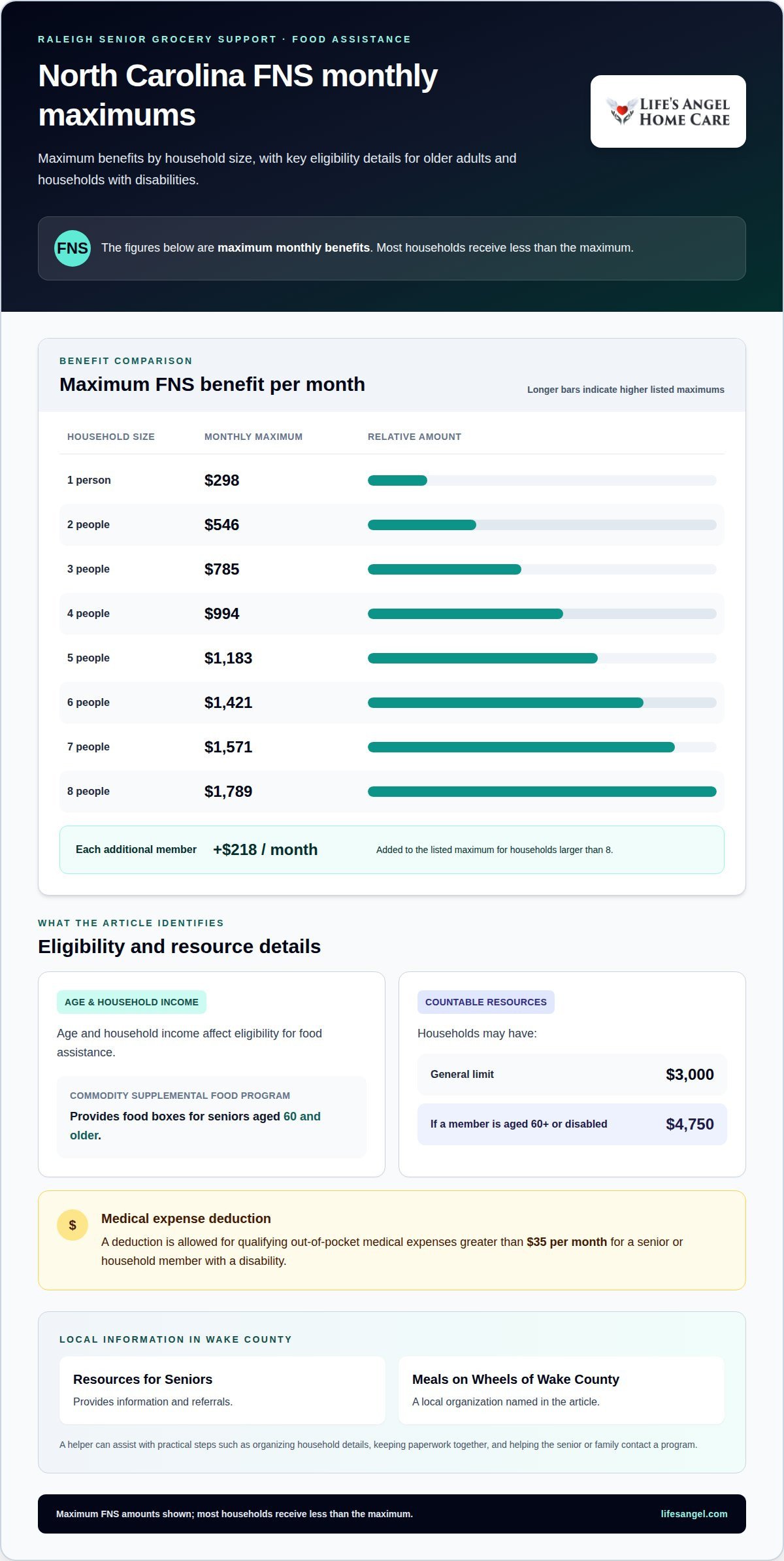
For food assistance, age and household income affect eligibility. The U.S. Department of Agriculture’s Food and Nutrition Service says the Commodity Supplemental Food Program provides food boxes for seniors aged 60 and older.
North Carolina Department of Health and Human Services lists maximum FNS benefits of $298 monthly for a one-person household, $546 monthly for two, $785 monthly for three, $994 monthly for four, $1,183 monthly for five, $1,421 monthly for six, $1,571 monthly for seven, and $1,789 monthly for eight, with $218 monthly for each additional member; most households receive less than the maximum.
North Carolina Department of Health and Human Services says households may have $3,000 in countable resources, or $4,750 if a member is aged 60 or older or disabled. It also allows a medical expense deduction for qualifying out-of-pocket expenses greater than $35 monthly for a senior or household member with a disability.
A helper can support the practical steps involved in accessing Meals on Wheels or grocery assistance by organizing household details, keeping paperwork together, and helping the senior or family contact the program. In Wake County, Resources for Seniors provides information and referrals, and Meals on Wheels of Wake County is a local organization.
During a visit, a helper can also note which foods are running low and whether groceries are being used. An empty refrigerator, expired food, or repeatedly eating a limited range of foods may be a sign that shopping, meal support, or nutrition needs deserve attention.
Grocery shopping and pickup
In Raleigh, grocery support might involve an in-store trip, curbside pickup, or an order delivered to the home. The best arrangement depends on whether the senior can choose items comfortably, carry bags, and put food away. Pickup can help when transportation is a challenge, while in-home assistance can ensure refrigerated items make it to the kitchen promptly. Grocery shopping assistance for seniors in Raleigh can follow the older adult’s preferred stores and routines.
A helper can assist with orders through services such as Instacart or Walmart by organizing the list, helping enter choices, and coordinating delivery details with the senior or family. Fees vary by service, order, and delivery option. The ordering process should also be accessible, especially if using apps or paying online is difficult. Notes on preferred brands and acceptable substitutions can make future orders easier.
Raleigh seniors may find delivery, curbside pickup, or occasional senior discounts through commercial grocery services, but availability varies by retailer and address. Instacart and Walmart are ordering options, and nearby stores may have their own pickup or delivery arrangements. Grocery shopping assistance for seniors in Raleigh can also include collecting a prepared order when placing it online is uncomfortable.
Before choosing transportation or delivery help, consider whether it reaches the home, works with the preferred ordering method, and handles substitutions clearly. Plan for timing, who will be home, and whether someone can bring the groceries inside. These details can help prevent a missed delivery or bags left outside.
For a smoother routine, keep one updated list of preferred brands, food needs, and acceptable alternatives. A helper can use it to sort groceries for the pantry, refrigerator, and freezer. If walking through a store or carrying bags is difficult, grocery shopping assistance for seniors in Raleigh can help with tasks an online order alone doesn’t address.
Walmart is an ordering option, and Instacart connects customers with participating retailers. Nearby stores may offer their own pickup or delivery arrangements, but availability varies by retailer and address. No specific store is identified here as offering a senior discount.
Hourly rates for grocery helpers
The cost of a grocery helper in Raleigh depends on the visit’s length, tasks, and level of support. A short store trip differs from a visit that includes shopping, carrying bags, putting food away, and handling another errand. The rate may also depend on whether the helper accompanies the older adult or shops from a supplied list. Ask what the service time covers, including travel and time in the store.
For a useful estimate, describe a typical visit rather than asking only for a general rate. Explain whether the helper will shop at one store, collect an order, carry groceries indoors, or organize pantry items. The amount of help needed with walking and lifting can also shape the plan. Clear details make it easier to match the requested tasks with the time involved.
Keep the helper’s time separate from grocery expenses and any delivery or shopping-platform charges. An Instacart order, for example, may have its own service costs, while an in-person shopping trip involves different steps. Ask how the estimate accounts for extra errands, waiting, or changes to the list. This helps families understand what a visit includes without confusing grocery spending with the cost of assistance.
Consider whether the visit should include companionship as well as shopping. An older adult may appreciate having someone accompany them through the store, take time with choices, and help bring bags home. If the main need is collecting a prepared order, the visit may have a different scope. An estimate is more useful when support reflects the senior’s mobility, preferences, and household routine.
For professional help, the cost depends on the tasks, visit length, and support needed, and is provided after a quote request. A practical next step is to describe a typical grocery trip, including the store, whether it involves pickup or in-store shopping, and any help needed at home. This gives the family a clearer basis for discussing the arrangement.
Are there Raleigh programs that provide free or low-cost grocery delivery for seniors?
Raleigh-area older adults can explore food banks, pantries, and senior food programs for grocery support. Some organizations arrange delivery or volunteer shopping for homebound seniors. The Food Bank of Central & Eastern North Carolina distributes nearly 9,000 senior food packages each month through a network of more than 700 local food assistance sites. Those packages provide food support, though a food box isn’t the same as a regular grocery order.
Resources for Seniors provides information and referrals across Wake County, including help identifying local aging services. Families can share the senior’s address, mobility needs, and preferred support, such as grocery delivery or volunteer shopping. Service areas and eligibility vary, so the address matters. Program schedules also affect whether support fits ongoing household needs.
For a local starting point, North Carolina residents can call 2-1-1 or 888-892-1162 for additional resources, 24 hours a day, 7 days a week. Ask about eligibility, referral or assessment steps, delivery frequency, costs, and whether someone must be home. Also ask about holidays, bad-weather changes, waitlists, and what happens after a missed delivery. These details help families understand how a program works before relying on it.
Food programs and grocery assistance meet different needs. A pantry may provide groceries, while a delivery program brings them to the home; neither necessarily includes putting food away or preparing meals. For example, a senior who cannot carry bags may need help bringing a delivery inside. If a meal program provides food only on certain days, families can plan other grocery support around its schedule.
Keep key details together: the senior’s address, contact preferences, food needs, and referral information. This makes conversations with Wake County programs clearer and helps families compare practical schedules without assuming every service reaches every neighborhood.
To explore grocery assistance, contact Resources for Seniors for Wake County referrals or call 2-1-1 or 888-892-1162. Share the senior’s address, mobility needs, and preferred support, and ask about eligibility and any referral or assessment steps. These sources can help identify local aging services and food support options.
Life’s Angel Home Care
Life’s Angel Home Care helps families manage everyday challenges that make grocery routines harder. If a senior has difficulty getting around, carrying bags, or keeping up with household tasks, personalized in-home support can make daily life more manageable. Errand Assistance helps with practical outings, while Mobility Assistance supports movement during daily activities. Personal Care and Light Housekeeping can also contribute to comfort at home.
This support can complement grocery delivery or community food programs, especially when a senior needs more than food brought to the door. Start by considering the person’s routine, preferences, and daily needs, then identify the support that fits. For a caring conversation about your family’s needs, contact Life’s Angel Home Care.
Make the next grocery routine easier
Start by identifying which part of the grocery routine feels hardest for your family. Is it making the list, getting to the store, carrying groceries, or keeping food organized at home? A shared plan can focus help on the most important tasks while keeping the senior’s preferences central. It can also clarify where family involvement is needed and where a helper could ease the load.
For grocery shopping assistance for seniors in Raleigh, begin with the older adult’s usual habits and the support that respects their independence. The goal isn’t to take over every choice, but to make everyday food routines easier and give families a clearer path forward.
If you’d like to talk about support for your family’s needs, contact Life’s Angel Home Care. A thoughtful conversation can help you consider the next step with greater confidence.
Frequently Asked Questions
What grocery shopping assistance services are available for seniors in Raleigh, NC?
Seniors can get help with grocery errands, store trips, and bringing purchases into the home. The right fit depends on whether the older adult wants to shop with a helper or needs someone to handle the errand. For example, a senior who can choose groceries but struggles with bags may mainly need help with transportation and carrying items. A helper can follow the senior’s preferences and familiar routine.
Are volunteer grocery shopping or errand services available for older adults in Raleigh?
Some food banks and pantries may offer volunteer shopping or delivery for homebound older adults in the Raleigh area. Services differ: one program may bring a food package, while another may help purchase groceries from a list. Families can ask what volunteer support includes, whether groceries are brought inside, and which neighborhoods it serves. This helps distinguish occasional community assistance from ongoing, personalized errand support.