

Living alone doesn’t automatically mean your parent has to leave home, but changes in daily routines or safety may signal that added support would help. Finding help for an elderly parent living alone in Chapel Hill starts with understanding what in-home care can provide: practical assistance with everyday tasks and companionship in familiar surroundings.
It’s understandable to worry when you can’t be there for every meal, errand, or appointment. Support can ease that worry while respecting your parent’s independence and the comfort of home.
This guide explains what in-home care involves and how to consider the kind of help that may suit your family. It also covers companionship, community support in the Chapel Hill area, and common safety concerns, so you can weigh practical next steps with greater confidence.
Key Takeaways
- Understand how home-based support can help an older adult with everyday needs while preserving familiar routines and independence.
- Explore how friendly visits and companionship can offer meaningful connection when a parent spends much of the day alone.
- Learn which public and community support options may help your family find services suited to your parent’s needs.
- Recognize common home safety concerns and practical ways to make daily life feel more secure.
1. Long-term services and supports information
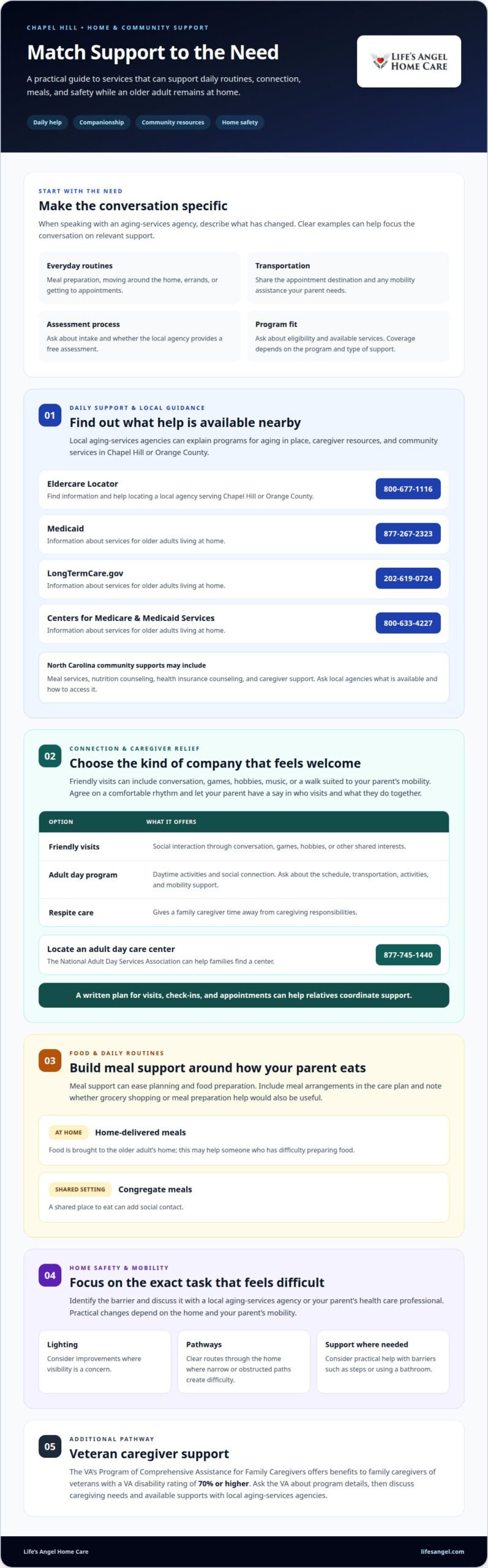
Families seeking help for an elderly parent living alone in Chapel Hill can begin by identifying which daily needs have changed. Local aging-services agencies can explain available programs, including support for aging in place, caregiver resources, and community services. For information about services for older adults living at home, Medicaid lists 877-267-2323 as a contact number. The Eldercare Locator is another starting point: according to the Administration for Community Living, call 800-677-1116 for information and help finding local services.
For an aging-services assessment, contact the Eldercare Locator to identify a local agency serving Chapel Hill or Orange County. Ask about its intake process and whether it provides a free assessment. When discussing help for an elderly parent living alone in Chapel Hill, describe specific needs, such as meal preparation, moving around the home, or getting to appointments. Clear examples help focus the conversation on relevant support.
Discuss transportation needs with local aging-services agencies to learn about community options in Chapel Hill and Orange County. Describe the appointment destination and any mobility assistance your parent needs. For financial assistance, ask North Carolina Medicaid or an aging-services agency which programs may fit your parent’s circumstances and what eligibility requirements apply. Coverage depends on the program and the type of support sought.
Veterans’ families may also have a federal resource to explore. According to the U.S. Department of Veterans Affairs, the Program of Comprehensive Assistance for Family Caregivers offers benefits to family caregivers of veterans with a VA disability rating of 70% or higher. Families can ask the VA about program details, then discuss caregiving needs and available supports with local aging-services agencies.
In North Carolina, local aging-services agencies can connect older adults with home- and community-based supports. Depending on the program, these may include meal services, nutrition counseling, health insurance counseling, and caregiver support. Ask what services are available in Chapel Hill or Orange County and how to access them.
LongTermCare.gov lists 202-619-0724 as a contact number for information about services for older adults living at home. The New York City Department for the Aging funds in-home services for residents aged 60 and older. For these services, a local case-management agency conducts a phone intake, followed by an in-home visit to assess eligibility and coordinate services.
2. Friendly visitors and senior companions
For companionship near Chapel Hill, families can arrange regular visits or ask local aging-services agencies about community programs. To locate an adult day care center, contact the National Adult Day Services Association at 877-745-1440; families can also ask local agencies about respite options.
Friendly visits offer social interaction through conversation, games, hobbies, or a walk suited to your parent’s mobility. A visitor might bring a puzzle, listen to music together, or share a familiar interest. These moments can make the day more engaging without taking over routines your parent manages independently. Companionship can be especially valuable when family members live farther away or cannot visit often.
Regular check-ins work best when they follow a comfortable rhythm. Agree on a visit or call schedule with your parent, then revisit practical topics such as meals, errands, and upcoming appointments. A brief conversation can help you notice changes in mood or routine, while a consistent visitor provides caring company. Keep the arrangement respectful: your parent should have a say in who visits and what they enjoy doing together.
Adult day programs and respite care serve different needs. An adult day program offers daytime activities and social connection; respite care gives a family caregiver time away from caregiving responsibilities. Ask about the daily schedule, transportation, and activities, such as exercise or shared meals. If your parent has mobility concerns, discuss how the setting supports them throughout the day. A written plan for check-ins, visits, and appointments can help relatives coordinate support without making every conversation feel like a safety inspection.
Start with the kind of connection your parent welcomes, whether that’s a hobby visit, a group activity, or a regular phone call. A specific, manageable step can make companionship feel personal rather than imposed.
3. Home- and community-based support for older adults
A coordinated care plan can combine support at home with useful community resources. According to the Centers for Medicare & Medicaid Services, call 800-633-4227 for information about services for older adults living at home. Ask which options address the older adult’s needs, what each service involves, and how family caregiving can fit alongside it. Home care may help with daily routines, while community programs can offer social connection, meals, or caregiver support.
Meal support can ease the work of planning and preparing food. Home-delivered meals bring food to an older adult’s home, while congregate meals offer a shared place to eat. Delivery may help someone who has difficulty preparing food, while a shared meal can add social contact. Include meal arrangements in the care plan and note whether help with grocery shopping or meal preparation would also be useful.
Home modifications can address barriers such as steps, narrow pathways, or difficulty using a bathroom. Identify the exact task that feels unsafe or difficult, then discuss it with a local aging-services agency or your parent’s health care professional. They can help you consider practical changes and community resources. Possible adjustments include improving lighting, clearing pathways, or adding support where needed. The right choice depends on the home and your parent’s mobility.
Home sharing is another arrangement some families consider when an older adult wants company or household help. Before making plans, discuss privacy, shared spaces, expenses, and responsibilities, then write down agreed expectations. Home sharing differs from professional home care and a nursing home, and may not suit someone who needs frequent hands-on assistance. Let your parent’s comfort, preferences, and support needs guide the decision, and revisit the arrangement if circumstances change.
4. Safety risks for seniors living alone
Falls are a major injury risk for older adults, and many happen at home. A loose rug, cluttered hallway, dim stairway, or wet bathroom floor can make everyday movement riskier. Walk through familiar rooms with your parent and notice where they steady themselves, avoid a task, or struggle to reach everyday items. Use these observations to guide practical changes, such as clearing pathways and improving lighting.
Safety involves daily routines as well as the physical home. A missed meal, confusion about medication, or difficulty getting dressed may signal that living alone has become harder. Keep a simple record of changes, when they happen, and what assistance was needed. Share those details with your parent and their health care professional to discuss next steps. Emotional changes and increasing isolation matter, too; fewer calls or abandoned activities can be a reason for a caring check-in.
For emergency-response or medical-alert options in Chapel Hill, ask local aging-services agencies about personal alert programs, devices, and enrollment. Agree with your parent on whom to contact if they feel unwell, fall, or cannot manage a daily task. Keep important contact details accessible at home, and make sure relatives know the plan. It may include a trusted neighbor, family member, or health care contact.
If your parent seems unsafe or can no longer manage daily activities, talk with them promptly and arrange more hands-on help. Start with the specific difficulty, such as bathing, preparing food, moving around, or attending appointments, then discuss it with their health care professional. If there is immediate danger or a serious injury, seek emergency assistance. A nursing home is not the only option; the family can consider home and community supports while respecting your parent’s preferences and privacy.
Nearly 1.4 million seniors live alone in New York City. Senior home care can be adjusted to fit a senior’s needs and can help with cooking, cleaning, and grocery shopping. Personal care at home can help seniors with bathing, dressing, grooming, and using the bathroom.
Seniors with mobility issues may need assistance to continue living independently. New York State’s Access to Home program provides funding for low-income seniors who need home modifications.
Life’s Angel Home Care
Life’s Angel Home Care can help when your parent wants to remain at home but everyday tasks are becoming harder. Support can address practical needs such as personal care, mobility assistance, errands, light housekeeping, and meal preparation, while respecting your parent’s routines and independence.
This support may suit a family balancing work, distance, or caregiving responsibilities, especially when an older adult needs help with daily life rather than emergency medical care. Discuss the tasks causing the most concern and consider what support would feel comfortable for your parent.
If you’re considering added help at home, contact Life’s Angel Home Care to discuss your family’s needs.
Take the Next Step at Your Family’s Pace
Choosing support doesn’t mean giving up your parent’s independence. It can make everyday life more manageable while keeping their preferences at the center. If you’re considering help for an elderly parent living alone in Chapel Hill, start with the routine or task that feels hardest right now, then talk together about what assistance would feel comfortable.
Life’s Angel Home Care offers personal care, mobility assistance, and errand assistance for older adults who need practical support at home. A conversation can help you describe your family’s needs and consider a thoughtful next step without pressure.
Contact Life’s Angel Home Care today to discuss support for your family. You don’t have to figure out every detail at once; one caring conversation can help you move forward with greater confidence.
Frequently Asked Questions
What is home care, and who is it for?
In-home care provides practical support where a person lives, helping with daily activities while they remain at home. It can suit older adults, people with disabilities, or someone recovering after illness or surgery. Depending on the person’s needs, support may include help with bathing and grooming, moving with a walker, preparing meals, or managing errands.
What financial assistance or Medicaid programs can help pay for senior care in North Carolina?
Ask North Carolina Medicaid or a local aging-services agency which programs may fit your parent’s circumstances and what eligibility requirements apply. Coverage depends on the program and the type of support sought.