

Yes, home care for Parkinson’s patients in Raleigh can be tailored to a person’s needs, routines, and abilities. Support can focus on daily tasks that have become harder while preserving opportunities for your loved one to do what they can independently. As needs change, the support plan can change too.
It’s understandable to want help that feels personal, not like a routine imposed on your family. Parkinson’s can affect movement, balance, and everyday activities differently over time, so thoughtful support starts with what matters most to the person and their family.
This guide explains how in-home support can help with daily routines, mobility, companionship, and practical needs in Raleigh and nearby communities. You’ll also learn what changes may signal a need for more help and how to plan support that respects your loved one’s comfort and independence.
Key Takeaways
- Reduce fall hazards by keeping walkways clear and offering steady, unhurried support with movement.
- Match help with personal care to the tasks that feel difficult, while preserving your loved one’s independence where possible.
- Plan grocery errands and meal preparation around familiar routines and the person’s dietary plan.
- Adjust in-home support as needs change, and look for signs that daily tasks or family caregiving are becoming harder to manage.
How can in-home Parkinson’s care help my loved one stay independent?
Yes. Home care for Parkinson’s patients in Raleigh can adapt to a person’s routines, symptoms, and abilities while supporting independence. A caregiver can notice changes in walking, coordination, or daily tasks and share observations with the family. For example, difficulty turning toward the kitchen or rising from a chair may mean a familiar routine needs more time or assistance.
To support safer movement, keep pathways clear and remove rugs or unstable decor. Allow time at doorways and turns, where rushing, fatigue, and multitasking can make freezing more difficult to manage. A caregiver can stay nearby while the person walks, offering support without taking over. This addresses balance concerns while helping your loved one remain involved in daily activities.
Gentle movement can support balance, mobility, and strength. Follow the person’s existing exercise plan, and pause if an activity feels uncomfortable or unsafe. A walk along a clear hallway can also create an opportunity for conversation and social connection. Adapt the activity to the person’s energy and ability that day.
Personal care support can make bathing, dressing, or eating less stressful. A caregiver can prepare needed items, allow extra time, and help only with the difficult steps. For families exploring home care for Parkinson’s patients in Raleigh, practical assistance can preserve choice while making daily routines easier.
Medicare, Medicaid, and long-term care insurance do not necessarily cover the same services. Medicare or insurance may limit home-health agency visits; Medicaid eligibility and long-term care policy benefits depend on their terms and covered services.
Look for a caregiver who understands Parkinson’s symptoms, safe mobility support, and respectful personal care. Ask how they respond to freezing, balance changes, and shifting abilities. Home care for Parkinson’s patients in Raleigh can include help with walking, medication reminders, meals, bathing, and daily tasks. Follow the person’s prescribed medication schedule and dietary plan; reminders aren’t clinical care.
Respite care can support family caregivers in Wake County. The Parkinson’s Foundation suggests asking one or two volunteers to be available on especially difficult days, creating a practical backup plan.
Personal care and activities of daily living
Parkinson’s symptoms can make dressing, bathing, grooming, and eating harder over time. A personalized approach identifies which steps need help while protecting comfort, choice, and quality of life.
Personalized Care Needs Evaluations
Start with specific daily activities rather than assuming every task needs assistance. For example, tremors may make fastening buttons difficult, while stiffness can complicate getting into a bath. Note what the person can do comfortably, where they need a steady hand, and which routines feel tiring or rushed.
Include the person with Parkinson’s in the discussion. Ask what kind of help feels respectful, and note preferences such as clothing choices, bathing routines, and the time of day they feel most rested. A caregiver can use these details to provide personal care that supports independence instead of taking over familiar tasks.
Care Plans That Adapt to Symptoms
Parkinson’s is progressive, but symptoms and care needs change differently for each person. Revisit the care plan when dressing takes longer, bathing becomes harder, or fatigue interrupts a familiar routine. Adjust assistance to the task, and keep activities the person can still manage in their daily schedule.
The Parkinson’s Foundation recommends creating a care plan together and preparing a written description of the person’s daily routine for outside caregivers. Include preferred steps for morning personal care, helpful prompts, and changes the family has noticed. Update the notes as needs shift so caregivers can provide consistent, considerate support.
For instance, a caregiver might lay out clothing in the order it’s worn, then help only with difficult fasteners. Preparing towels and toiletries before bathing can make the routine more comfortable and organized. These adjustments help people take part in their own care.
Families can use personal care support to help with daily routines while keeping individual preferences central.
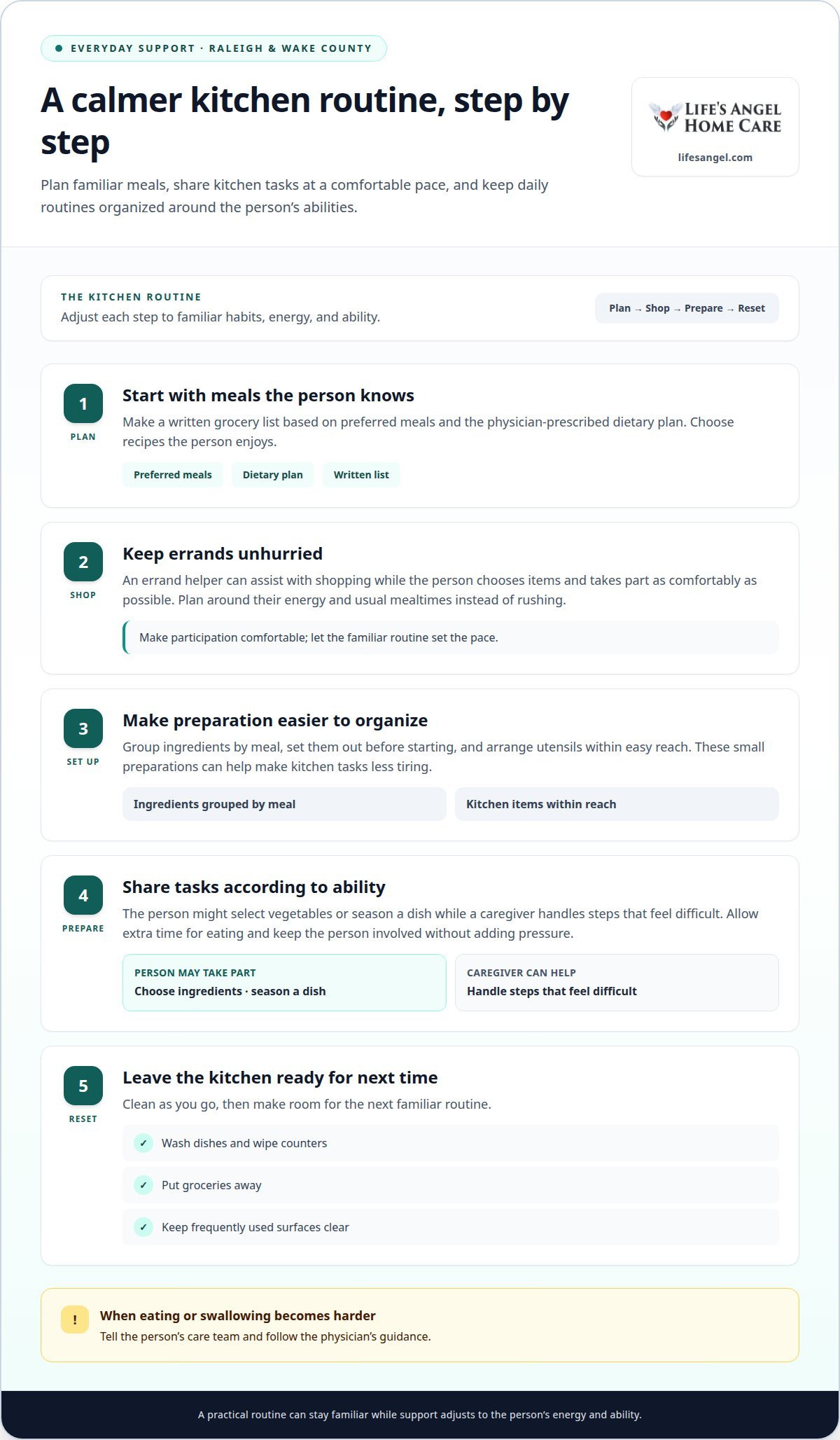
Grocery shopping, meal preparation, and cleanup
Parkinson’s symptoms can make shopping and kitchen tasks tiring, so families can plan around familiar routines. Before a grocery trip, make a list based on the person’s preferred meals and physician-prescribed dietary plan. Errand assistance can help with shopping while the person chooses items and participates as comfortably as possible. This supports independence and keeps daily life familiar.
Meal planning can make preparation easier to organize. Choose recipes the person enjoys, group ingredients by meal, and note any instructions in the dietary plan. A caregiver can prepare ingredients, arrange utensils within easy reach, and allow extra time for eating. If speaking or swallowing becomes more difficult as Parkinson’s progresses, tell the person’s care team and follow the physician’s guidance.
During meal preparation, divide tasks according to ability. Your loved one might select vegetables or season a dish, while a caregiver handles steps that feel difficult. This keeps the person involved without adding pressure. In Raleigh, families can plan errands around the person’s energy and usual mealtimes instead of rushing through a busy day.
- Keep a written grocery list organized by familiar meals.
- Set out ingredients and kitchen items before beginning preparation.
- Clean as you go, then leave frequently used surfaces clear.
After eating, light housekeeping can include washing dishes, wiping counters, and putting groceries away. An orderly kitchen makes the next meal easier to prepare and reduces clutter during daily activities. Families in Wake County can include these tasks in a practical care routine, leaving their loved one more time and energy for meaningful parts of the day. Good meal support respects preferences, follows the prescribed plan, and allows room for independence.
In-home Parkinson’s care in Raleigh and nearby communities
In Raleigh, in-home support can be shaped around the person’s routines, symptoms, and the family’s capacity. Start by listing tasks that have changed, such as keeping appointments, walking safely, or managing errands. As Parkinson’s progresses, revisit the list and adjust assistance to match current physical needs and emotional well-being.
Which Raleigh home care agencies specialize in Parkinson’s care? Look for agencies that describe support for Parkinson’s-related daily needs and explain how caregivers adapt assistance as symptoms change. A useful example is help that lets a person keep familiar routines while receiving support with tasks that have become difficult.
To find licensed, insured, and Parkinson’s-trained caregivers in Raleigh, review an agency’s published credentials, insurance information, and training details. Compare those with the person’s needs, such as assistance walking to appointments or reminders that follow an established medication schedule. Look for clear information about caregiver experience with mobility changes and respectful communication.
A practical first step is to write down what help is needed, when it matters, and what the person prefers. For example, note whether appointment assistance means help getting ready to leave, accompanied transportation, or support with errands afterward. This gives the family and caregiver a shared starting point while preserving independence.
Caregiver support should also account for family limits. If a family member is struggling to balance care with work or their own physical capacity, outside help can create time to rest and manage other responsibilities. The Parkinson’s Foundation suggests arranging outside help a couple of times per week to make time for an activity such as a yoga class.
For Raleigh families, compassionate support can include mobility assistance or accompanied appointments, shaped around the person’s routine. Explore in-home support options for help making everyday routines more manageable.
Life’s Angel Home Care: Personal Care
Life’s Angel Home Care can support daily routines when Parkinson’s makes personal tasks, moving around, or errands more difficult. Personal care can help with everyday needs while respecting your loved one’s preferences and independence. Mobility assistance can support movement at home, while errand assistance and light housekeeping can ease practical demands on the family.
Support may help when dressing takes longer, walking feels less steady, or household tasks are becoming harder to manage alone. Identify the routines that need attention and discuss what kind of help would feel comfortable for your family. The aim is practical, considerate assistance that fits into familiar daily life.
If you’d like to discuss support for your loved one, contact Life’s Angel Home Care.
Shape the Next Step Around Your Family
A helpful next step is to talk together about what feels manageable now and what may need attention later. Invite your loved one to share which routines matter most, then write down what support would make them easier. This gives your family a calm starting point for planning without requiring every future decision today.
As you consider home care for Parkinson’s patients in Raleigh, focus on a plan that respects personal preferences and can be revisited as needs change. A thoughtful conversation can clarify where family support is enough and where an extra helping hand could bring relief.
Life’s Angel Home Care offers personal care, mobility assistance, and errand assistance for everyday needs. If you’re ready to explore a supportive next step, connect with Life’s Angel Home Care. You can begin with a simple conversation about your family’s priorities and move forward at a pace that feels comfortable.
Frequently Asked Questions
Can Parkinson’s care plans be customized?
Yes, a care plan can reflect the person’s abilities, preferences, and changing support needs. Write down practical details, including preferred routines, tasks they want to do independently, and signs that a task has become harder. The person with Parkinson’s and family caregivers can review the plan together and update it as symptoms or daily priorities change.
How Can I Get Started With a Free Assessment?
Start by describing the person’s daily routines, current challenges, and the help your family hopes to arrange. An assessment conversation can organize these needs, such as support with getting dressed or attending appointments. Don’t assume an assessment is free based on its name; focus first on explaining what kind of assistance would make home life easier.
How Is In-Home Parkinson’s Support Provided?
A caregiver provides practical help in the person’s home, guided by agreed routines and preferences. Support may include personal care, companionship, meal preparation, or help getting to appointments. Families can share written instructions about preferred approaches, communication, and routine changes so the person receives considerate assistance without losing familiarity or choice.
How long can someone with Parkinson’s live at home?
Many people with Parkinson’s can remain at home with appropriate support. How well that arrangement works depends on mobility, cognition, fall risk, caregiver capacity, and medical complications. Families can consider whether the home setup and available help meet daily needs, then revisit the plan as circumstances change.
Seeking Wake County Caregivers?
Wake County families can start by identifying the specific tasks that need support and the routines they want to preserve. For example, a family member may need help accompanying a loved one to an appointment while another relative handles errands. Life’s Angel Home Care supports families in the Raleigh area with practical in-home assistance for daily needs.
What home care services are available for people with Parkinson’s disease in Raleigh, NC?
In-home support can include personal care, mobility assistance, companionship, meal preparation, light housekeeping, errand assistance, and accompaniment to appointments. Life’s Angel Home Care provides these practical services for seniors and adults with disabilities. Families can identify everyday tasks that need help, such as getting ready for an appointment or keeping household routines manageable.