

A stroke doesn’t tell you on day one how much walking will return. Some survivors regain mobility, while others need ongoing help; recovery depends on the effects of the stroke, rehabilitation, and individual progress. For families considering home care for stroke recovery patients in Durham, support at home can make everyday routines safer and less overwhelming, but it can’t predict or promise a particular recovery.
It’s natural to wonder whether your parent will walk again. Rehabilitation and consistent therapy can support mobility recovery, and progress may continue well beyond the first weeks. Meanwhile, needing help with balance, dressing, meals, or remembering instructions can signal that your family needs more support at home.
This article explains when home care may help, what nonmedical in-home support can include, and how it fits alongside rehabilitation and medical care. You’ll get a clearer picture of day-to-day assistance as your loved one works toward greater comfort and independence.
Key Takeaways
- See how personal care and mobility support can make everyday routines at home more manageable.
- Understand why the period after hospital discharge calls for attentive support and clear communication.
- Recognize changes in balance, daily tasks, communication, or memory that may signal a need for extra help.
- Learn how nonmedical home care can complement a stroke survivor’s rehabilitation and ease pressure on family caregivers.
In-home assistance with mobility and personal care
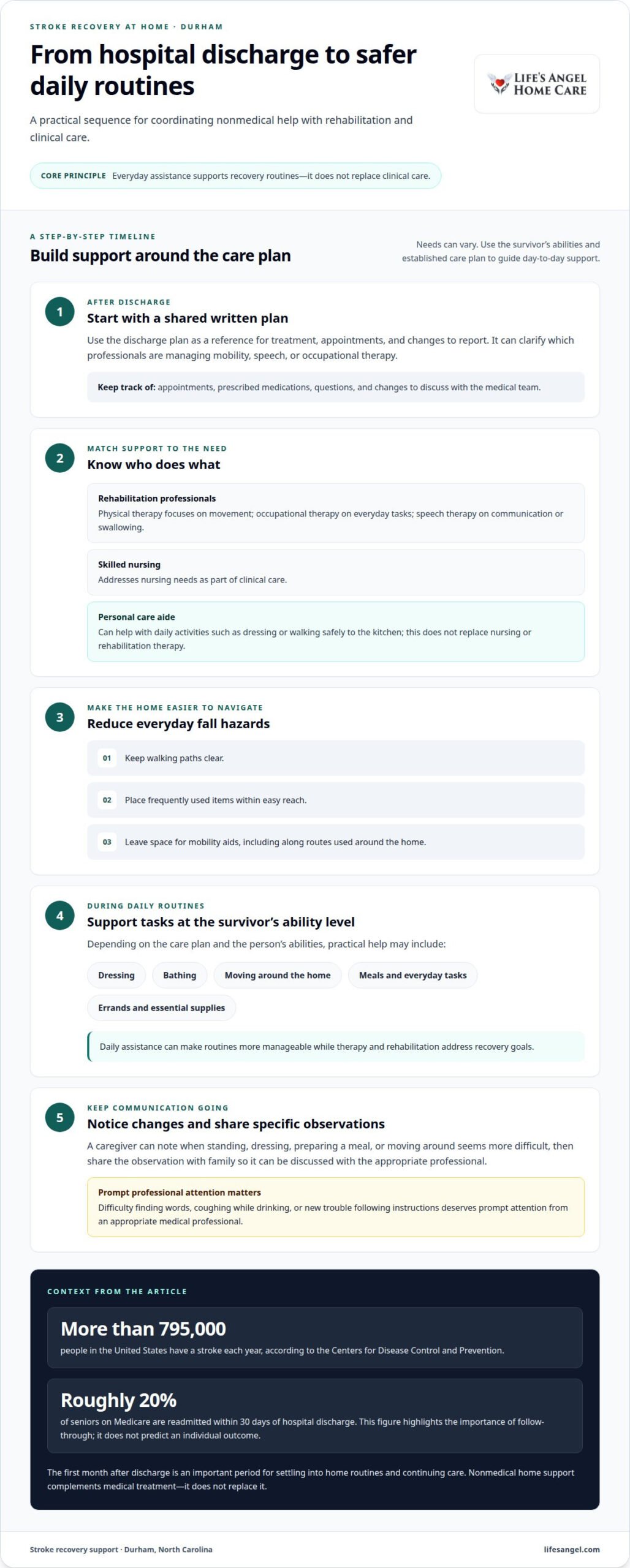
Every year, more than 795,000 people in the United States have a stroke, according to the Centers for Disease Control and Prevention. After discharge, everyday tasks such as dressing, bathing, and moving between rooms may require support. In-home assistance can help survivors manage these routines while rehabilitation and therapy address recovery goals.
In Durham, different providers meet different needs. Rehabilitation professionals provide physical, occupational, or speech therapy; skilled nursing addresses nursing needs; and personal care helps with daily activities. A family may need more than one type of support. A personal care aide can help with dressing or walking safely to the kitchen, but that assistance does not replace skilled nursing or rehabilitation therapy.
Families can ask the hospital discharge team about therapists who make home visits in Durham. Physical therapists focus on movement, occupational therapists on everyday tasks, and speech therapists on communication or swallowing. The discharge plan can clarify which therapies are needed and how they fit with ongoing care.
After discharge, a home care provider can help make daily routines easier by following the family’s care plan and sharing observations. For example, a caregiver can note when standing, dressing, or preparing a meal seems difficult, so the family can discuss the change with the appropriate professional. Errand assistance can also help keep appointments and essential supplies on track.
To help prevent falls, keep walking paths clear, place frequently used items within easy reach, and leave space for mobility aids. Personal Care and Mobility Assistance can support bathing, dressing, or moving around the home, based on the survivor’s abilities and care plan. A caregiver can also alert family members to hazards noticed during daily routines, such as clutter along the route between the bedroom and bathroom. These practical observations can help families address accessibility concerns without confusing everyday assistance with clinical rehabilitation.
Reducing emergency visits and hospital readmissions
The first month after a stroke patient leaves the hospital is an important period for settling into home routines and continuing care. Roughly 20 percent of seniors on Medicare are readmitted within 30 days of hospital discharge. That figure highlights why clear follow-through matters, though it doesn’t predict what will happen to any one person.
A written discharge plan gives family caregivers a shared reference for treatment, appointments, and changes to report. It can clarify who is managing mobility, speech, or occupational therapy and how sessions connect with daily routines. For example, if transferring from bed to chair becomes harder, caregivers can note the change and share it with the appropriate care professional.
Consistency matters. Use the discharge instructions to track appointments and prescribed medications, and note questions or changes to discuss with the medical team. Raise a missed appointment, difficulty following the plan, or a new concern about strength or function promptly with the relevant professional. Nonmedical home support can help with daily routines, but it does not replace medical treatment or clinical advice.
Preventing another stroke also involves attending to ongoing health needs. Home-based stroke care should combine lifestyle and medical interventions, with clinicians guiding treatment and follow-up. A care plan may address nutrition, activity, and health conditions under medical supervision. Clear responsibilities help families support the survivor without taking on tasks beyond their role.
Comfort and safety at home can support a steadier routine. A caregiver may notice that fatigue makes a familiar activity harder or that the survivor needs more help moving around the home. Sharing specific observations with family and care professionals helps them discuss whether the plan still fits. Regular communication connects daily support with recovery progress and the clinical team’s guidance.
Signs a stroke survivor may need home care
Changes in physical ability can make familiar routines difficult after a stroke. Notice whether your family member needs help standing, walking, dressing, or preparing food. Weakness or coordination problems can affect movement and independence, while trouble concentrating or remembering appointments can complicate daily plans. These changes can indicate where practical assistance would help.
Home health agencies, private caregivers, and outpatient rehabilitation serve different needs in Durham. Home health teams may include nurses and rehabilitation therapists; private caregivers generally help with nonmedical daily routines, while outpatient therapy takes place away from home. The right arrangement depends on whether the primary need is clinical treatment, everyday support, or therapy sessions.
Medicare home health eligibility is separate from needing help with personal routines. Eligibility depends on Medicare’s coverage criteria for home health services and the individual’s circumstances. Families can discuss the required services and coverage determination with the clinical team managing the survivor’s care.
When hiring a caregiver, look for relevant training, clear communication, and experience supporting people with changing mobility or cognitive needs. Ask how the caregiver follows the established care plan and shares observations with family. A capable professional understands the limits of nonmedical support and reports changes rather than attempting clinical treatment.
During daily visits, caregivers can notice changes in balance, strength, movement, communication, swallowing, concentration, or familiar tasks. Difficulty finding words, coughing while drinking, or new trouble following instructions deserves prompt attention from an appropriate medical professional. Sudden or concerning symptoms require urgent medical attention, not routine home assistance.
Caregiving can also affect a family member’s health, so planned respite and support matter. Duke’s Stroke Survivor Support Group meets at Duke Regional Hospital and welcomes survivors, friends, and family. It offers a setting to share experiences and connect with others facing similar changes. Mobility Assistance and Errand Assistance can also ease practical demands while relatives attend appointments or take time to rest.
What home care services are available for stroke recovery patients in Durham, North Carolina?
In Durham, stroke support at home can include clinical home health, rehabilitation, and nonmedical help with daily routines. Home health teams may include nurses, physical therapists, occupational therapists, and speech-language pathologists. Physical therapy addresses movement, occupational therapy supports everyday function, and speech therapy focuses on communication or swallowing. Aides help with nonmedical tasks, but do not replace clinical care.
Families looking for home care for stroke recovery patients in Durham can consider how each type of support fits the survivor’s needs and goals. Regular assessments can consider physical, cognitive, and emotional health, helping the care team notice changes. For example, a therapist may work on a transfer technique while a caregiver supports the related routine at home. Families can share observations about movement, communication, or daily activities with the appropriate professional.
Nonmedical assistance can make routines easier between appointments. Depending on the support arranged, a caregiver may help with personal care, mobility, meal preparation, errands, or light housekeeping. This practical help can ease family caregivers’ workload and help a survivor take part in familiar activities. It remains distinct from nursing visits and therapy, which address clinical needs.
Choosing home care for stroke recovery patients in Durham also means considering how the home supports daily routines. Home-based care may involve improving safety and accessibility, such as making frequently used areas easier to reach and clearing obstacles from walking routes. Families may also benefit from guidance and resources for supporting recovery at home. Emotional support matters, too, since adjustment can be difficult for survivors and loved ones. Telehealth and digital monitoring tools may help track progress and adapt treatment plans when included in the care approach. The right mix of services depends on the survivor’s needs, goals, and recovery plan.
Stroke recovery home health services may include physical therapy, occupational therapy, speech therapy, and nursing visits. Coordinating nurses, therapists, aides, and social workers can help align responsibilities and updates. Professional home caregivers provide nonmedical assistance and can alert families to signs of a health concern.
In-home care for stroke recovery can be arranged for a few hours per week up to 24/7. Home-based stroke care should use home modifications to improve safety and accessibility and reduce accident risk, while including psychological support for emotional challenges associated with recovery.
Life’s Angel Home Care
Life’s Angel Home Care helps make everyday life at home more manageable while a loved one continues stroke rehabilitation. Turn to this support when personal routines, moving around the home, errands, or light household tasks are becoming difficult for your family to manage alone.
Support can focus on practical needs during recovery. Personal Care can help with daily routines, while Mobility Assistance supports movement around the home. Errand Assistance and Light Housekeeping can ease some responsibilities that often fall to family caregivers. This nonmedical support complements, but does not replace, clinical treatment and rehabilitation.
Every survivor’s needs and abilities differ. A calm conversation about which routines feel hardest can clarify how home support may fit alongside the existing care plan. If your family needs help with daily life during stroke recovery, contact Life’s Angel Home Care.
Make the next step feel manageable
Recovery at home is a shared effort, and families don’t have to manage every daily responsibility alone. As your loved one’s needs change, consider which routines are hardest and where steady support could make the day easier. Home care for stroke recovery patients in Durham can complement a clinical care plan with practical help that respects the survivor’s pace and dignity.
Life’s Angel Home Care provides Personal Care, Mobility Assistance, and Errand Assistance for everyday needs. These services can make daily routines and appointments easier to manage while family members remain involved in the recovery journey.
A calm conversation can help you consider what kind of support would fit your family’s situation. Contact Life’s Angel Home Care to discuss support at home. With thoughtful help in place, you can focus on your loved one’s comfort and the next step forward.
Frequently Asked Questions
Will my parent walk again?
Some stroke survivors regain the ability to walk, while others continue to need mobility support. Your parent’s progress depends on how the stroke affected movement and how rehabilitation addresses their individual needs. Recovery may continue for years, with the fastest gains often occurring during the first three months. A physical therapist can assess movement and work with your parent on appropriate rehabilitation goals as recovery continues.