

Trustworthy home care in Raleigh starts with a clear picture of the help your loved one needs, followed by a careful look at caregiver skills, agency hiring practices, scheduling, and communication. If the need is limited, support might begin with a few hours a week. The best way to find trustworthy home care in Raleigh is to choose support that respects your loved one’s safety, independence, and dignity.
It’s understandable to want someone both capable and kind in your family’s home. Knowing which questions to ask and what a good fit looks like can help you compare care with confidence.
This guide explains how to assess daily and personal care needs, compare schedules, and evaluate caregiver qualifications, experience, and the first meeting. It also explains how home care differs from medical home health care, so you can identify the support that fits your family’s situation.
Key Takeaways
- Match the care plan to the specific daily tasks where your loved one needs support, while protecting their independence and dignity.
- Compare Raleigh-area coverage based on where care is needed and how the schedule can fit your family’s routine.
- Ask how caregivers are interviewed, screened, trained, and supervised so you can understand the safeguards behind the care.
- Look at the agency’s communication and backup approach, not just the proposed schedule, to understand how support is coordinated when plans change.
- Use the first meeting to notice your loved one’s comfort and response, alongside the caregiver’s relevant skills and experience.
Assessing daily, personal, and specialized care needs
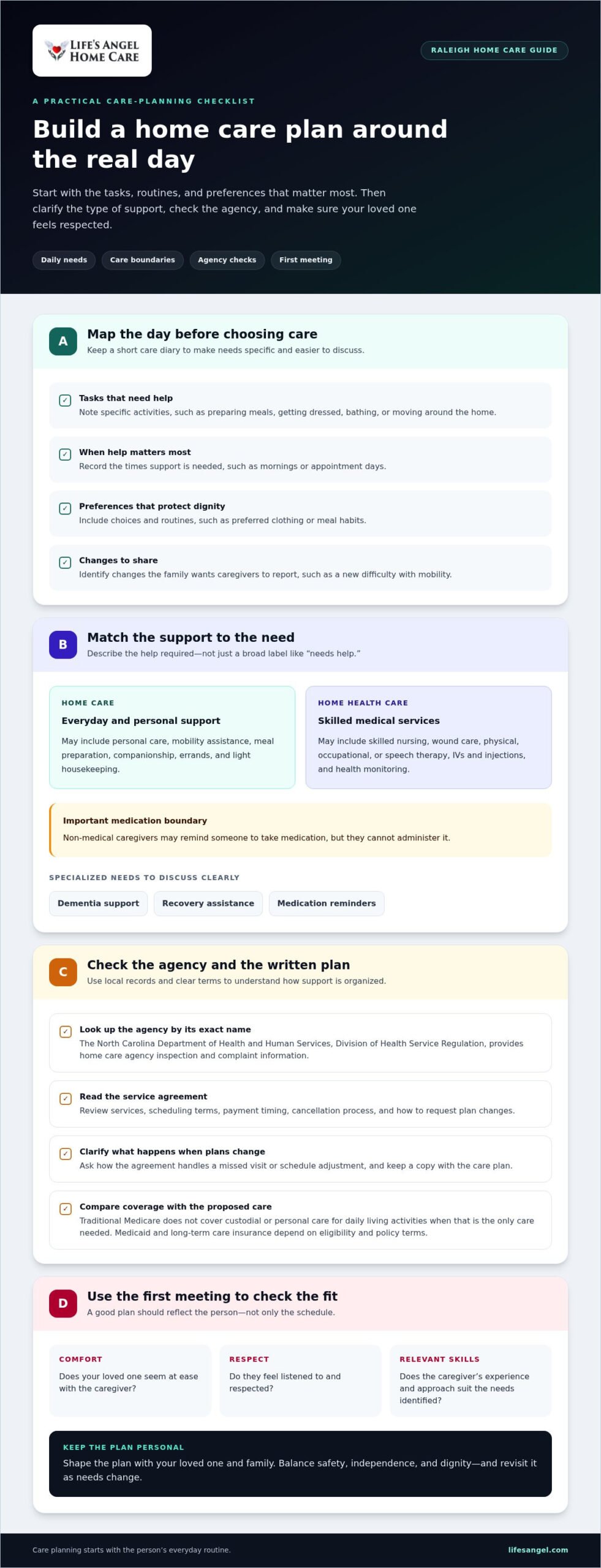
Start with a practical picture of your loved one’s day, rather than a broad label such as “needs help.” Note which tasks are difficult, when they occur, and what support would preserve comfort and independence. One person may need help with household tasks, while another may need assistance getting dressed each morning.
Distinguish daily living assistance from medical care. Home care can include personal care, mobility assistance, meal preparation, and companionship, along with errands and light housekeeping. Examples of personal care include help with bathing, dressing, and moving around the home. These details help families explain their needs during a care-planning conversation.
Before a consultation, keep a short care diary. Record what happens during a typical day, including:
- Tasks that require assistance, such as preparing meals or getting dressed.
- Times when help matters most, such as mornings or appointment days.
- Preferences that support dignity, such as clothing choices or meal routines.
- Changes that families want caregivers to share, such as a new difficulty with mobility.
Use those details to shape a personalized plan with your loved one and family. Balance safety, independence, and dignity, and revisit the plan as needs change. At the first meeting, notice whether your loved one feels comfortable, listened to, and respected, as well as whether the caregiver’s approach suits their needs.
Specialized needs call for clear boundaries. In-home care may include dementia support, recovery assistance, or medication reminders. Non-medical caregivers can remind someone to take medication, but they cannot administer it. Home health care is different: it can provide skilled services such as nursing or therapy, and may be combined with daily living support when both are needed.
For information about North Carolina home care agency inspections and complaints, consult the North Carolina Department of Health and Human Services, Division of Health Service Regulation. Search its home care agency resources by agency name, and use the division’s complaint process for concerns about a licensed agency. Have the agency’s exact name available so you can distinguish its records from information about an individual caregiver.
Think about coverage for the whole care picture. Traditional Medicare doesn’t cover custodial or personal care for daily living activities when that is the only care needed, according to the Centers for Medicare & Medicaid Services. A personalized care plan can still identify daily tasks, family involvement, and any separate clinical support that may be needed.
A home care plan should balance safety, independence, and dignity, with input from the person receiving care and their family. Home health care can include skilled nursing, wound care, physical, occupational, and speech therapy, IVs and injections, and health monitoring.
Raleigh-area service coverage and community connections
Compare care options against the home address, daily routine, and destinations the person visits. A clear plan can also make it easier to adjust support after a hospital stay or as needs change.
Raleigh-Area Care Services
Home care may include one-on-one help with daily living, mobility, meal preparation, errands, light housekeeping, and companionship. In Raleigh, describe the actual routine, such as needing a caregiver at home before an appointment or company during an afternoon. Then compare whether the proposed care schedule and tasks fit those needs.
For companionship, consider what makes time together meaningful: conversation, shared meals, or support with an ordinary daily routine. Ask how the care plan can change if a senior becomes more independent or needs additional help. Families looking for companionship support at home can consider how regular company might complement their loved one’s routine.
Local Resources for Families
Families in Raleigh and Wake County can consult the North Carolina Department of Health and Human Services, Division of Health Service Regulation, for home care agency inspection records and complaint information. Wake County aging-services resources can also provide local guidance and community connections relevant to an older adult’s needs.
When reviewing resources, write down the agency’s exact name, the tasks being considered, and your questions about care. Sharing the same details with local aging-service staff can help make their guidance relevant to your family’s situation.
Read the service agreement carefully before care begins. Review the services, scheduling terms, payment timing, cancellation process, and how to request plan changes. Note how the agreement handles a missed visit or a schedule adjustment, and keep a copy with the care plan.
Traditional Medicare doesn’t cover custodial or personal care for daily living activities when that is the only care needed, according to the Centers for Medicare & Medicaid Services. Medicaid and long-term care insurance depend on eligibility and policy terms. Compare covered tasks, authorization steps, and provider requirements with the proposed plan.
Starting care can be gradual: families may begin with a limited schedule, then revisit it as routines or support needs change. Home health is different from ongoing daily assistance. It is short-term medical care at home ordered by a physician, and visits in the United States typically last 30-60 minutes. Those visits aren’t designed to replace daily caregiving or one-on-one supervision.
When deciding how to find trustworthy home care in Raleigh, compare the service area, schedule, and written terms with the person’s actual routine. Familiarity with local needs and destinations can help make everyday support more coordinated.
Flexible scheduling and backup coverage
A care schedule should fit the person’s routines, not force every family into the same pattern. Identify when assistance would make the greatest difference, such as getting ready in the morning, attending an appointment, or running errands. Consider how the schedule might change as independence or support needs shift.
For families in Raleigh and the Triangle, flexibility means more than choosing a visit time. It also means having a clear way to adjust the plan when a family caregiver’s work hours change, an appointment moves, or a loved one returns home from the hospital. Ask how schedule changes are handled and how the family receives updates as routines evolve.
Before care starts, write down the schedule and the tasks for each visit. A morning visit might focus on mobility assistance and getting ready, while another time may suit errands better. Separate essential tasks from preferences so that changes don’t remove the support that matters most.
- Record the usual visit days and time windows.
- Identify which tasks need to happen during each visit.
- Note appointment days or family routines that may affect timing.
- Decide how the family wants to receive schedule updates.
Discuss backup arrangements as part of care planning. The plan should explain how the family will be notified if a caregiver is absent, who communicates schedule changes, and what happens with the next visit. If a caregiver can’t make a planned visit, the family needs a timely update and a clear explanation of next steps.
A regular schedule doesn’t automatically clarify backup arrangements. Ask who coordinates changes and how updates reach the family. A consistent point of contact can help prevent mixed messages, especially when several relatives share care responsibilities. Record communication preferences, such as calling the primary family contact about a changed visit.
Flexible care should preserve the older adult’s choices. If a senior prefers a later start or wants to complete a familiar task independently, include those preferences in the plan. The goal is practical assistance that supports connection and daily life, rather than taking over the person’s routine.
Review the arrangement whenever a meaningful change affects daily life. A new appointment pattern, a change in family availability, or greater difficulty moving around may call for schedule adjustments. Keep the current plan easy for family members to find and record agreed changes so everyone can follow the same routine.
Background checks and credential verification
Trust grows when you understand who will enter the home and how they are prepared. Before care begins, ask about hiring, background checks, training, and supervision. Find out, for example, who reviews references and how concerns are handled.
A home care agency arranges care through an organization, while an independent caregiver is engaged directly by the family. Ask who employs the caregiver and who handles screening, supervision, and concerns. Treat licensing as a separate matter and review relevant North Carolina state records.
Ask what screening involves and when each step takes place. Discuss interviews, background checks, reference reviews, training, and ongoing supervision. Also ask how caregiver experience is matched to the person’s needs, such as familiarity with dementia or mobility assistance.
Check qualifications by role rather than assuming every worker has the same credentials. Ask which assigned caregiver holds BLS or CPR/AED certification and what training applies to their duties. If medication reminders are part of the plan, clarify that reminders are different from administering medication.
When reviewing agency references and reviews, compare several sources and look for recurring comments about communication, punctuality, and caregiver consistency. Ask for references from families with similar care arrangements, and discuss specific examples rather than relying on a general rating.
When speaking with an agency, ask how caregivers are hired, trained, screened, and supervised. Also ask about caregiver matching, family updates, and how the care plan changes when a senior’s needs or preferences shift.
Red flags include unclear answers about screening, reluctance to explain caregiver qualifications, or vague procedures for reporting concerns. Be cautious if an agency dismisses questions about dementia support, medication reminders, or the family’s care plan.
- Ask who conducts each background check and how the agency documents completion.
- Request the assigned caregiver’s relevant training and credential details.
- Clarify who supervises the caregiver and receives family concerns.
- Discuss how updates reach relatives if a senior’s needs change.
The first meeting offers another useful way to assess fit. Notice whether the caregiver listens to the senior, respects personal preferences, and explains tasks clearly. Someone who asks how a person prefers their morning routine, for example, may be more attentive to the details that make care feel respectful.
Keep your notes together as you decide. Recording each agency’s answers about screening, credentials, references, and supervision makes comparisons easier and gives family members a shared basis for discussing which arrangement fits the person receiving care.
Office experience and care team size
An agency’s office team coordinates the people and details behind each visit. Ask who creates the schedule, shares updates, and handles changes to the care plan. If a caregiver is delayed, you should know who will notify your family and how the update will reach you.
Experience is useful when it relates to your loved one’s needs. Ask how the office matches a caregiver’s background to the planned activities, such as helping someone with dressing or supporting a person living with dementia. A Raleigh caregiver profile lists 15 years of caregiving experience, but a single profile is only one example. The key is whether the experience suits the individual’s care needs.
Ask how many caregivers may be assigned, who introduces a substitute, and how each person receives updates about preferences. Familiar caregivers can help maintain routines, while a broader team may provide more potential coverage. The important thing is a clear process for coordination and communication.
Use these questions to understand the office’s role:
- Who is the main contact for schedule or care-plan changes?
- How does the office share important preferences with the care team?
- Who follows up after a concern or a change in daily needs?
- How are new caregivers introduced to the senior and family?
Reviews can offer clues about an agency’s communication and consistency, but read the details rather than relying on a rating alone. Raleigh senior care providers have an average rating of 4.8 out of 5 stars based on 127 reviews. Look for specific experiences that mention dependable communication, respectful care, or smooth coordination, and compare those themes with your family’s priorities.
During a conversation with the office, notice whether staff listen carefully and explain the process in plain language. If your parent values choosing their own clothing, ask how that preference becomes part of daily care. A thoughtful response should explain how the team will respect that choice and preserve dignity during dressing and other personal activities.
Care includes meaningful moments beyond scheduled tasks. Ask how the team learns which activities your loved one enjoys, such as conversation over breakfast or a familiar hobby. Knowing these preferences can help caregivers offer support without taking over choices the senior can still make independently.
As you compare agencies, note the office contact, caregiver experience, team coordination, and review themes together. That simple record helps families weigh the full care experience, not just the first meeting. Discuss a care plan for your family as a next step.
Life’s Angel Home Care: Personal Care
Life’s Angel Home Care supports seniors and adults with disabilities when daily routines become harder to manage comfortably at home. Personal Care and Mobility Assistance address everyday needs, while Errand Assistance and Light Housekeeping can ease practical responsibilities for families in Durham, Chapel Hill, and Raleigh.
The agency’s staff includes North Carolina Board-certified registered nurses, nursing assistants, and care aides with BLS and CPR/AED certification. Describe the tasks your loved one finds challenging, such as moving around the home or keeping up with errands, so the support can reflect their routine and preferences.
If your family is considering help with these daily needs, contact Life’s Angel Home Care to discuss the next step.
Take the Next Step Toward Support at Home
Choosing care is also a chance to make room for the moments your family wants to share. Once you’ve decided how to find trustworthy home care in Raleigh, begin with one practical question: what would make an ordinary day easier for your loved one? A clear starting point can turn a difficult decision into a thoughtful plan.
Life’s Angel Home Care provides Personal Care, Mobility Assistance, and Errand Assistance for seniors and adults with disabilities. These services support everyday needs while helping people remain comfortable and independent at home. Start by describing the kind of help that would make the biggest difference for your family.
For a caring next step, contact Life’s Angel Home Care to discuss support for your loved one. A thoughtful conversation can help you move forward with greater clarity and care.
Frequently Asked Questions
How do I choose the right senior caregiver in Raleigh, NC?
Choose a caregiver whose experience and approach suit your loved one’s needs and preferences. During the introduction, notice whether the senior feels comfortable speaking with them and can express choices freely. Discuss how the caregiver would support a morning routine while allowing the person to choose their clothing. Consider practical skills alongside respectful communication and your loved one’s response.
How do I find senior care near me in Raleigh, NC?
For families in Raleigh, Durham, and Chapel Hill, start by identifying home care that serves the neighborhood, then consider whether the support fits the home address and daily routine. A caregiver’s ability to reach the home matters, as does help with familiar destinations such as a grocery store or medical appointment. Write down the location, tasks, and preferred schedule before contacting an agency to make comparisons more useful.
How to verify a home care agency’s license in Raleigh, North Carolina?
Use the North Carolina Department of Health and Human Services, Division of Health Service Regulation, to look for agency records and inspection information. Search the agency’s full business name and compare the record details with the organization you’re considering. Agency records and an individual caregiver’s credentials are separate, so checking one does not establish the other.
What credentials and background checks should Raleigh home care workers have?
Ask which credentials apply to the caregiver’s role, who issued them, and how they are verified. Also ask whether the agency interviews caregivers, conducts background checks, provides training, and supervises staff. Request a clear explanation of the screening process rather than assuming every role has identical requirements. If a credential is relevant to planned duties, ask how it relates to the care provided.