

A lower hourly rate does not always mean a lower overall care bill. The cost of hourly home care in Raleigh depends on the hours of support, the tasks involved, and how visits are scheduled. Considering these details gives you a more useful basis for planning than focusing on the hourly rate alone.
It’s understandable to want a clear budget before arranging help for someone you love. Needs can range from occasional help with errands or meals to regular personal care and mobility assistance, and the schedule affects how costs add up.
This article explains the factors that shape local rates and how Raleigh costs compare with state and national averages. It also covers weekly care hours and the difference between nonmedical home care and skilled nursing, helping you plan with greater confidence.
Key Takeaways
- Estimate monthly care needs by considering the number of hours each week, not just the hourly rate.
- Visit length, timing, and the type of assistance can all shape local rates.
- See how Raleigh costs compare with state and national benchmarks before setting a budget.
- Learn how personal care, mobility assistance, errands, and light housekeeping can support daily life at home.
What Does Home Care Cost in the Raleigh Area?
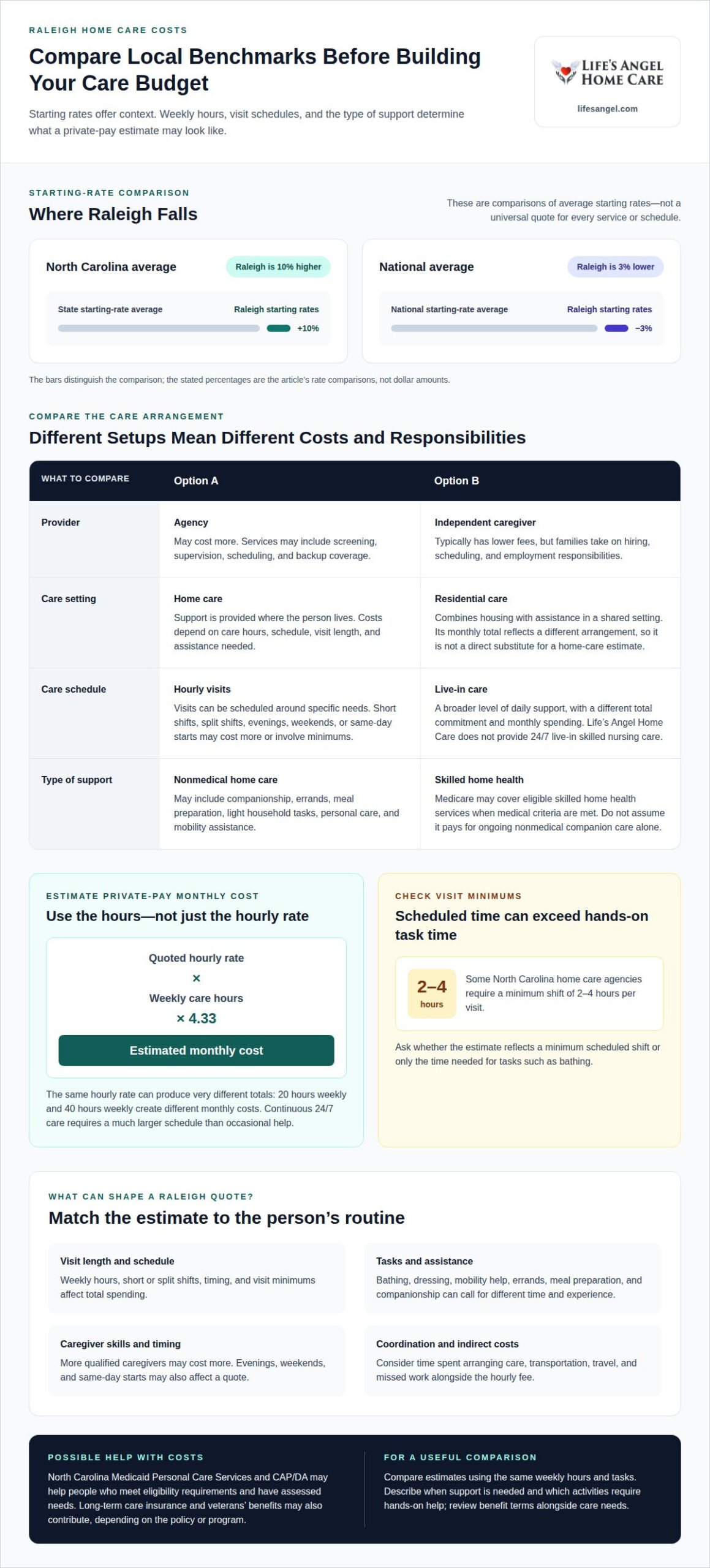
Monthly spending depends on the hourly rate, weekly schedule, visit length, and type of help. For private-pay care, multiply the quoted hourly rate by weekly hours, then by 4.33 to estimate a monthly cost.
Monthly Costs by Care Schedule
A care schedule is the number of support hours arranged each week, from part-time visits to around-the-clock coverage. It matters because 20 hours weekly and 40 hours weekly create very different monthly totals, even at the same rate. Continuous 24/7 care requires a much larger schedule than occasional help, so families should map support needs before estimating a monthly cost.
Use the proposed weekly hours and quoted rate in the formula above. Dressing assistance, meal preparation, and companionship can fit different visit patterns. Families should also consider indirect costs, including travel, missed work, and time spent coordinating daily routines.
Home Care and Facility Costs
In-home care provides support in a person’s own home, while facility care combines housing with assistance in a shared setting. Compare the two carefully: their monthly totals reflect different arrangements, not just hands-on care hours.
Raleigh costs differ from national figures, and family caregiving can bring indirect burdens such as work absences, transportation, and time spent coordinating care.
North Carolina Hourly Care Costs
North Carolina private-pay home care costs vary by schedule and type of assistance, so an hourly quote is only one part of the budget. According to the Centers for Medicare & Medicaid Services, Medicare may cover eligible skilled home health services when medical criteria are met. Families should not assume it pays for ongoing nonmedical companion care alone.
North Carolina Medicaid Personal Care Services and CAP/DA may help people who meet eligibility requirements and have assessed needs. Long-term care insurance and veterans’ benefits may also contribute, depending on the policy or program. Review benefit terms alongside the person’s care needs.
Agency and Independent Caregiver Costs
An agency may charge more than an independent caregiver, but an independent arrangement can leave families responsible for hiring, scheduling, and employment duties. Consider these responsibilities alongside the hourly fee when weighing coordination and continuity of care.
Agencies may include screening, supervision, scheduling, and backup coverage in their service structure. Independent caregivers typically have lower fees, but families take on more responsibilities. The most affordable choice depends on the rate, hours needed, and time available to manage care.
Factors that may affect local home care rates
A local quote reflects more than the number of care hours. Visit length, timing, the person’s needs, and the caregiver’s responsibilities can all affect total spending.
Visit Minimums and Total Spending
A visit minimum is the shortest shift an agency schedules, even if a person needs less hands-on help. Ask how it affects the estimate: families may pay for the minimum scheduled time, not just the minutes spent on tasks such as bathing.
Some North Carolina home care agencies require a minimum shift of 2-4 hours per visit. That difference shows why a short visit schedule can cost more than its care time suggests.
Factors Shaping Care Quotes
A care quote reflects the assistance, schedule, and caregiver skills needed for someone’s routine. Bathing and dressing may require different time and experience than companionship or light household tasks.
In Raleigh, short shifts, split shifts, evenings, weekends, and same-day starts may cost more or involve minimums. More qualified caregivers may also cost more. Someone who needs help with several daily activities may need longer visits, while a predictable daytime schedule can shape the quote differently.
Make a quote more useful by describing the daily routine, including bathing, dressing, mobility, and appointment attendance. Note which tasks require hands-on help and when support matters most. Agency and independent caregiver arrangements may also differ in scheduling and oversight, affecting overall value as well as the hourly rate.
These details help align care services with practical needs instead of paying for an unsuitable schedule. To think through how support fits daily routines, explore planning care around everyday needs.
Raleigh rates compared with state and national averages
Raleigh’s starting rates fall between North Carolina and national benchmarks. Comparing these measures can help families interpret local figures without treating any one estimate as a universal quote.
State and National Rate Comparisons
Average starting home care rates in Raleigh are 10% higher than North Carolina’s average starting rate and 3% lower than the national average. Those comparisons offer context, but starting rates don’t capture every service or schedule.
For families paying privately, a quote can vary with care needs, visit timing, and the provider’s rate structure. Compare estimates using the same weekly hours and tasks, such as personal care or help with daily routines. This makes local options easier to evaluate.
Hourly and Live-In Care
Hourly care schedules visits around specific needs, while live-in care involves a broader level of daily support. The total commitment and monthly spending can differ substantially, so compare what each arrangement includes.
This is a separate arrangement from hourly assistance, and Life’s Angel Home Care does not provide 24/7 live-in skilled nursing care. Families should compare the care model as well as the schedule.
Home Care and Residential Care
Home care takes place where someone lives; residential care combines housing with support in a shared setting. Comparing both helps families weigh familiarity, daily assistance, and overall care costs.
These settings provide different types of support, so their figures are not direct substitutes for a home care estimate. Medicaid and long-term care insurance may affect how eligible families pay, depending on program or policy terms.
Raleigh hourly home care cost
Estimating the cost of hourly home care in Raleigh starts with the schedule, not just the hourly charge. Multiply the hourly rate by weekly hours, then multiply by 52 and divide by 12 for an average monthly estimate. This accounts for the difference between a four-week estimate and an average month.
Start with the routine, not a guessed schedule. A care plan might identify help with bathing, dressing, or mobility during specific visits. Memory-related needs may also affect the timing and consistency of support. List tasks and preferred visit times to clarify what the requested hours need to cover.
The type of service matters, too. Nonmedical personal care differs from skilled nursing and home health, which provide different kinds of support. According to the Centers for Medicare & Medicaid Services, Medicare may cover eligible skilled home health services when medical criteria are met. Families should not assume it covers ongoing nonmedical companion care when that is the only need.
Payment arrangements can affect a family’s budget without changing the care schedule. Private pay means families pay directly; long-term care insurance or veterans’ benefits may help when eligibility requirements are met. Coverage depends on the policy or benefit, so list any expected contribution separately from the hourly care calculation.
To assess the cost of hourly home care in Raleigh, keep proposed weekly hours and tasks consistent across estimates. Note whether the schedule includes short or split visits, or support at particular times, since these details can affect charges. Compare monthly estimates with the care plan rather than treating an hourly figure as the full cost.
Discuss a care plan for your family and the daily support that would make home routines more manageable.
Life’s Angel Home Care
Life’s Angel Home Care helps families connect daily support needs with a practical home care schedule. Personal Care and Mobility Assistance provide hands-on help, while Errand Assistance and Light Housekeeping support everyday routines.
If you’re weighing hourly care, consider which tasks would ease the most pressure at home and when support would be useful. A clear picture of those needs can guide a conversation about care and budgeting.
Contact Life’s Angel Home Care to discuss your family’s home care needs.
Turn Your Care Priorities Into a Plan
Planning for the cost of hourly home care in Raleigh can be a first step toward a more manageable routine. Before deciding on a schedule, consider which parts of the day are hardest for your loved one and which responsibilities are becoming difficult for family caregivers to sustain. This can help focus a care conversation on practical relief.
You don’t need every detail settled before taking that step. A conversation can connect everyday needs with support that fits your family, while keeping your loved one’s comfort and dignity in view. Start with the routines that matter most, then consider what help could make them easier.
Connect with Life’s Angel Home Care to talk about your family’s needs and possible next steps. A thoughtful plan can make moving forward feel more manageable.
Frequently Asked Questions
Can I arrange just one hour of help?
Some care schedules may be arranged for one hour, but an agency’s visit minimum can affect the booking. North Carolina agencies commonly require a minimum shift of 2-4 hours per visit. For example, a brief appointment-related task may take less time than the scheduled shift. The distinction is useful when planning a visit around one specific need rather than several daily activities.
What is the average hourly cost of nonmedical home care in Raleigh, NC?
There is no single hourly figure for every nonmedical home care arrangement in Raleigh. Published benchmarks describe a market, not a universal charge for every agency or schedule. For a useful estimate, first define the assistance and visit pattern. Routine daily support may be structured differently from occasional companionship or help with errands.
What are the typical hourly rates for home health aides in Raleigh?
Home health aide rates depend on the service category and care arrangement, so a statewide figure is not a specific Raleigh quote. Home health aide support and nonmedical assistance are not interchangeable terms. Distinguish routine help at home from skilled home health services, then consider which matches the person’s care plan and needs.
How do Raleigh home care rates compare with North Carolina and U.S. averages?
Raleigh benchmarks can be compared with state and national averages, but the comparison is useful only when the figures use the same measure. Check whether each describes a starting rate, maximum rate, or broader median, and compare the same type of care and schedule. This helps prevent a statewide estimate for one service category from being mistaken for a local quote.
What factors affect hourly home care costs in Raleigh, such as care needs and schedule?
Care tasks and scheduling both shape an estimate. Someone needing hands-on help with bathing and dressing may require a different visit plan from someone seeking occasional companionship. Timing matters, too: evening or weekend visits, split shifts, and short visits can affect scheduling and charges. Describe the routine, preferred days, and tasks to give a clearer picture of the support needed.
Are there minimum shift lengths or weekend and overnight surcharges for Raleigh home care agencies?
Minimum shift lengths are common, and North Carolina agencies often set them at 2-4 hours per visit. Weekend schedules may cost more or trigger a minimum, while short or split visits can also affect the total. There isn’t one overnight surcharge that applies across Raleigh agencies. The visit duration and timing together determine how a schedule is structured and billed.