

Scheduling a non-emergency medical transport ride in Raleigh depends on your Medicaid coverage: request a ride at least 2 days before an appointment, or at least 4 days ahead if you have NC Medicaid Direct. For private rides, giving the provider 24 to 48 hours’ notice may improve vehicle availability.
Planning a medical trip around Raleigh or the wider Triangle can feel like one more responsibility when you’re already focused on someone’s care. Knowing which transportation option fits the trip and when to arrange it can make the day more manageable.
This guide explains how non-emergency medical transport Raleigh options work, how ambulatory, wheelchair-accessible, and stretcher rides differ, and what to consider when scheduling across the Triangle. You’ll also learn where Medicaid ride arrangements begin and how appointment accompaniment can help when a loved one needs support beyond the ride itself.
Key Takeaways
- Distinguish routine medical transportation from emergency response so you can choose the right kind of help for the situation.
- Understand how ambulatory, wheelchair-accessible, and stretcher rides serve different mobility needs.
- Find out how Medicaid ride arrangements differ by coverage, including when a health plan or local DSS is involved.
- For recurring appointments, plan around the trip pattern and consider whether mobility assistance or an accompanying caregiver would make the outing easier.
What is non-emergency medical transportation (NEMT) service?
Non-emergency medical transportation takes patients to and from medical services when the trip isn’t an emergency. In Raleigh, a ride might help someone reach a scheduled clinic visit, prescription pickup, or behavioral health appointment. For urgent medical emergencies, call 911 instead of arranging routine transportation. North Carolina Medicaid rides may be arranged through a health plan, an NEMT broker, or local county DSS for Medicaid Direct and the EBCI Tribal Option.
Raleigh-area transportation options include private vehicles, public transit, and rides arranged through Medicaid. A bus may work for someone who can reach a stop and travel independently. A private ride may better suit someone who needs an accessible vehicle or help coordinating a clinic visit. Before setting the appointment time, confirm that the pickup and destination are covered by the ride arrangement. A trip between Raleigh and another Triangle community may take more planning than a ride within one neighborhood.
The cost depends on the trip and assistance required. Distance, vehicle type, and support needs all factor into a quote.
Start by matching the Raleigh-area ride to the passenger’s needs. Note whether they can walk to a vehicle, use a mobility device, or need help reaching an appointment. Then gather the pickup and destination addresses, appointment time, and access details. This information helps identify whether public transit, a standard vehicle, or accessible transportation is appropriate.
ADA paratransit service areas and NEMT arrangements are not interchangeable. For a ride tied to ADA-accessible transit, service boundaries may determine whether a particular pickup and destination are covered. Share both addresses when planning a trip around Raleigh or the wider Research Triangle. If traveling between North Carolina communities, identify the appointment location early so the ride plan accounts for the full route.
Ambulatory, wheelchair, and stretcher services
Choose a ride type that matches the passenger’s mobility and the support needed for the trip. NEMT and ambulance transportation serve different purposes, so selecting the right category matters.
Ambulatory Appointment Rides
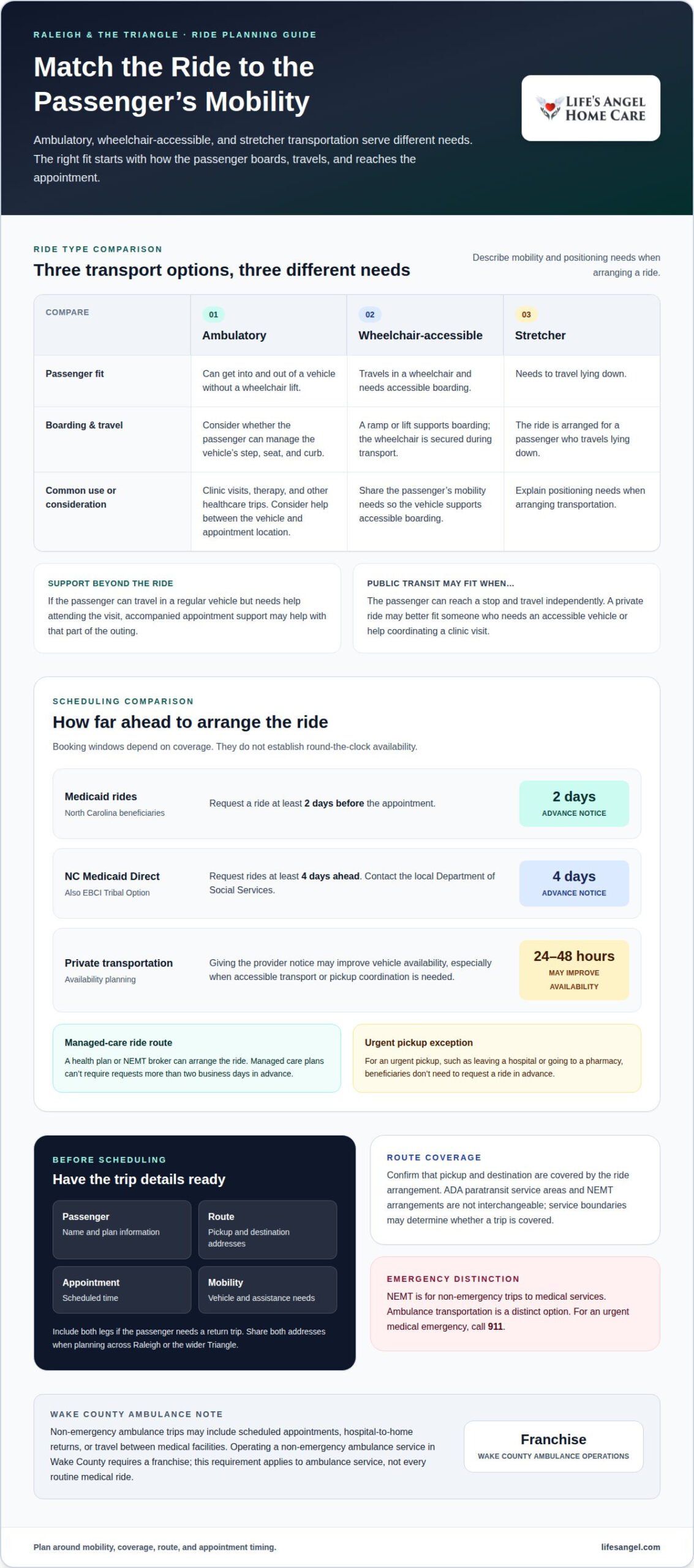
Ambulatory rides suit passengers who can get into and out of a vehicle without a wheelchair lift. They may be used for clinic appointments, therapy, and other healthcare trips. Consider whether the passenger can manage the vehicle’s step, seat, and curb, and whether they need help between the vehicle and the appointment location. These details help determine whether a ride alone is sufficient or accompaniment would be useful.
Wheelchair and Stretcher Services
Wheelchair-accessible vans use a ramp or lift for boarding, and the wheelchair is secured during transport. This option suits passengers who travel in their wheelchair and need accessible boarding. Stretcher transportation serves a different need, with the passenger lying down. Describe the passenger’s mobility and positioning needs when arranging transportation so the ride matches the trip.
In Wake County, non-emergency ambulance trips may include travel to a scheduled medical appointment, a hospital-to-home return, or transportation between medical facilities. They may also meet other non-emergency transportation needs. Operating a non-emergency ambulance service in Wake County requires a franchise. This requirement applies to ambulance service, not every routine ride to medical care.
For North Carolina safety planning, start by matching the vehicle and assistance to the passenger’s mobility. The local licensing requirement for non-emergency ambulance operations in Wake County is a franchise. NEMT is transportation to medical services on a non-emergency basis; ambulance transportation is a distinct option. Call 911 for an emergency, not a scheduled ride.
If the passenger can travel in a regular vehicle but needs help attending the visit, accompanied appointment support can help with that part of the outing.
Is ride scheduling and availability offered 24/7?
Ride requests are planned around the appointment and the passenger’s needs. For Medicaid rides, the advance notice required depends on coverage. Booking windows do not establish round-the-clock availability.
North Carolina Medicaid beneficiaries should request a ride at least 2 days before an appointment. Medicaid managed care plans can’t require requests more than two business days in advance. NC Medicaid Direct beneficiaries should request rides at least 4 days ahead. For an urgent pickup, such as leaving a hospital or going to a pharmacy, beneficiaries don’t need to request a ride in advance.
Start by identifying the passenger’s Medicaid coverage and the correct scheduling route. A health plan or NEMT broker can arrange managed-care rides; people enrolled in NC Medicaid Direct or the EBCI Tribal Option should contact their local Department of Social Services. UnitedHealthcare Community Plan members can schedule a North Carolina Medicaid ride by calling 800-349-1855.
When booking, have the passenger’s name and plan information, pickup and destination addresses, appointment time, and mobility needs ready. These details help describe the requested ride. Scheduling routes vary by program, so plan information helps direct the request. If the passenger needs a return trip after the appointment, include both legs when arranging transportation.
Recurring visits, such as weekly therapy, are easier to plan when you map the dates and appointment times together. Ask to schedule each ride through the appropriate plan or DSS route, then keep the trip details consistent unless an appointment changes. For private transportation services, 24 to 48 hours’ notice may improve vehicle availability. Earlier planning can be especially helpful when a passenger needs an accessible vehicle or pickup coordination.
If a doctor reschedules a visit, note the change promptly and share the updated time through the same booking route. An urgent need differs from a recurring scheduled trip. For eligible Medicaid rides, use the urgent-pickup process rather than relying on a routine booking.
Non-emergency medical transportation in Raleigh and the Triangle
Across Raleigh and the Triangle, transportation planning can affect whether people get to medical appointments, treatments, and follow-up visits. A trip may start in one community and end at a hospital, clinic, or treatment center elsewhere. Before arranging travel, map the pickup and destination, appointment time, and return plan. These details clarify the full trip, particularly for recurring care such as dialysis.
North Carolina Medicaid non-emergency rides may cover medical appointments, prescription pickup, mental health appointments, and substance use treatment. Depending on coverage, arrangements may go through a Medicaid health plan, an NEMT broker, or local county DSS. For NC Medicaid Direct or the EBCI Tribal Option, contact local DSS about scheduling. This is especially relevant when someone lives outside central Raleigh but receives treatment elsewhere in the Triangle.
For a visit between communities, plan around the appointment rather than assuming the return trip will happen automatically. Note whether the passenger has scheduled treatment, such as dialysis, and whether pickup is at home, a clinic, or a hospital. Provide both addresses and the appointment time through the applicable ride arrangement. This gives transportation staff the practical details needed to plan the trip.
North Carolina Medicaid requires anyone under age 18 using non-emergency medical transportation to be accompanied by an adult, according to North Carolina Medicaid. A medical emergency is different from a planned ride; call 911 for emergency help. Some Medicare Advantage plans offer transportation as a supplemental benefit, with benefits varying by plan. Original Medicare generally doesn’t cover routine rides to a doctor’s office, so coverage can affect the available travel plan.
For a ride beyond the vehicle, such as support attending a medical appointment, arrange accompanied appointment support as part of the day’s care plan.
Life’s Angel Home Care
Life’s Angel Home Care supports the care surrounding a medical trip, especially when a loved one needs help preparing for an appointment or managing daily routines at home. Personal Care and Mobility Assistance provide practical support, while Errand Assistance and Light Housekeeping can ease household tasks.
This in-home support can complement a separately arranged ride for non-emergency medical transport Raleigh, but it is not emergency ambulance transportation. If your family needs help beyond arranging the vehicle, practical assistance can make appointment days and home routines more manageable.
Contact Life’s Angel Home Care to discuss the support that may fit your family’s needs.
Make the Next Care Step Feel More Manageable
Planning non-emergency medical transport in Raleigh is also a chance to consider the support surrounding each appointment. A calm routine might include setting out what your loved one needs before leaving, arranging mobility assistance, and allowing time to rest afterward. Thoughtful preparation can help the day feel less rushed for everyone.
Life’s Angel Home Care provides Personal Care, Mobility Assistance, and Errand Assistance as part of everyday in-home support. This assistance is separate from emergency ambulance transportation and can complement a ride arranged for a medical visit. Consider which practical support would make the next step easier for your family.
Contact Life’s Angel Home Care to talk about care that fits your family’s needs. A little support can make room for more calm, connection, and confidence in the days ahead.
Frequently Asked Questions
How far in advance should NEMT rides be scheduled?
For Medicaid appointments, the scheduling window depends on your coverage. North Carolina Medicaid beneficiaries should request rides at least 2 days ahead, while NC Medicaid Direct beneficiaries should request them at least 4 days ahead. For private rides, 24 to 48 hours’ notice may improve vehicle availability. If a clinic changes an appointment, update the ride request through the original scheduling route.
Does Insurance Cover NEMT?
Coverage depends on your plan and the type of ride needed. North Carolina Medicaid may cover eligible non-emergency trips to medical appointments, prescription pickup, and certain treatment visits. Some Medicare Advantage plans include transportation as a supplemental benefit, but details vary by plan. Original Medicare generally does not cover routine rides to a doctor’s office. Review your plan’s transportation benefit and trip rules before relying on coverage.
How Does the NEMT Process Work?
Begin by identifying the passenger’s coverage and the level of assistance the trip requires. Arrange the ride through the applicable Medicaid health plan, broker, or local DSS, or use a private service. Provide the pickup and destination, appointment time, mobility needs, and return-trip details. For example, a clinic visit for someone using a wheelchair requires a different vehicle plan than an ambulatory trip.
What are the available non-emergency medical ride options near me?
Options may include ambulatory rides, wheelchair-accessible vans, and stretcher transportation, depending on the passenger’s needs and the trip. Public transit may suit someone who can reach a stop and travel independently. A wheelchair user may need a van with a ramp or lift and securement. Non-emergency ambulance transportation is a separate option for appropriate trips, not a replacement for emergency response.
Who Can Benefit From NEMT?
NEMT can help people who need to reach healthcare but cannot drive or manage the trip independently. This may include older adults, people with mobility limitations, and patients attending recurring treatments such as dialysis. It can also help caregivers coordinate appointments when they cannot provide the ride themselves. For a medical emergency, call 911 rather than arranging a scheduled non-emergency ride.
What non-emergency medical transportation services are available in Raleigh, NC?
In Raleigh, non-emergency medical transport can include scheduled rides to medical appointments, prescription pickup, mental health care, and substance use treatment. Transportation may be arranged through Medicaid coverage or privately, with options shaped by mobility needs and trip purpose. When planning non-emergency medical transport in Raleigh, coordinate the pickup and destination, especially for trips outside the passenger’s neighborhood or elsewhere in the Triangle.