

The cost of overnight caregiver services in Raleigh depends on the support needed, the scheduled hours, and the type of care involved. Since no single rate fits every household, understanding what shapes the cost can make planning easier.
It’s understandable to want a clear budget while making sure your loved one feels safe and cared for through the night. This article explains what affects overnight care costs, what to consider when reviewing caregiver qualifications, and how nighttime support may help with dementia-related wandering and safety concerns. You’ll also learn how in-home assistance can ease family responsibilities when nights become difficult or disrupted. Understanding the options can help you identify what support best fits your family.
Key Takeaways
- Understand which care needs and scheduling details can shape an overnight care plan and its cost.
- Learn what caregiver screening, training, licensing, and insurance can indicate when assessing care.
- See how calm, familiar nighttime support may help families respond to dementia-related wandering.
- Explore how personalized assistance can support safer nights while respecting your loved one’s routines and dignity.
Home care agency costs near me in Raleigh, NC
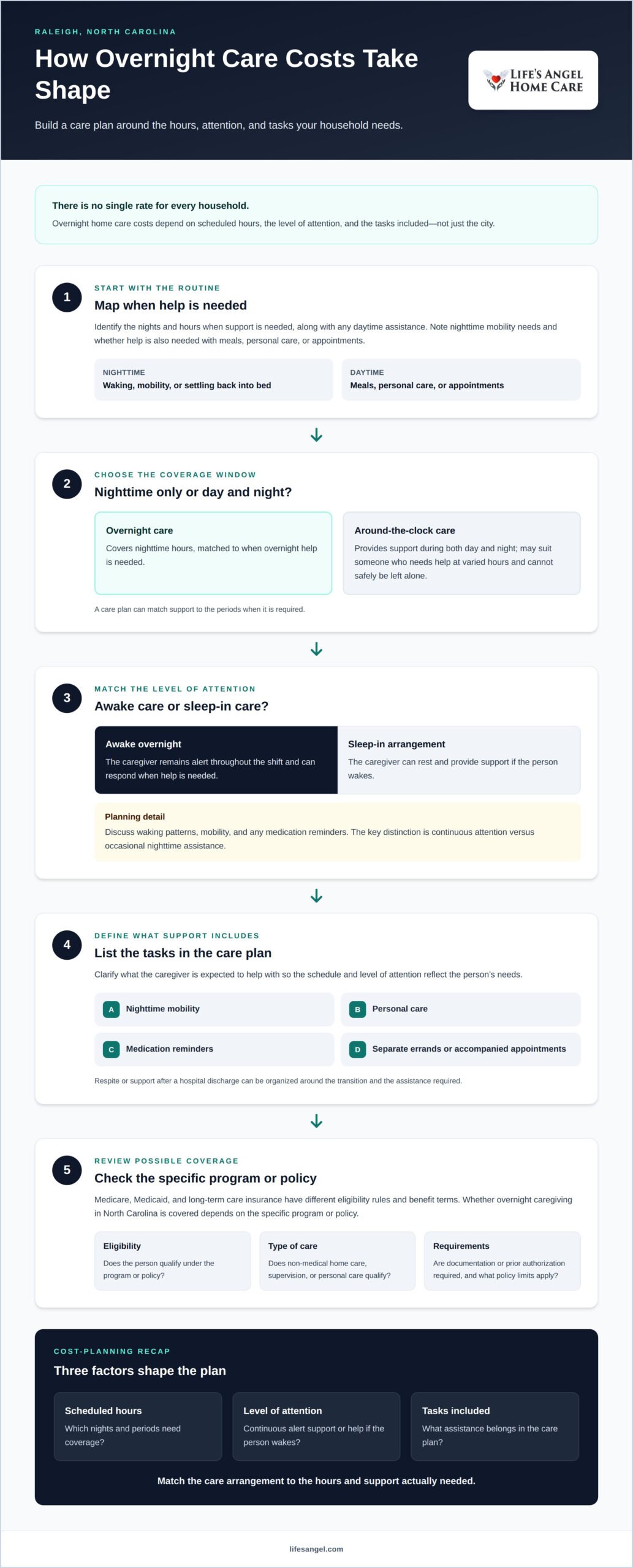
Overnight home care costs in Raleigh depend on the hours, care arrangement, and tasks included. A plan tailored to someone’s nighttime routine can help define the support needed, rather than assuming every household needs the same schedule.
Overnight or Around-the-Clock Care
Overnight care covers nighttime hours, while around-the-clock care provides support during both day and night. The schedule depends on when help is needed, such as for nighttime mobility or for daytime meals, personal care, and appointments. Round-the-clock support may suit someone who needs help at varied hours and cannot safely be left alone. A care plan can map needs to the periods when support is required.
Awake Care or Sleep-In Care
An awake overnight caregiver remains alert throughout the shift and can respond when someone needs help. In a sleep-in arrangement, the caregiver can rest and provide support if the person wakes. The key distinction is whether continuous attention or occasional nighttime assistance is needed. When planning care, discuss waking patterns, mobility, and any medication reminders.
Insurance and Program Coverage
Medicare, Medicaid, and long-term care insurance have different eligibility rules and benefit terms. Whether they cover overnight caregiving in North Carolina depends on the specific program or policy. Review whether non-medical home care, supervision, or personal care qualifies and whether documentation or prior authorization is required. The type of assistance, care setting, and policy limits can affect coverage.
In Raleigh, Durham, and Chapel Hill, a schedule can be shaped around a senior’s routine, overnight needs, and daytime support. For example, a plan can distinguish nighttime assistance from separate errands or accompanied appointments. Cost depends on scheduled hours, the level of attention, and the tasks included, not just the city.
Planning starts by identifying the nights and hours when help is needed, then matching them to the care plan. Respite or support after a hospital discharge can be organized around the transition and the assistance required. When considering overnight caregiver services in Raleigh, weigh whether nighttime-only coverage is suitable or whether support is needed throughout the day as well.
Caregiver screening, training, licensing, and insurance
Trust grows when you understand who may enter your home and what preparation supports their work. For overnight care in Raleigh, the provider says its caregivers undergo background checks and training, and are licensed and insured. Those details matter when a senior needs steady help after surgery, comfort during a difficult night, or assistance responding safely to an unexpected situation.
With an independent caregiver, coordination and backup may be less structured if the caregiver becomes unavailable. An agency can provide an organized care structure, but screening, training, and coverage practices vary. Ask how care is organized and what support is available, especially if your family needs help overnight.
Training should match the care a person will provide. Life’s Angel Home Care employs North Carolina Board-certified registered nurses, nursing assistants, and care aides. Its medical staff are BLS and CPR/AED accredited through the American Heart Association. These qualifications support preparedness, but do not mean every caregiver performs clinical tasks. Alzheimer’s-related confusion may call for calm communication and attentive support, while personal assistance after surgery may involve different needs.
Clear communication helps families understand the scope of non-medical care. Share practical details about nighttime routines, mobility concerns, medication reminders, and whom the caregiver should alert in an emergency. A care plan should make responsibilities clear to both the caregiver and family, with expectations agreed in advance. This also helps match the support to the person’s needs.
For a more informed discussion of in-home support, review these care services and support options alongside the overnight needs your family is weighing.
Dementia, sundowning, and nighttime wandering
Dementia can affect a person’s sense of place, particularly when they wake at night. One family reported that their mother woke three times a night and wandered in the hallway. A calm caregiver presence can offer companionship and help someone feel more oriented in familiar surroundings. Support should respect the person’s dignity and established routines.
When someone wanders at night, a caregiver can stay attentive, offer reassurance, and assist with safe movement around the home. The care plan can describe familiar rooms, mobility needs, and how the person usually responds to confusion. If someone heads toward a hallway after waking, for example, gentle conversation and nearby support may help redirect them without startling or rushing them.
Sundowning refers to increased confusion or restlessness later in the day for some people with dementia. A consistent evening routine can help a caregiver provide steady support, such as a quiet activity or familiar conversation. Families can share comforting topics, preferred routines, and signs that a person is becoming unsettled. These details help shape respectful, individual care.
Someone who wakes at night may need personal care, including help moving safely or settling back into bed. A caregiver can assist within the agreed care plan and keep family members informed about relevant changes. If behavior changes suddenly or there may be a health emergency, follow the family’s established care instructions and emergency plan.
A hospital visit or change in routine can make it especially important to plan nighttime support carefully. Before care begins, families can explain the person’s usual sleep pattern, history of wandering, communication preferences, and calming approaches. Overnight caregiver services in Raleigh can be considered in light of those needs, with companionship and personal care focused on comfort, safety, and familiar surroundings.
Nighttime safety monitoring and assistance
Overnight caregivers may assist with mobility, dementia-related confusion, and nighttime routines. The care plan should reflect the person’s needs and the family’s priorities.
Bathroom Assistance and Fall Prevention
A bathroom trip may involve getting out of bed, walking through a dim hallway, and returning safely. Mobility assistance can support movement in a way that suits the person’s abilities. A consistent plan can note preferred routes, mobility aids, and when help is needed. For a Wake Forest household, clear bathroom routine instructions can help the caregiver provide respectful assistance without rushing.
Evening and Morning Routines
Evening support may include helping someone settle in, change clothes, or get ready for bed. Morning assistance can help them start the day at a familiar pace. A written routine can note preferences, such as the order of tasks or where clothing is kept. Families can share details that make care more consistent and comfortable.
Overnight monitoring means responding to needs as they arise, not replacing skilled medical care. A caregiver may notice that someone is awake, offer mobility assistance, or alert family members according to agreed instructions. If dementia affects a person’s sense of direction, reassurance and familiar surroundings may help them settle back into bed.
Families can describe common nighttime needs, mobility concerns, and how they prefer to hear about changes. This helps shape care around the person rather than relying on a generic program. Errand assistance can also support daytime tasks, giving family members more time to coordinate routines and appointments.
Explore mobility assistance and support options for care needs that affect moving safely at home.
Life’s Angel Home Care
Life’s Angel Home Care can help families seeking practical in-home support alongside a plan for nighttime care. Its services include personal care, mobility assistance, errand assistance, and light housekeeping, which may ease everyday responsibilities for seniors and adults with disabilities.
Consider in-home support when personal routines, moving around the home, errands, or household tasks add to your family’s caregiving responsibilities. Mobility assistance can help with movement at home, while errand assistance supports practical needs outside it. These services can complement family care arrangements without replacing support beyond their scope.
Care needs can change, and choosing help is a personal decision. Contact Life’s Angel Home Care to discuss in-home support for your family.
Take the next step toward calmer nights
Choosing overnight caregiver services in Raleigh starts with identifying what would make home life more manageable for your family. Consider the nighttime needs that matter most, what could ease daytime responsibilities, and how your loved one prefers to receive help. A short list of priorities can make a care discussion more focused and personal.
Your needs do not have to be fully defined before exploring support. A change in routine, growing family strain, or concern about moving safely at home may be a reason to consider help. Life’s Angel Home Care provides in-home assistance with personal routines, mobility, and errands, while respecting each person’s dignity.
Share what’s been difficult and what kind of support you hope to find. Contact Life’s Angel Home Care to talk about your family’s needs and possible next steps. One thoughtful conversation can help you move forward with greater clarity and care.
Frequently Asked Questions
What overnight caregiver services are available in Raleigh, NC?
Overnight in-home support can involve personal care, mobility assistance, companionship, and help with daily routines. The support needed depends on whether someone wakes often, needs help moving, or feels unsettled at night. Families can also consider how daytime needs connect with overnight routines. Life’s Angel Home Care provides in-home personal care, mobility assistance, and companionship for seniors and adults with disabilities.
Which Raleigh agencies provide overnight in-home care?
Life’s Angel Home Care provides in-home support for seniors and adults with disabilities in the Raleigh area. Services include personal care, mobility assistance, companionship, meal preparation, errand assistance, and accompanied appointments. Overnight support depends on the schedule and type of help required. When considering nighttime care, distinguish general in-home assistance from the specific overnight coverage your relative needs.
What is the average hourly or overnight rate for caregivers in Raleigh?
Overnight care costs depend on scheduled hours, the type of shift, and the assistance included. An awake arrangement differs from sleep-in care, and mobility or personal care needs can shape the plan. The price depends on the individual case and is provided after a quote request, so the cost reflects the actual schedule and support required rather than an assumed standard arrangement.
How do Raleigh caregiver agencies verify licensing, insurance, and background checks?
Agency screening practices can include background checks, training, licensing, and insurance documentation. Life’s Angel Home Care employs board-certified registered nurses, nursing assistants, and care aides; its medical staff are BLS and CPR/AED accredited through the American Heart Association. These credentials describe staff qualifications and training. Families also benefit from understanding how an agency’s screening process relates to the specific caregiver assigned to provide support.
What should families ask when comparing overnight caregiver agencies in Raleigh?
When comparing overnight care, consider the schedule, the difference between awake and sleep-in coverage, and the assistance included. Think about needs such as mobility support, personal care, dementia-related reassurance, and communication with family. Training, screening, insurance, and how care is organized when routines change can also help you decide whether the arrangement suits your relative.