

What if companion care for lonely seniors could bring more connection to familiar routines without taking away the independence they value? If you’re concerned that a loved one spends more time alone than they would like, a useful first step is to ask what kind of company or support they’d welcome. Work and family responsibilities can make regular visits difficult, but your loved one’s preferences can guide a comfortable plan.
Companionship can fit naturally into everyday life: conversation over a meal, a shared hobby, help with an errand, or an accompanied appointment. The older adult should have a say in how each visit feels and what happens during it. This guide covers changes that may prompt a conversation, what a companion can do, and ways to make support practical and personal. Small, familiar moments can help someone feel included while leaving their routines and choices in their hands.
Key Takeaways
- Notice changes in conversation, interests, or daily habits, then ask whether your loved one would welcome more company rather than assuming they feel lonely.
- Companion care for lonely seniors can bring conversation and shared activities into familiar routines while keeping the older adult’s choices at the center.
- Make visits feel natural with activities your loved one already enjoys, such as preparing a familiar meal, talking over a hobby, or running an errand together.
- Agree on practical details, including preferred activities, pace, and outing needs, and adjust the routine based on your loved one’s feedback.
- When family schedules make regular visits difficult, in-home companionship can add company and practical support without replacing family relationships.
Companion Care for Seniors: The Need for Connection
If your loved one has grown quieter, stopped asking about familiar activities, or seems less interested in seeing people, it’s natural to wonder whether they would like more company. These changes can be easy to miss when you’re balancing work, family, and visits. They don’t automatically mean your loved one feels lonely, so start with a conversation instead of a conclusion.
Companion care is non-medical, person-centered support that brings conversation and connection into everyday life at home. A companion might talk over tea, share an activity, help prepare a meal, or accompany someone on an errand. For families exploring companion care for lonely seniors, it can offer a way to make social connection part of familiar routines. It is not a diagnosis or a promise to resolve loneliness.
How loneliness can show up in an older adult’s routine
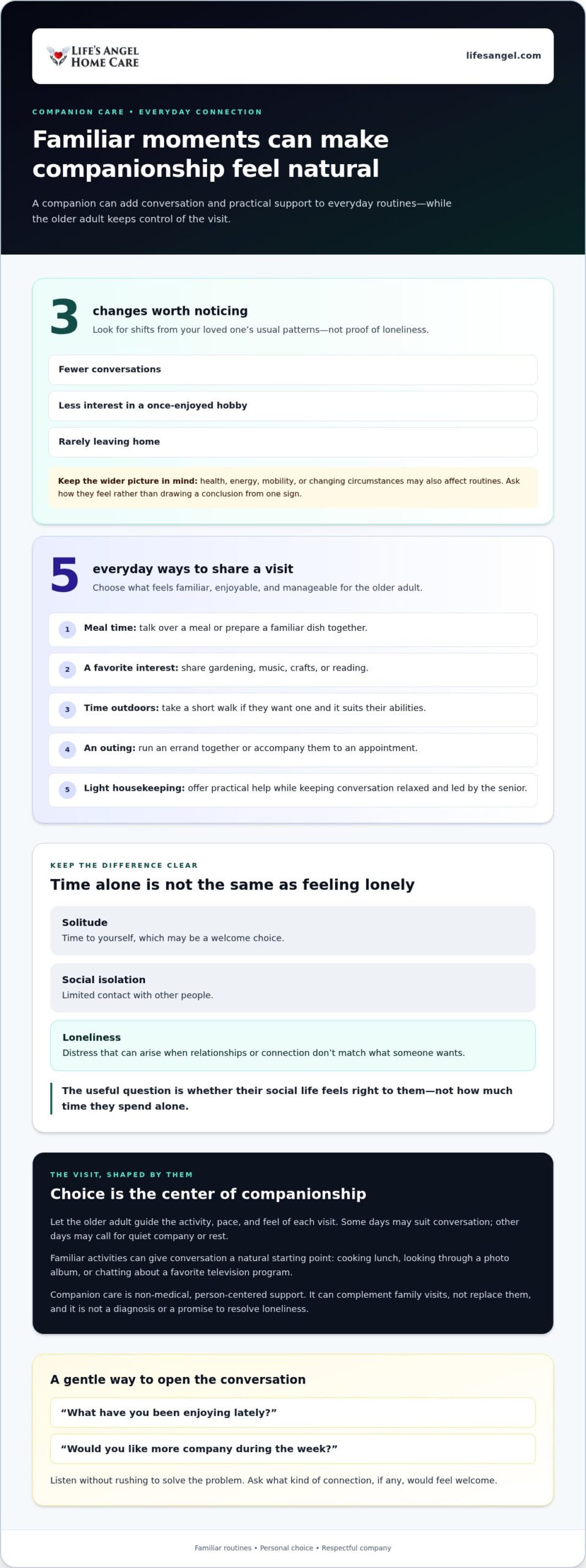
Look for changes from your loved one’s usual patterns. They may have fewer conversations, lose interest in a hobby they once enjoyed, or rarely leave home. Any of these changes can have many causes, including shifts in health, energy, mobility, or circumstances. Consider the wider picture and ask how your loved one feels rather than treating one sign as proof of loneliness.
Open-ended questions can make it easier to hear what they want. Try, “What have you been enjoying lately?” or “Would you like more company during the week?” Listen without rushing to solve the problem. Avoid labels and ask what kind of connection, if any, would feel welcome.
Solitude, social isolation, and the need for companionship
Time alone can be a welcome choice. Someone may enjoy quiet mornings, independent hobbies, or a private routine and feel content. Social isolation describes limited contact with others, while loneliness is the distress a person may feel when their relationships or level of connection don’t match what they want. One does not automatically mean the other.
Loneliness is feeling short of the connection you want; being alone simply means having time to yourself. A senior can value independence and still appreciate regular company. The useful question is not how much time they spend alone, but whether their social life feels right to them. A respectful companion follows their pace, leaving space for quiet as well as conversation.
How Companion Care Helps Lonely Seniors Feel More Connected
A friendly visit can add a point of connection to the day without taking the place of family. A companion makes time to talk, listen, and share an activity at the older adult’s pace. Family relationships remain important, while regular visits can add another familiar face when relatives’ schedules are full.
Conversation often comes more easily while doing something familiar than during a planned discussion about loneliness. Preparing lunch together, looking through a photo album, or chatting about a favorite television program gives the visit a natural starting point. There’s no need to fill every moment. One day, a senior may enjoy a lively conversation; another day, quiet company may feel right.
Everyday activities that can make a visit meaningful
Start with what the older adult enjoys and has energy for. A shared activity can open the door to conversation, but it should not become an obligation. For example, a companion might:
- Talk over a meal or help prepare a familiar dish together.
- Share a hobby, such as gardening, music, crafts, or reading.
- Take a short walk if the senior wants one and it suits their abilities.
- Run an errand together or accompany them to an appointment, making the outing a chance to talk and spend time together.
- Offer light housekeeping support while keeping conversation relaxed and led by the senior.
Practical help can make interaction feel easy rather than forced. Choosing groceries, discussing what to cook, or talking on the way to an appointment gives conversation a natural focus. Let the older adult shape the visit, including when they would rather rest or simply have someone nearby.
Why familiar routines and regular conversation matter
A familiar rhythm can make visits easier to anticipate and welcome. When a companion listens closely and remembers personal interests, conversation feels individual rather than rehearsed. Asking about a favorite recipe or following up on a story the senior shared before shows attention and respect.
Personalized companionship brings connection into everyday routines by making time for the interests, pace, and choices that matter to the senior. For families exploring companion care for lonely seniors, this support can complement family visits, not replace them, while offering practical help along the way. Learn more about in-home companionship support as one way to add connection to familiar routines.
Does Companion Care Mean Losing Independence? Addressing Common Concerns
Accepting help at home can feel like a significant change, especially for someone who has managed their own routines for years. But companionship does not have to mean giving up control. A senior can decide what they would like to do, when they prefer quiet, and how a visit fits into the day. Support should make room for their choices, not take over.
For families considering companion care for lonely seniors, it helps to distinguish companionship from clinical care. Companionship is non-medical support, such as conversation and everyday assistance. It is not medical treatment or skilled nursing, and it cannot promise to resolve loneliness or prevent health problems. Its value is in offering respectful company and practical help that may make daily life feel more supported. It also does not replace family relationships or emergency services.
How families can introduce companionship without pressure
Start with curiosity, not a decision already made on your loved one’s behalf. Ask, “What would make your week a little easier or more enjoyable?” Then listen, including if the answer is “nothing right now.” Your loved one may need time to consider the idea or explain what makes them hesitant.
If they’re open to trying support, suggest a first visit built around something familiar, such as sharing a meal or talking about a favorite interest. Avoid presenting it as a formal assessment or as evidence that they can’t manage. Agree on simple boundaries together, such as preferred activities or topics, and leave room to adjust. Their comfort matters more than persuading them to accept a particular arrangement.
What companion care can and cannot be expected to do
A companion can offer conversation, join an activity, help with errands, prepare a meal, or accompany someone to an appointment. These practical moments create opportunities for social connection while the senior remains involved in deciding how the time is spent. Companionship may add warmth and structure to the day, but each person’s experience is different, and it is not a guaranteed solution to loneliness.
Sometimes a loved one also wants hands-on help with personal daily tasks. In that case, personal care may be relevant alongside companionship. Discuss what support would feel useful while keeping the senior involved in decisions. A respectful approach recognizes both needs: assistance can be welcome, and the person receiving it can still have a meaningful say in their routines.
How to Make Companion Care Feel Personal and Comfortable
A comfortable visit begins with the senior’s own ideas, not a preset activity list. A little preparation can help a companion understand what feels familiar, which topics are welcome, and when your loved one prefers to take things slowly. The goal is for support to fit their life, rather than becoming another routine they have to accommodate.
What families can share before visits begin
Start by asking your loved one what they would like a companion to know. With their agreement, share useful details such as their preferred name, conversation preferences, daily rhythms, and interests. You might also mention meal preferences, comfort with outings, mobility needs, appointment accompaniment, and any boundaries that help them feel at ease. These details give each visit a more personal starting point.
Build a routine together, then adjust
Try a simple process: ask what would make the week more enjoyable, listen without filling in the answer, identify activities they genuinely like, and agree on a comfortable routine. After visits begin, ask, “What did you enjoy?” or “Would you change anything next time?” Interests, energy, and practical needs can shift, so revisit the plan together.
Familiar home routines offer an easy foundation. A favorite time for conversation, help preparing a meal, or a shared interest may feel more comfortable than introducing several new activities at once. In Durham, Chapel Hill, and Raleigh, local outings can also be part of a visit if the senior is interested and the outing suits their needs. For more on local support, read this guide to elderly companion care in Durham, NC.
If an outing is part of the plan, talk about what would help your loved one feel steady and comfortable before heading out. Let their mobility needs and preferences guide the activity. Families considering how to keep an elderly parent at home can also discuss what kind of assistance would make everyday routines more manageable.
These small conversations can help companion care for lonely seniors feel respectful and personal. Life’s Angel Home Care provides in-home companionship and practical daily support in Durham, Chapel Hill, and Raleigh. Explore in-home companionship support as a way to bring company into familiar routines.
Finding a Gentle Next Step for a Lonely Senior at Home
Regular companionship may be worth exploring if your loved one says they’d like more company, misses familiar social routines, or finds it difficult to get out and connect with others. These observations can open a conversation, but they do not decide the answer for your loved one. Their wishes matter most, including if they want to wait or try a different kind of support.
Rather than beginning with a label like “lonely,” ask what they would enjoy or find helpful. A calm family conversation can turn a general worry into a clearer picture of the kind of support that might feel welcome.
Questions to discuss as a family
Give your loved one space to describe their experience in their own words. You might ask:
- Are there times of day or days of the week when you’d like more company?
- What kind of visit would you enjoy, and what would you rather not do?
- Would practical help with a meal, errand, appointment, or daily routine make the day easier?
Agree on how family members will share relevant observations, while keeping private conversations private and treating your loved one with dignity. The goal is to understand their preferences, not to monitor or pressure them. If they’re unsure, give them time and revisit the conversation gently.
When companionship may sit alongside other home support
Some seniors want company and would also appreciate help with everyday tasks. Mobility assistance, meal preparation, errands, or personal care can address practical needs while creating opportunities for conversation. The right combination depends on what the person wants and what makes daily life feel more manageable. Life’s Angel Home Care provides these kinds of in-home support for seniors and adults with disabilities.
Life’s Angel Home Care provides in-home companionship alongside practical daily support in Durham, Chapel Hill, and Raleigh. Visits can include conversation, mobility assistance, errands, light housekeeping, meal preparation, personal care, and accompaniment to appointments. Support can follow familiar routines and reflect the kind of connection the older adult welcomes. Companionship is not a guaranteed cure for loneliness, but it can offer a considerate way to add company and assistance at home.
To explore companionship and daily support for your loved one, learn about Life’s Angel Home Care. A conversation about what would feel comfortable can be a gentle place to begin.
Make Room for More Connection at Home
A loved one becoming quieter or less engaged may be a reason to check in, not a reason to make assumptions. Listen to what they want, and remember that accepting companionship does not mean giving up independence. A comfortable visit can follow familiar routines while leaving the older adult in charge of how they spend their time.
For families considering companion care for lonely seniors, small, personal moments can make support feel more natural. Conversation, shared activities, and practical help create opportunities for connection while respecting individual preferences. Life’s Angel Home Care provides in-home companionship alongside daily assistance. Its team includes board-certified registered nurses, nursing assistants, and care aides. Care aides are BLS and CPR/AED certified.
If you’re exploring a gentle next step in Durham, Chapel Hill, or Raleigh, contact Life’s Angel Home Care to discuss in-home companionship and practical support for your loved one. Your loved one’s wishes can guide the conversation and help shape support that feels comfortable at home.
Frequently Asked Questions
How does companion care help lonely seniors?
Companion care can add friendly conversation and shared moments to a senior’s familiar daily routine. A companion might talk with them over a meal, join a favorite activity, or provide company during an errand. For families exploring companion care for lonely seniors, support can offer another source of social connection without replacing family relationships or taking control away from the older adult. Visits should reflect the senior’s interests and preferences.
What does a companion caregiver do during a visit?
A companion caregiver offers social and practical support based on what the senior wants and needs that day. A visit might include conversation, sharing a hobby, preparing a meal, light housekeeping, running an errand, or accompanying the senior to an appointment. Activities do not need to fill the whole visit; a companion can respect quiet time, too. The older adult’s routines, energy, and preferences help shape how the time is spent.
How can I tell if my elderly parent is lonely or simply enjoys being alone?
Ask how your parent feels about their social life instead of judging by how much time they spend alone. Chosen solitude can be enjoyable, while loneliness is feeling short of the connection a person wants. Notice changes from their usual routine, such as less interest in familiar activities or fewer conversations, but remember these can have many causes. Open-ended questions like “Would you enjoy more company?” invite an honest answer without applying a label.
Can companion care help a senior who is reluctant to accept help?
It may be easier to consider companionship when the conversation begins with the senior’s own wishes, not a family decision already made for them. Ask what would make the week more enjoyable, listen to concerns, and allow time to think. If they’re interested, suggest starting with a familiar activity or relaxed conversation. Respect boundaries and hesitation; a companion visit should support the senior’s choices, not pressure them to accept a particular routine.
Is companion care the same as personal care or home health care?
No. Companion care focuses on social connection and practical non-medical support, such as conversation, errands, or meal preparation. Personal care can include assistance with hygiene and other daily activities. Home health care generally refers to health-related clinical services, which are different from companionship. A person may benefit from companionship alongside other daily support, depending on their needs. These types of help have different purposes and should not be treated as interchangeable.
How often should a lonely senior have companion care visits?
There isn’t one visit frequency that fits every senior. Consider when your loved one would welcome company, what kind of routine feels comfortable, and what practical support may be useful. Discuss those preferences together and adjust as interests or daily needs change. Life’s Angel Home Care provides in-home support hourly or on scheduled shifts, so visits can be considered in relation to the person’s routine rather than assuming one schedule suits everyone.
Is companion care available for seniors in Durham, North Carolina?
Yes. Life’s Angel Home Care provides in-home companionship and daily living assistance in Durham, Chapel Hill, and Raleigh. Support may include conversation, errands, light housekeeping, meal preparation, mobility assistance, personal care, and accompaniment to appointments. The agency employs board-certified registered nurses, nursing assistants, and care aides, and care aides are BLS and CPR/AED certified. Support is centered on helping seniors feel comfortable at home.