

What if taking a break helped you care with more patience, not less devotion? If you’re searching for “relief for family caregivers durham nc,” you may be handling personal care, errands, meals, and household tasks with little time to rest or attend to your own needs.
It’s understandable to feel uneasy about stepping away, especially when your loved one is most comfortable at home. Accepting help doesn’t diminish your care. It gives you time to recharge while someone supports familiar routines with respect.
This guide covers signs of caregiver strain, ways to plan a break, and everyday tasks an in-home caregiver can take on. You’ll also learn how hourly or scheduled support from Life’s Angel Home Care can fit a family’s needs in Durham, including mobility assistance, meal preparation, companionship, and accompanied appointments. These options can also be relevant to families in Chapel Hill and Raleigh.
Key Takeaways
- Caregiver relief means arranging planned support so you can step away from care duties without managing everything alone.
- Compare help from family or friends, scheduled in-home assistance, and eligible programs by flexibility, task coverage, continuity, and coordination.
- Build a relief plan by identifying what feels hardest, choosing a break, listing tasks, and sharing familiar routines.
- Start with one manageable scheduled period, then adjust the plan based on how you and your loved one feel.
- Explore relief for family caregivers in Durham, NC, through hourly or scheduled home support shaped around daily needs.
Caregiver relief in Durham, NC: recognize when you need support
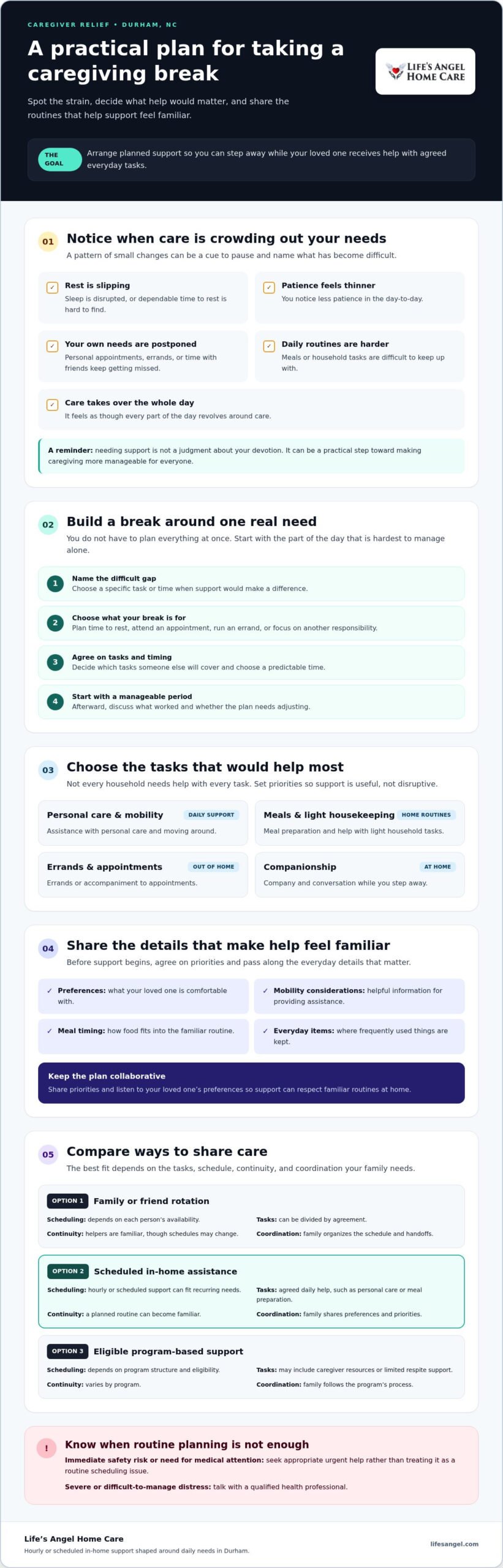
Supporting someone you love can involve coordinating appointments, helping with daily routines, working, caring for other family members, and trying to meet your own needs. If rest, errands, or personal appointments keep getting postponed, it may be time to consider relief for family caregivers durham nc. Recognizing that you need support isn’t a judgment about your devotion. It’s a practical step toward making caregiving more manageable for everyone.
Caregiver relief is planned support that gives a family caregiver time away from care duties while their loved one receives appropriate assistance. It may be a short break or a recurring period of help. For a broader overview of what respite care is, see this general reference on respite care.
What can caregiver strain look like in everyday life?
Strain can show up as a pattern of small changes: disrupted sleep, less patience, or little time for friends and activities that matter to you. You might miss your own appointments, struggle to keep up with meals or household routines, or find that every part of the day revolves around care.
These signs don’t mean you’re failing or love your family member any less. They can be a cue to pause and name what has become difficult. Choose a calm moment to share specific examples, such as a weekly errand you can no longer fit in or a routine that is hard to manage alone. Listening to your loved one’s preferences can help keep support familiar and respectful.
When does a family caregiver need a planned break?
Consider arranging help when care tasks leave no dependable time for rest or essential responsibilities. You don’t have to wait until you feel overwhelmed. Identify a task someone else could cover, then choose a time to step away, attend an appointment, or run an errand.
Recurring gaps in a routine are different from urgent safety or medical concerns. If your loved one faces an immediate safety risk or needs medical attention, seek appropriate urgent help rather than treating it as a routine scheduling issue. If your distress feels severe or difficult to manage, talk with a qualified health professional. You don’t have to decide everything at once; noticing a pattern and asking for support can be a practical first step.
How in-home caregiver relief works for Durham families
In-home relief can be arranged around the support your loved one already receives from family. During a scheduled period, a caregiver helps with agreed tasks, giving you time to rest, run errands, or focus on another responsibility. The aim isn’t to replace your role. It’s to share selected daily tasks in a way that respects your loved one’s preferences and familiar routines at home.
Planned in-home help gives family caregivers time away by arranging support for everyday tasks that still need attention.
Which everyday tasks can another caregiver help with?
Start by identifying what would make a real difference during your time away. Depending on your family’s priorities, help may include:
- Personal care and mobility assistance
- Meal preparation and light housekeeping
- Errands and accompanied appointments
- Companionship and conversation at home
Not every household needs help with every task. You might want someone to assist with a morning routine, prepare a meal, or keep your loved one company while you step out. Agreeing on priorities helps make support useful rather than disruptive.
How can families arrange support around existing routines?
A clear plan helps everyone know what to expect. First, identify the part of the day when you most need a break. Then agree on the tasks to be covered, choose a predictable time, and share helpful details before support begins.
Explain your loved one’s preferences, mobility considerations, and familiar routines, such as meal timing or where everyday items are kept. These details help a caregiver provide assistance in a comfortable, respectful way. Start with a manageable scheduled period, then discuss what worked and whether the plan needs adjusting.
For families exploring relief for family caregivers durham nc, Life’s Angel Home Care provides hourly or scheduled in-home support. Explore compassionate in-home support as you consider what could fit your family’s routine.
Comparing caregiver relief options without losing your loved one’s comfort
There isn’t one right arrangement for every Durham family. The best fit depends on which tasks need attention, how predictable your schedule is, and what feels comfortable to your loved one. You can agree on tasks, routines, and timing so support respects your family member’s preferences and keeps you involved in decisions.
| Option | Scheduling flexibility | Task coverage | Continuity | Family coordination |
|---|---|---|---|---|
| Family or friend rotation | Depends on each person’s availability | Tasks can be divided by agreement | Familiar helpers, though schedules may change | Family organizes the schedule and handoffs |
| Scheduled in-home assistance | Hourly or scheduled support can fit recurring needs | Agreed daily tasks, such as personal care or meal preparation | A planned routine can become familiar | Family shares preferences and priorities |
| Eligible program-based support | Depends on program structure and eligibility | May include caregiver resources or limited respite support | Varies by program | Family follows the program’s process |
When might informal family help be enough?
Relatives or friends may be able to cover a predictable, limited need, such as a weekly errand or regular visit. Agree on who is coming, when, and what they’ll do. A shared schedule can prevent missed handoffs and confusion. This approach can work while everyone’s availability is steady, but changing work or family commitments may make the rotation harder to maintain.
When can scheduled in-home assistance make a difference?
Hourly support can help when a recurring task, such as assistance with a daily routine or mobility, makes it difficult for you to step away. Keeping a familiar routine can help the support feel more comfortable over time. If hands-on daily assistance is relevant, explore personal care services available in Durham.
Eligible program-based support may also be worth exploring. In North Carolina, Project C.A.R.E. offers support for caregivers of people with Alzheimer’s disease and related dementias, including limited respite vouchers; eligibility and available support depend on the program. For families seeking relief for family caregivers durham nc, comparing these options can help clarify what fits without assuming one approach suits every household.
Keep the distinction clear: routine in-home assistance can help with agreed daily tasks, but it isn’t a substitute for clinical care or emergency response. If an urgent medical or safety concern arises, seek appropriate professional or emergency support.
How to make a caregiver relief plan that works at home
A useful plan starts with the part of caregiving that feels hardest to sustain. Maybe you’re missing your own appointments, postponing errands, or finding it difficult to step away during a regular part of your loved one’s day. For families seeking relief for family caregivers durham nc, a written plan can turn a general need for help into clear, manageable steps.
Start with one scheduled period of support. A manageable first step gives your family a chance to learn what feels comfortable before making broader changes. Consider how much time you need for an appointment or household responsibilities, and build the plan around your loved one’s usual routines.
What should families include in a support plan?
Keep instructions clear and focused on what helps your loved one feel safe, respected, and at ease. A brief written guide can cover:
- Priority tasks: The specific help needed during the scheduled period.
- Preferred timing: Meal times, rest periods, or other familiar parts of the day.
- Mobility considerations: Helpful information about moving around the home and everyday routines.
- Household preferences: Where useful items are kept and how your loved one likes things done.
- Communication: Who in the family should receive updates and how schedule changes will be shared.
Share the details a caregiver needs to provide respectful, practical support. If a task involves personal care, explain your loved one’s preferences and privacy expectations. A calm introduction and clear boundaries help everyone understand what to expect.
How can you make the first period of help feel easier?
Before the scheduled time, introduce the caregiver and walk through familiar routines without rushing. Explain where meal items are kept, how your loved one prefers to move through the home, or what helps them feel comfortable during companionship. Invite questions and give your loved one room to express preferences.
Afterward, check in with your loved one and yourself. Was the timing comfortable? Were the tasks clear? Did the break leave room for the errand, appointment, or rest you planned? Use the answers to make small adjustments rather than changing everything at once.
Revisit the plan as needs, routines, or family availability change. A schedule that once worked may need updating, and that’s a normal part of caregiving. If you’re ready to explore planned in-home support, connect with Life’s Angel Home Care to consider an arrangement shaped around your family’s daily routines.
How Life’s Angel Home Care can support family caregivers in Durham
Relief can begin with a practical change: someone else helps with a daily routine while you run an errand, attend an appointment, or rest. Life’s Angel Home Care is based in Durham and provides hourly or scheduled in-home support for seniors and adults with disabilities. Families in Durham, Chapel Hill, and Raleigh can focus on which everyday tasks would make a planned break possible and how assistance can fit a loved one’s familiar routine.
Support includes personal care, mobility assistance, meal preparation, errands, light housekeeping, accompanied appointments, and companionship. The agency employs board-certified registered nurses, nursing assistants providing CNA assistance for an aging parent in Durham, and care aides. Nursing assistants and care aides are BLS and CPR/AED certified.
What can families expect from support tailored to their routine?
Agreeing on priorities, preferences, and how your loved one likes daily tasks handled can help keep assistance familiar and protect their dignity and privacy. Practical help and companionship can work together: a caregiver might assist with a routine task while offering conversation and a reassuring presence.
Home assistance can support agreed daily needs, but it doesn’t replace skilled nursing or emergency care. If the situation involves urgent medical needs, seek appropriate clinical or emergency support.
What is a comfortable next step for a Durham family?
You don’t need to solve every challenge at once. Start by naming one pressure point, such as a task that regularly prevents you from leaving home, then consider when help would matter most. Sharing that starting point can make a conversation about support clearer and less overwhelming.
If companionship is an important part of the routine, read our elderly companion care guide for Durham families. For relief for family caregivers durham nc, Life’s Angel Home Care provides practical support around your household’s needs. Talk with Life’s Angel Home Care about everyday tasks that could make a planned break possible while your loved one remains comfortable at home.
Take the next step toward a more manageable care routine
Caregiver relief can begin with noticing which responsibilities leave you without time for rest, errands, or appointments. A simple plan built around agreed tasks and familiar routines can help your loved one remain comfortable at home while you take a break. You don’t have to change everything at once; start with the support that would make the greatest difference.
For families seeking relief for family caregivers durham nc, Life’s Angel Home Care provides hourly and scheduled in-home support from its Durham base. The agency employs board-certified registered nurses, nursing assistants, and care aides; nursing assistants and care aides are BLS and CPR/AED certified.
When you’re ready, Talk with Life’s Angel Home Care about support for your family. Discuss which everyday tasks could make a planned break possible. Asking for help is a thoughtful step, and you can take it at a pace that feels right for your family.
Frequently Asked Questions
How can family caregivers get relief in Durham, NC?
Family caregivers in Durham can arrange planned help from relatives, friends, or an in-home care service, depending on the tasks and schedule involved. Start by identifying what makes it hardest to step away, such as personal care, meal preparation, or errands. Life’s Angel Home Care provides hourly or scheduled in-home support for seniors and adults with disabilities. Naming one priority can help you plan a break that feels comfortable for your loved one.
Can in-home care give a family caregiver a regular break?
Yes. Scheduled in-home care can give a family caregiver recurring time away when the agreed support fits the household’s routine. Identify a predictable period and tasks that need coverage, then revisit the arrangement as needs or schedules change. Support may include companionship or help with daily activities. A planned schedule can make time for your appointments, errands, or rest more manageable while your loved one remains in familiar surroundings.
What tasks can an in-home caregiver help with while family takes time away?
An in-home caregiver may help with agreed daily tasks such as personal care, mobility assistance, meal preparation, light housekeeping, errands, and companionship. Support can also include accompanying a loved one to appointments. Decide together which tasks matter most during your break. Clear instructions about routines, privacy, and comfort can help make assistance feel respectful rather than disruptive.
Is respite care the same as hourly in-home care?
Not exactly. Respite care describes support intended to give a family caregiver a break, while hourly in-home care describes how assistance is scheduled and delivered. Hourly home support can serve as respite when it covers agreed tasks while you step away. The terms refer to different aspects of care, and the arrangement should reflect your family’s needs, the tasks involved, and the time you hope to set aside.
How do I talk to my loved one about accepting help at home?
Choose a calm moment and explain what you hope the help will make possible, such as attending an appointment or running an errand. Ask what would help your loved one feel comfortable, and listen to concerns about privacy, routines, or having someone new in the home. Consider starting with one specific task rather than presenting a broad change. Involving your loved one in the plan can help preserve their sense of choice and dignity.
What should I include in a family caregiver relief plan?
A practical plan should name the tasks to be covered, preferred timing, mobility considerations, meal routines, and household preferences that support comfort. Include how family members will share updates or communicate schedule changes. Keep instructions clear and focused on what the caregiver needs to know. Starting with one manageable scheduled period gives everyone a chance to see what works, then adjust as your loved one’s needs or family availability change.
Can home care help with appointments and errands in Durham?
Yes. In-home support can include accompanying a loved one to appointments and helping with errands, based on the family’s needs. This can give a family caregiver time for another responsibility while their loved one receives assistance and companionship. Life’s Angel Home Care is based in Durham and provides hourly or scheduled support. Discussing timing, preferences, and practical details ahead of time helps the outing or errand fit comfortably into the day.