

What could a little companionship change about an ordinary day at home? If you’re exploring elderly companion care durham nc, you may be looking for warm social support and practical help while wondering what a caregiver can do and how a new person might fit into your loved one’s routines. Those are important questions to ask before arranging care.
Companion care can combine social connection with agreed-upon, non-emergency help. Depending on the person’s needs and the services arranged, a visit may include conversation, meal preparation, errands, light housekeeping, mobility assistance, personal care, or accompaniment to appointments. This guide explains what companion care may include, how to assess whether support feels respectful, and what to ask before arranging help in Durham. It also offers a straightforward way to discuss routines and preferences so your family can make an informed choice.
Key Takeaways
- Elderly companion care durham nc can bring social connection together with practical, non-emergency support at home.
- List the tasks your loved one wants help with, and discuss mobility assistance or personal care needs before arranging visits.
- Ask about the older adult’s preferences, communication, and the qualifications relevant to the specific assignment.
- Plan around familiar routines by listing concerns, choosing preferred activities, and setting priorities before discussing scheduling and billing.
- When exploring Life’s Angel Home Care, ask which staff roles and qualifications apply to the requested support and confirm current scheduling options.
What Does Elderly Companion Care in Durham, NC, Actually Include?
Arranging help at home is a personal decision. You’re welcoming someone into a familiar space and deciding what support feels comfortable, so it helps to understand the scope before getting started. A useful distinction for families searching for elderly companion care durham nc is that companion care focuses on social connection and practical, non-emergency help at home, rather than clinical treatment.
Companion care is one part of broader elderly home care. The specific tasks depend on what the older adult wants and what the provider agrees to do. Visits may include conversation, shared activities, or help with everyday routines. The older adult’s preferences should guide the support, without promises about health outcomes.
What might a companion care visit look like?
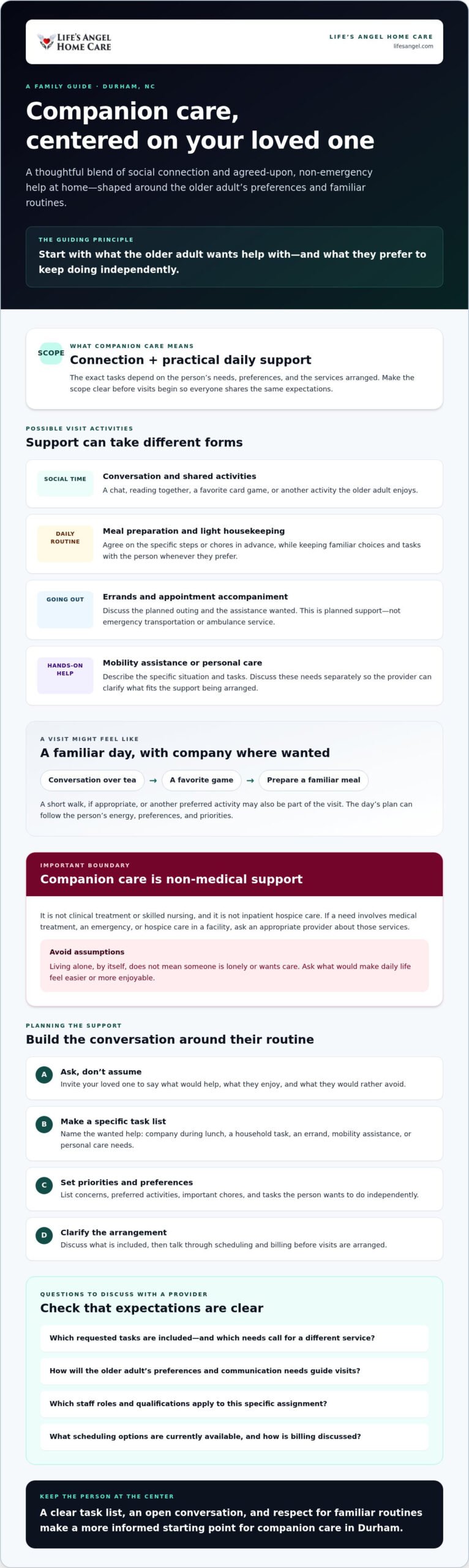
A visit might begin with a conversation over tea and continue with a favorite card game, a short walk if appropriate, or another activity the person enjoys. The caregiver and older adult might also prepare a familiar meal together. Meal preparation, light housekeeping, and errands may be included when arranged in advance. Rather than follow a rigid script, a visit can be shaped around the person’s energy, preferences, and priorities that day.
Before support begins, describe the tasks in practical terms. Does your loved one want company while making lunch, help with a household task, or someone to accompany them on an errand? Being specific helps the older adult, family, and provider share the same expectations. For more detail on household support, see this guide to light housekeeping for seniors in Durham, NC.
When might a family consider companionship at home?
You might notice that a loved one has fewer opportunities to socialize, spends more time without company, or finds some everyday routines harder to manage. These observations can open a caring conversation, but they don’t prove that someone is lonely or needs a caregiver. Living alone, by itself, doesn’t mean a person wants or requires help. If loneliness is a particular concern, this guide to companion care for lonely seniors offers more ways to approach the conversation.
Ask what would make daily life feel easier or more enjoyable. “Would you like company for a meal?” gives your loved one room to choose, rather than making a decision on their behalf. If they’re open to support, note what they’d welcome, what they’d prefer to do independently, and which activities they might enjoy sharing. This creates a clearer starting point for discussing companion care in Durham and keeps the older adult’s voice central.
Which Companion Care Services Can Families Arrange in Durham?
Companion care can include more than conversation, but a clear task list helps distinguish social support from hands-on assistance. Life’s Angel Home Care lists companionship along with practical in-home services for families exploring elderly companion care durham nc. Discuss the requested tasks before visits begin so your loved one knows what to expect and can say what feels comfortable.
Social support and familiar daily routines
Social time can follow the older adult’s lead: a chat, reading together, a game, or another preferred activity. A caregiver may also help with meal preparation, taking on agreed-upon steps while leaving familiar choices and tasks to the person. Light housekeeping is another listed service. Prioritize specific chores in advance so household tasks don’t take up the entire visit if social time is also important.
Errands, mobility help, and appointment accompaniment
Errand assistance for seniors in Durham and accompaniment to appointments are also listed services. These are planned support, not emergency transportation or ambulance service. If your loved one needs help moving around, ask what mobility assistance may involve and describe the particular situations where help is wanted. Discuss personal care needs separately so the agency can clarify whether the requested tasks fit the support being arranged. For a closer look at that service category, consult the related personal-care guide.
Companion care is non-medical daily support. It isn’t the same as skilled nursing or other clinical treatment, and it isn’t inpatient hospice care. If the need involves medical treatment, an emergency, or hospice care in a facility, ask an appropriate provider about those services instead.
Use this checklist when discussing a possible care plan:
- Companionship: Which activities does the older adult enjoy, and which would they rather avoid?
- Household routines: Would meal preparation or light housekeeping help? Which specific tasks matter most?
- Outings: Are errands or planned appointment accompaniment wanted?
- Hands-on help: Is mobility assistance or personal care needed? What specific tasks should be discussed?
- Boundaries: Which tasks are included, and which needs call for a different type of service?
A specific list makes it easier to discuss expectations. You can review Life’s Angel Home Care’s in-home support as a starting point, then confirm which requested services are appropriate for your loved one.
How Can You Choose Companion Care That Feels Safe and Respectful?
Inviting someone into your loved one’s home can raise questions about trust, privacy, and independence. Support should respect the older adult’s choices rather than take over decisions they can make for themselves. When comparing options for elderly companion care durham nc, look for a provider who listens to the person receiving care, discusses specific needs, and explains expectations clearly.
Questions to ask a Durham home-care provider
A direct conversation can help you understand what a visit may involve and how to handle changes. Consider asking:
- Needs: How do you learn about the older adult’s preferences, routines, and support needs?
- Visit tasks: Which requested tasks can be included, and how are priorities agreed upon with the older adult?
- Communication: With the older adult’s permission, how are family updates handled, and who should we contact with questions?
- Qualifications: What screening, training, and supervision apply to the person providing companion support? Which credentials apply to this specific assignment?
- Changes: How should we discuss changes to needs or a scheduled visit, and how are agreed updates documented?
Life’s Angel Home Care reports employing registered nurses, nursing assistants, and care aides. Ask which staff role and qualifications apply to the specific companion-care assignment. The agency also reports that its care aides hold BLS and CPR/AED certifications. Confirm whether those qualifications apply to the person who would provide the requested support.
Confirm the agreed service scope and the assigned staff member’s role and qualifications directly with the provider. That helps clarify which practical tasks are arranged for a visit and which credentials or services apply to other roles.
How to make the first conversations feel comfortable
Invite your loved one to describe what they would welcome: a familiar routine, a favorite activity, help with a chosen task, or simply someone to talk with. Ask what they’d prefer to keep doing independently, too. Framing support around the person’s priorities can make the conversation feel less like a loss of independence and more like help on their terms.
Keep the discussion gentle and give them room to raise concerns. You might ask, “Would it help to have someone join you for a meal or an errand?” rather than deciding for them. Their answers can guide your questions for providers and help your family assess whether the proposed support feels comfortable. Listening carefully is a respectful place to begin, even when the right fit takes time to work out.
How Should You Plan Companion Care Around Your Loved One’s Routine?
A useful care plan starts with your loved one’s ordinary week, not a generic list of services. If you’re exploring elderly companion care durham nc, identify which moments feel difficult, which activities bring comfort, and what help the older adult actually wants. Those details give you a more useful starting point for discussing support in Durham.
Build a visit plan from everyday priorities
Ask which parts of the week feel hardest or least connected. Is it preparing a meal, getting to an appointment, keeping up with a household task, or having company during a quiet part of the day? Separate essential requests from optional activities so the most important needs guide the plan.
Consider whether errands, meal preparation, or appointment accompaniment belong on the list. Include social activities your loved one enjoys, while leaving room for their preferences to change from visit to visit. This checklist can help you prepare for an initial conversation:
- Concerns: Which moments or routines are challenging?
- Preferences: What activities or familiar routines would your loved one welcome?
- Priorities: Which tasks matter most, and which are optional?
- Support requested: Should the conversation include companionship, meals, errands, or appointment accompaniment?
- Questions: What should you confirm about scheduling, billing, and communication?
Discuss timing, communication, and changing needs
Life’s Angel Home Care describes its in-home support as hourly. Ask whether hourly support fits your request, which scheduling options are currently available, and how visit length and billing are handled. Don’t assume a particular schedule or availability; confirm what can be arranged for your family in Durham.
Agree on how the older adult and family can share relevant updates, who to contact with questions, and how changes to the plan will be discussed. If routines or needs shift, revisit the priorities rather than assuming the original arrangement still fits. Families considering Chapel Hill or Raleigh should confirm current service coverage directly instead of assuming those locations are served.
Bring your notes to a conversation with Life’s Angel Home Care to discuss requested tasks and current scheduling details. A preference-led plan can help make each visit more personal and purposeful. Families balancing hands-on care with their own need for a break may also find this guide to relief for family caregivers in Durham, NC useful when considering extra support.
Explore Life’s Angel Home Care Companion Support in Durham
Choosing support for someone you love is personal, and it’s reasonable to want clear information before taking the next step. Life’s Angel Home Care lists companionship and practical in-home support in Durham, with services to discuss in light of your loved one’s routines and preferences. If you’re considering elderly companion care durham nc, use the conversation to clarify what your family needs and what the agency can currently arrange.
What Life’s Angel Home Care lists as in-home support
Along with companionship, listed services include errands, light housekeeping, meal preparation, and mobility assistance. The agency also lists personal care and accompaniment to appointments. These are distinct types of support, so describe the specific tasks your loved one may need and confirm whether they can be included in the arrangement. If hands-on help is a priority, explore a guide to personal care services in Durham as you consider what to ask.
Life’s Angel Home Care reports employing registered nurses, nursing assistants, and care aides. It also reports that its care aides hold BLS and CPR/AED certifications. These workforce details don’t establish which role or credentials apply to a companion-care visit. Ask who would provide the requested support and which qualifications apply to that assignment.
A low-pressure next step for Durham families
You don’t need every detail settled before asking questions. A conversation is an opportunity to explain what’s happening at home and understand the possible scope of support. It doesn’t commit your family to arranging care.
Before speaking with the agency, jot down a few notes to keep the discussion focused:
- Routines: Which parts of a typical day or week matter most to your loved one?
- Concerns: What feels difficult or could benefit from company or practical help?
- Preferences: What activities, tasks, or boundaries should a caregiver know about?
- Questions: What should you confirm about service coverage, scheduling, staff qualifications, and requested tasks?
Ask about current availability in Durham and confirm any service details that matter to your family. If you’re considering a location beyond Durham, check coverage directly rather than assuming it’s included. For a practical conversation about your loved one’s needs, talk with Life’s Angel Home Care about support for your loved one.
Take a Thoughtful Next Step Toward Support at Home
Companion care can bring social connection together with practical help, but a suitable arrangement starts with your loved one’s preferences. A clear list of routines, desired activities, and requested tasks can help your family discuss what support may fit and what to confirm before visits begin.
For families exploring elderly companion care durham nc, Life’s Angel Home Care lists companionship, meal preparation, errands, light housekeeping, mobility assistance, and appointment accompaniment. The agency reports employing registered nurses, nursing assistants, and care aides. Ask which staff role and qualifications apply to the specific companion-care assignment, along with current scheduling and service details.
You don’t need every answer before starting a conversation. Share what’s on your mind and ask questions at a pace that feels comfortable. Talk with Life’s Angel Home Care about support for your loved one when your family is ready.
Frequently Asked Questions
What does elderly companion care include?
Elderly companion care generally means social connection and practical support at home, rather than clinical treatment. A visit might include conversation, a shared activity, or help with agreed-upon everyday tasks. Life’s Angel Home Care lists companionship alongside meal preparation, errands, light housekeeping, mobility assistance, personal care, and appointment accompaniment. Ask which services fit the specific visit and your loved one’s needs. The full service list doesn’t mean every task is part of every arrangement.
Is companion care the same as home health care?
No. Companion care commonly focuses on social connection and practical help with daily routines, while skilled home health care involves clinical services. Life’s Angel Home Care lists in-home support and employs registered nurses, nursing assistants, and care aides, but families should confirm the scope of the requested service and the qualifications of the person providing it. Don’t assume a companion-care visit includes nursing or medical treatment. Discuss clinical needs with an appropriate health provider.
Can a companion caregiver help with errands and appointments?
Life’s Angel Home Care lists errand assistance and appointment accompaniment among its services. Explain the trip or task you have in mind, then confirm whether it can be arranged, how scheduling works, and what help is included. Appointment accompaniment is planned support, not emergency ambulance transportation. For an urgent medical need, contact appropriate emergency services rather than relying on a scheduled caregiver visit.
How do I know if my parent might benefit from companion care?
Start by asking whether your parent would welcome more conversation, shared activities, or help with selected routines. Fewer social interactions or difficulty keeping up with errands may be reasons to talk, but they don’t automatically mean someone needs care. Living alone doesn’t decide the question, either. Listen to what your parent wants, ask which tasks they’d prefer to manage independently, and explore support that respects their choices and familiar routines.
How much does elderly companion care cost in Durham, NC?
Life’s Angel Home Care describes in-home assistance as billed hourly or on scheduled shifts, but confirm specific rates and plan details directly with the agency. Ask which tasks are included, what scheduling options are available, and whether appointment accompaniment or transportation involves a separate charge. A general estimate may not reflect your family’s requested services or schedule, so request details based on the support you’re considering.
What qualifications should I ask about when choosing companion care?
Ask what screening, training, supervision, and credentials apply to the person who would provide the specific service. Life’s Angel Home Care reports employing registered nurses, nursing assistants, and care aides, and says its care aides are BLS and CPR/AED certified. These details may not apply uniformly to every role or visit. Confirm which staff member’s qualifications are relevant to the companion-care assignment rather than assuming all caregivers share the same credentials.
Does Life’s Angel Home Care provide companion care outside Durham?
Life’s Angel Home Care is based in Durham, and its business information also names Chapel Hill and Raleigh in its local coverage. Confirm coverage and availability for a particular address directly before making plans. Ask whether the requested tasks and schedule can be arranged in your part of the Triangle, especially if you live outside Durham or need support at a specific location.