

A grocery trip that used to feel routine can become tiring when walking, carrying bags, or keeping track of a list takes more effort. And when a family caregiver is juggling work and other responsibilities, fitting in another errand can be difficult. Finding help with grocery shopping for seniors shouldn’t mean taking away the senior’s say in what goes into the cart.
It’s possible to get support while protecting familiar routines, food preferences, and independence. With a little planning and a respectful approach, shopping can feel more manageable, whether a senior goes with a family member, a trusted helper, or another form of assistance.
This guide explains how to plan a trip around the senior’s energy and needs, keep familiar groceries at home, and share shopping responsibilities without creating pressure. You’ll also learn how errand assistance, companionship, and mobility support can make an outing easier while leaving food choices with the senior.
Key Takeaways
- Keep the senior in charge of food choices by building the shopping routine around their preferences and habits.
- Use a simple five-step plan, from checking what’s needed to reviewing what worked afterward.
- Adapt the outing to the senior’s pace, with practical ways to reach items, take breaks, or shorten the trip.
- Match shopping adjustments to everyday needs, including mobility, energy, sensory preferences, and changes at home.
- Help with grocery shopping for seniors can include respectful errand assistance, companionship, and mobility support.
Help With Grocery Shopping for Seniors Starts With Their Preferences
A familiar grocery trip can become tiring or stressful when walking the aisles, standing in line, or carrying bags takes more effort than it used to. That doesn’t mean a senior has to give up choosing what to eat or where to shop. Thoughtful help with grocery shopping for seniors starts by asking what would make the trip easier, then following the senior’s preferences instead of taking charge.
Support might mean making a list together, keeping company in the store, reaching items, or carrying bags. The senior should guide what’s bought and how the trip unfolds. Small choices matter: a preferred brand, a familiar route through the store, or time to compare options can help preserve the comfort and independence of an everyday routine.
How to offer grocery help without taking over
Start with an open question, such as, “Which part of shopping feels hardest lately?” Give the senior time to answer without suggesting they must stop shopping. Let them choose the store, day, and foods they enjoy. Grocery stores come in different formats and sizes; an overview of types of grocery stores may help you talk through which familiar setting feels most comfortable.
Before setting out, agree on the specific help they want. A short conversation can prevent well-meant support from feeling like control:
- Ask first: Find out whether the senior wants help planning, shopping together, carrying bags, or with another task.
- Agree on roles: Decide who will handle each part, and leave room for the senior to change their mind.
- Keep choices theirs: Follow their list and preferences; don’t substitute foods or brands without asking.
When shopping may need a gentler approach
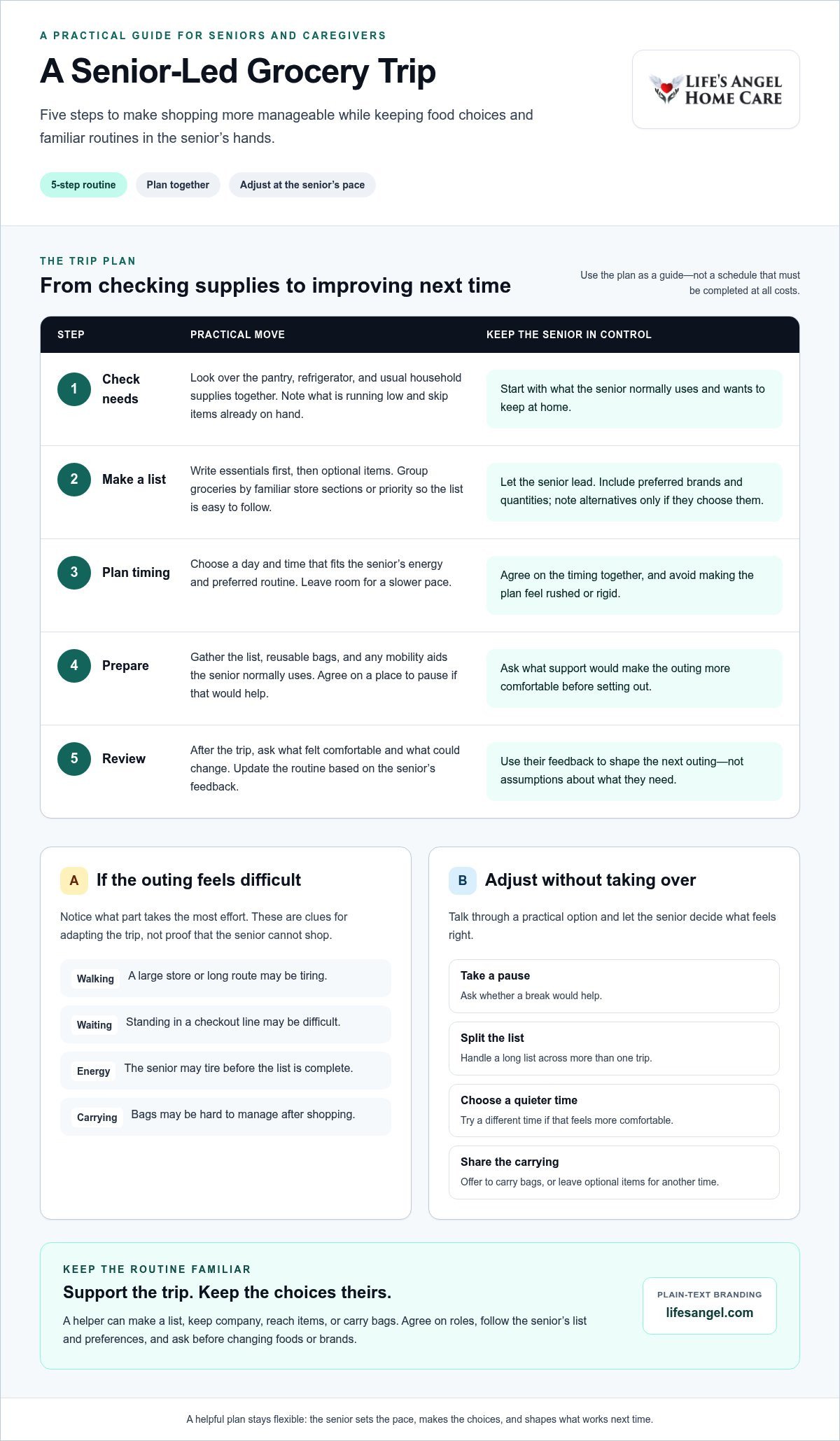
Notice which parts of the trip seem difficult, such as walking across a large store, standing at checkout, getting tired before the list is complete, or carrying bags afterward. These are useful clues, not proof that someone can’t shop. Ask what would make the next outing more comfortable, and let the senior help choose an adjustment.
That adjustment could be taking a pause, splitting a long list across trips, choosing a quieter time, or having someone carry the bags. Keep the conversation practical and reassuring: “Would it help if we took a break?” is more respectful than assuming the senior needs to sit down or go home. If a suggestion doesn’t suit them, listen and try another approach.
Afterward, ask what worked and what they’d change next time. Perhaps the route felt comfortable, but the checkout line was tiring, or the senior would rather shop on a different day. These details can make future trips more manageable without unnecessarily changing familiar foods or routines. The goal isn’t to do everything for the senior; it’s to offer enough support for them to stay involved and in control.
How to Plan a Grocery Trip That Feels Manageable
A comfortable outing often begins before anyone leaves home. A simple plan can keep the trip focused, account for the senior’s usual preferences, and make it easier to adjust if energy changes. Agree on the plan together, and treat it as a guide rather than a schedule that must be completed at all costs.
Use this five-step routine to organize the outing:
- Check needs: Look over the pantry, refrigerator, and usual household supplies together. Note what’s running low and skip items already on hand.
- Make a list: Write down essentials first, then add optional items. Group groceries by familiar store sections or priority so the list is easy to follow.
- Plan timing: Choose a day and time that fits the senior’s energy and preferred routine. Leave flexibility for a slower pace.
- Prepare: Gather the list, reusable bags, and any mobility aids the senior normally uses. Agree on a place to pause if that would make the outing easier.
- Review afterward: Ask what felt comfortable and what could change next time. Update the routine based on the senior’s feedback.
“Planning the list, timing, and practical details ahead of time can reduce avoidable decisions during the trip, leaving more attention for choosing groceries at a comfortable pace.”
Make a useful list together
Let the senior lead the list-making, using what’s at home as a starting point. Include preferred brands and quantities when they matter, and note an acceptable alternative only if the senior chooses one. Mark essentials separately from optional treats or extras. If time or energy runs short, the senior can decide what can wait instead of feeling rushed through every aisle.
A familiar order can help, too. Arrange items by the store sections the senior usually visits, or group them by priority if that feels simpler. Keep the list readable and easy to check off, whether it’s on paper or a device the senior prefers. The goal is a useful reminder, not a rigid set of instructions.
Prepare for comfort and accessibility
Before setting out, consider what will make the outing easier without overcomplicating it. Bring the senior’s usual mobility aid, reusable bags, and written list. Avoid rushing, and agree that you can pause, shorten the trip, or leave optional items for another time. A smaller shopping trip may feel more manageable than trying to complete a long list in one visit.
For families balancing errands with other responsibilities, in-home errand assistance can share practical tasks while keeping the senior’s preferences central. Life’s Angel Home Care provides errand assistance and companionship in Durham and nearby Triangle communities to support seniors with everyday routines.
How to Help During the Store Visit and Bring Groceries Home
Keep the plan flexible once you’re in the store. Walk beside the senior at their preferred pace, follow their list, and allow time to compare items or change their mind. A companion can offer help without steering the choices: ask before reaching for something, lifting an item into the cart, or suggesting a substitute.
Keep check-ins calm and specific. “Would you like to pause for a moment?” gives the senior room to say yes, no, or suggest another option. If the aisles feel tiring or the list is longer than expected, ask whether they’d prefer to sit, skip optional items, or finish another time. Help with grocery shopping for seniors should make the outing manageable while keeping the senior involved.
Offer assistance while keeping the senior involved
Give the senior time to read labels, compare familiar brands, and make decisions. If an item is out of reach, ask before retrieving it. If lifting or stretching seems uncomfortable, offer to get it rather than assuming. When the senior wants a break, pause somewhere convenient and let them decide when they’re ready to continue. Small choices like these support comfort without making the trip feel rushed or supervised.
Handle and put away groceries thoughtfully
At checkout, group bags to make them easier to manage. Keep heavier items separate from lighter ones and chilled or frozen groceries together. Ask where the senior wants each bag set down at home, then follow their usual system for unpacking and storage. Avoid reorganizing shelves or cupboards without permission; a familiar arrangement can make everyday items easier to find.
Put refrigerated and frozen foods away promptly, and follow package instructions for storage. FoodSafety.gov offers food storage guidance for handling groceries safely. If the trip needs to be shortened, prioritize the senior’s essential items and make a note of what remains rather than hurrying through the last aisles.
Food preferences and household routines can change over time. If a senior’s food needs are changing because of a health concern, encourage them to discuss appropriate choices with their clinician rather than making dietary changes on their behalf. You can still help by recording the senior’s questions, following their stated preferences, and keeping food decisions in their hands.
Before unpacking is finished, ask whether anything should be moved or stored differently. The senior may prefer frequently used items within easier reach or want certain groceries kept together for a familiar meal. Following these directions makes the help personal and useful. Carrying bags, setting them down where requested, and putting items away as directed can ease the physical work while preserving the senior’s control over their home and daily routine.
Adapt Grocery Shopping Help to Mobility, Routine, and Food Preferences
There isn’t one right way to make a grocery outing easier. A senior may prefer a familiar route through the store, a shorter visit, or help with only a few items. Let their experience guide adjustments, and revisit the plan if their energy, household routine, or preferences change. Practical help with grocery shopping for seniors should support the person’s choices, not replace them.
| What feels challenging | A practical adjustment to consider |
|---|---|
| Walking or standing for long stretches | Try a shorter visit, pause when wanted, or focus on priority items. |
| Lower energy on certain days | Choose a time that fits the senior’s usual routine, or divide the list across trips. |
| Busy or overwhelming store surroundings | Consider a quieter time or a familiar store and route, if that suits the senior. |
| Changing household needs | Review what’s being used at home and adjust quantities or the list together. |
Adjust the plan for mobility or limited energy
If a large store or long outing feels tiring, the senior might prefer a shorter route or fewer items on each trip. Agree on places to pause and keep the usual route consistent if familiarity helps. Offer mobility assistance in the way the senior welcomes, such as walking beside them or helping with a bag. Ask before changing the plan, and let them decide whether to continue, pause, or head home.
Keep food choices personal and practical
Favorite meals, familiar brands, and preferred textures can all shape a useful grocery list. Ask what the senior enjoys and whether a substitute is acceptable before adding it. If household routines change, such as cooking less often or sharing meals with family, update quantities with the senior rather than making assumptions. Don’t impose a new diet or interpret nutrition needs; detailed questions about meal planning belong with a clinician or a separate senior meal-preparation resource.
Helpful assistance makes a choice easier to carry out; it doesn’t make the choice for someone else.
Small sensory preferences can matter, too. A senior may want to avoid a crowded aisle, choose familiar packaging, or shop at a time that feels calmer. Ask what would help instead of deciding that a particular sound, smell, or setting is a problem. Consistent routines can offer comfort, but they should remain flexible enough to reflect what the senior wants now.
For families who value practical support shaped around a senior’s routine, explore grocery errand assistance from Life’s Angel Home Care. Errand assistance, companionship, and mobility assistance can make shopping outings more manageable while respecting personal preferences.
When Local In-Home Support Can Make Grocery Shopping Easier
Family members often want to help with groceries, but work, caregiving, and other responsibilities can make it difficult to handle every errand personally. In-home errand assistance for seniors, including prescription pickup can share some of that practical load and help a senior maintain familiar routines. Support may be useful for a single outing or as part of ongoing help with grocery shopping for seniors, with the senior’s choices guiding the support.
Life’s Angel Home Care provides errand assistance, companionship, and mobility assistance for seniors in Durham, Chapel Hill, and Raleigh. These forms of support can work together around a grocery errand: a helper can offer company, assist with mobility in ways the senior welcomes, and make the outing feel less like a task to manage alone.
What grocery-related support can look like at home
Support can begin with a conversation about what the senior would like to buy and which part of the errand feels difficult. A helper can assist with planning the outing and accompany the senior, offering a steady, reassuring presence while they shop. The senior remains central to decisions about the store, groceries, pace, and any changes along the way.
For families, sharing errands can ease the pressure of trying to fit every shopping trip into an already full week. It can also help relatives identify what support is useful, whether that means help getting through the outing or simply having someone alongside the senior. The purpose is to make everyday life easier while respecting independence and personal routines.
How families can take a simple next step
Start by describing the parts of shopping that are challenging rather than assuming what kind of help is needed. A senior may enjoy choosing groceries but appreciate company, or want help with mobility while keeping control of the list. It can also help to discuss how errands fit alongside non-medical care for elderly parents, so assistance feels connected to the person’s routine.
- Share what the senior prefers: Note familiar foods, routines, and the kind of help they welcome.
- Explain what feels difficult: Identify whether the main concern is getting around, carrying items, or finding time for the errand.
- Keep the senior involved: Include them in conversations about support and changes to the routine.
With a thoughtful approach, grocery help can offer families some relief without taking choices away from the person who knows their preferences best. If you’re considering support with errands and everyday routines, explore caring in-home support from Life’s Angel Home Care.
Make the Next Grocery Trip Feel More Supported
A helpful next step doesn’t have to mean changing everything at once. Ask the senior what would make their next shopping trip easier, then agree on one adjustment to try. That small conversation can turn help with grocery shopping for seniors into support that fits the person, rather than a routine imposed on them.
If family schedules make errands harder to coordinate, Life’s Angel Home Care offers errand assistance and companionship as part of in-home support. Care aides and nursing assistants are BLS and CPR/AED certified. The aim is to offer thoughtful help while keeping the senior’s preferences and independence at the heart of everyday decisions.
Explore compassionate in-home support from Life’s Angel Home Care and consider what assistance could bring more ease to your family’s routine. With a respectful plan and the right support, grocery shopping can remain a meaningful part of a senior’s life, on their terms.
Frequently Asked Questions
Can a caregiver help an older adult with grocery shopping?
Yes. A caregiver can help with grocery shopping by sharing tasks the older adult wants support with, such as organizing a list, accompanying them, or carrying bags. The senior can still choose items and guide the outing. In Durham, Chapel Hill, and Raleigh, families can use errand assistance and companionship as practical help with grocery shopping for seniors. Agreeing on roles beforehand can make the outing more comfortable for everyone.
How can I help my elderly parent shop without upsetting them?
Offer help as a choice, not as a correction. You might say, “Would you like company at the store, or would you rather I help with the list?” Invite your parent to show you their preferred route or explain how they like to compare items. Starting with one small task can feel less intrusive than changing the whole routine. Afterward, ask privately what felt useful and what they’d prefer next time.
What should be on a grocery list for a senior?
Build the list around foods the senior enjoys and uses, rather than a generic set of “senior” groceries. A helpful starting point is ingredients for a few familiar meals, preferred breakfast foods, drinks, snacks, and staples that are running low. Note quantities and favorite brands if those details matter. If a health condition or dietary restriction affects food choices, ask the senior what guidance they’ve received from their clinician.
How can grocery shopping be easier for a senior with limited mobility?
Ask which part of the outing takes the most effort, such as getting from the entrance to an aisle or standing while comparing products. Consider using a shopping cart for support only if the senior finds it comfortable, and offer to retrieve items from higher or lower shelves with permission. Keep the pace unhurried, and agree on a simple way to signal that they’d like to pause or leave.
How can family caregivers share grocery-shopping responsibilities?
Divide the errand into clear roles instead of relying on one person to remember every detail. For example, one family member can check household supplies and update a shared list, while another handles the next outing. Record preferred brands, substitutions, and items the senior doesn’t want changed. A shared note or calendar can help everyone see what’s been bought and reduce duplicate trips, while keeping the senior included in decisions.
How should groceries be stored after shopping with a senior?
Put refrigerated and frozen foods away promptly, following the storage directions on packaging. Keep raw meat sealed and separate from foods that are ready to eat, and place groceries where the senior prefers to find them. Ask before rearranging shelves or cupboards, since moving familiar items can make them harder to locate later. If unpacking is tiring, the senior can direct where items go while someone else handles the lifting.