

The simplest ride to arrange may not be the support your loved one needs. Choosing scheduled medical appointment transport means thinking beyond pickup and drop-off: can they get to the vehicle, reach the appointment, and manage the return trip comfortably?
Ride-only transportation may work for someone who travels independently. Personal accompaniment can offer practical help and company when a person has mobility needs or would feel more at ease with someone alongside them.
This guide compares transportation options and explains how to match them to the appointment and your loved one’s needs. You’ll find a trip-planning checklist, ways to think through pickup and the journey home, and guidance on when accompaniment may help. A plan that respects your family member’s comfort and choices can make the day feel more manageable.
Key Takeaways
- Scheduled medical appointment transport is prearranged, non-emergency travel. The right option depends on the support your loved one needs.
- Compare family rides, ride-only options, public transit, and accompanied care by considering mobility, who will coordinate the trip, and whether someone should stay with the person.
- Use a trip checklist to organize appointment details, timing, mobility needs, contact information, and the ride home.
- Personal accompaniment can provide practical help and reassuring company while respecting your loved one’s comfort and choices.
- Life’s Angel Home Care provides scheduled transportation and accompaniment for seniors and people with mobility restrictions in the Durham area.
What scheduled medical appointment transport includes, and when families need it
Coordinating a healthcare trip can mean fitting pickup around work and other family responsibilities, then planning how your loved one will get home. It can take extra thought if they need help moving around or feel uneasy travelling alone. Knowing what kinds of support are available helps you plan around their needs and independence.
Scheduled medical appointment transport is prearranged, non-emergency transportation to and from a healthcare visit. It can mean a ride to the appointment or transportation paired with personal accompaniment. It is planned support, not an emergency response. Urgent medical situations require emergency services. The broader concept of patient transport includes moving people for healthcare outside emergency care.
Distance is only one part of the decision. Consider whether your loved one can comfortably get to the vehicle, feels confident travelling independently, and would value having someone alongside them. Plan for the return, too: the appointment may take longer than expected, so decide how updates and the trip home will be coordinated. These questions help you determine whether a ride, additional personal support, or accompaniment is a better fit.
When does a planned medical ride become a support need?
A ride alone may not be enough if getting to the vehicle is difficult or travelling alone causes worry. Support can also help with a one-time visit to an unfamiliar place or recurring appointments that require repeated family coordination. Ask your loved one what feels challenging and what kind of help they would welcome. Their preferences matter: assistance should support independence, not take choices away.
What is the difference between transportation and accompaniment?
Transportation covers travel to and from the healthcare appointment. Depending on the arrangement, personal support may also help with transitions between home, the vehicle, and the destination. Accompaniment means someone is present to support the person during the appointment trip, rather than leaving them to manage it alone. It is not a substitute for clinical care, and an accompanying aide does not make medical decisions.
Life’s Angel Home Care provides scheduled transportation and personal accompaniment for seniors and people with mobility restrictions in Durham. The goal is practical, considerate support that keeps the individual’s comfort and dignity in view. Start by asking your family member what would make this particular appointment easier.
How scheduled medical transport and appointment accompaniment work
A calmer appointment day often starts with a shared plan. Agreeing on the details in advance helps your loved one know what to expect and clarifies who is coordinating each part of the trip. Scheduled medical appointment transport is arranged ahead of a healthcare visit. It is not an ambulance service or a response to a sudden medical emergency.
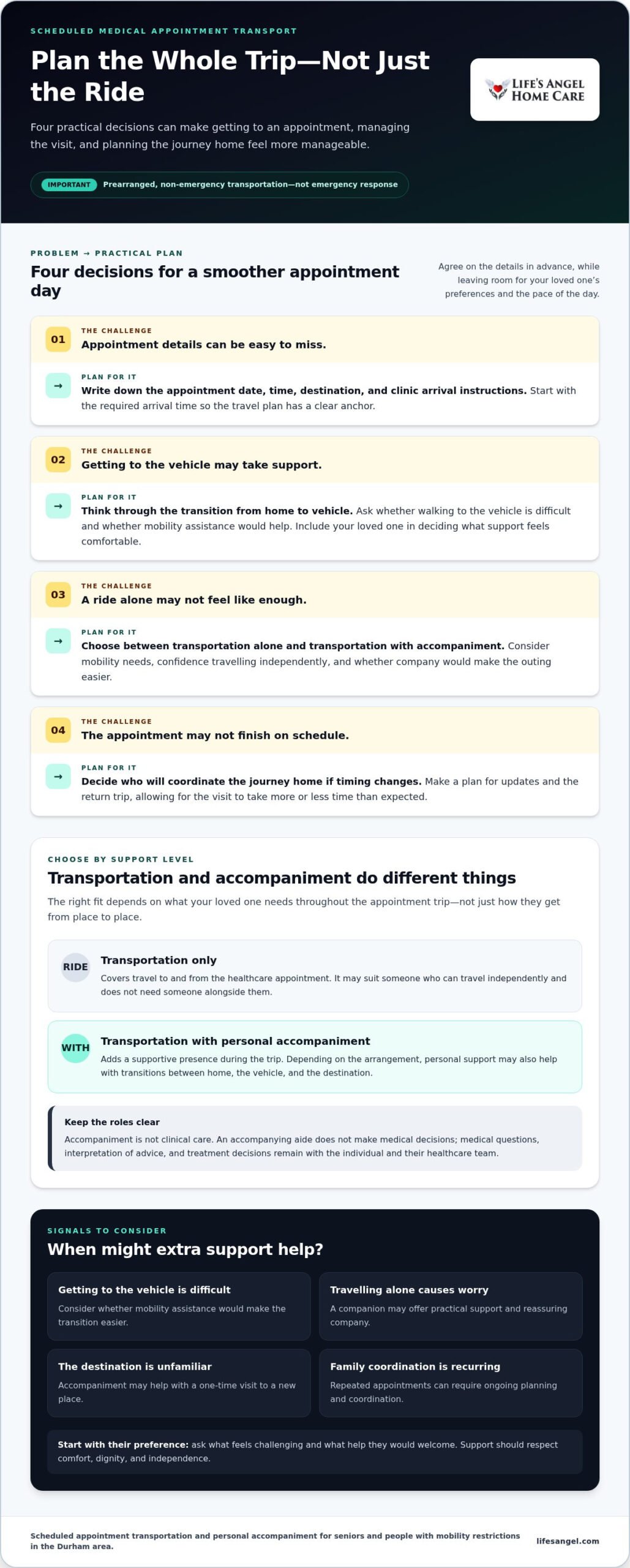
Think through the trip in four practical steps:
- Identify the visit. Write down the appointment date, time, destination, and any arrival instructions the clinic has provided.
- Plan the trip. Consider how your loved one will get from home to the vehicle, whether mobility assistance would help, and what kind of support feels comfortable to them.
- Decide on accompaniment. Consider whether transportation alone suits their needs or whether having someone accompany them would make the outing easier.
- Plan the return. Appointments can take more or less time than expected. Decide how the trip home will be coordinated if the schedule changes.
The goal is not to control every moment. It is to make the important details easier to manage while leaving room for your family member’s preferences and the natural pace of the day.
What should families plan before the appointment trip?
Start with the appointment time, destination, and required arrival time. Then talk through practical needs: Will walking to the vehicle be difficult? Would travelling with someone feel reassuring? Include your loved one in the conversation, since they may have clear preferences about the help they want. Finally, decide who will coordinate the return trip, allowing for the possibility that the appointment may not finish on schedule.
What can personal accompaniment add to the experience?
Transportation covers getting to and from the appointment. Personal accompaniment adds a supportive presence during the trip, which may help an older adult feel more at ease during an unfamiliar or tiring day. A companion can offer practical support and reassurance while respecting the person’s pace and choices. Accompaniment does not replace clinical care: medical questions, interpretation of advice, and treatment decisions remain with the individual and their healthcare team.
For a senior who feels uneasy travelling alone, a patient companion can make appointment-day transitions feel less daunting. Coordinating transportation and accompaniment together can also ease some of the planning for family members without taking away the older adult’s independence. Life’s Angel Home Care provides scheduled appointment transportation and accompaniment for seniors and people with mobility restrictions in the Durham area, with support centered on comfort and dignity.
Compare appointment transportation options by support level, not ride alone
A ride that works for one person may leave another needing help at the curb, finding the right entrance, or coordinating the trip home. Compare options by the support they provide, not only by how the person travels. Use this table as a starting point, then consider your loved one’s mobility, confidence, preferences, and appointment plans.
| Option | Support level | Planning responsibility | Mobility considerations | Does someone accompany the person? |
|---|---|---|---|---|
| Family member or friend | Can be tailored to the person and visit | The family or friend coordinates timing and the return | Support depends on the companion’s ability to help and the person’s needs | Usually, if the family member or friend stays with them |
| Ride-only transportation | Primarily travel to and from the destination | The family and rider plan pickup and the trip home | Consider getting into and out of the vehicle and reaching the appointment location | Not necessarily |
| Public transit | Travel on available routes, with the rider managing the journey | The rider or family plans the route, timing, and return | Walking, transfers, schedules, and access needs may affect suitability | Not necessarily |
| Scheduled transport with accompaniment | Transportation paired with personal support for the appointment trip | The family and service coordinate the planned trip and return expectations | Can suit someone who would benefit from support related to mobility or reassurance | Yes, personal accompaniment is part of the support |
Public transit routes, eligibility rules, and community transportation programs can vary by location and change over time. If you are planning a trip in Durham, Chapel Hill, or Raleigh, make sure the route and timing work for the appointment and your loved one’s mobility needs.
When might a ride-only option be enough?
A ride-only arrangement may suit someone who can manage the appointment independently and needs transportation. Consider the whole journey before deciding: can they get to and from the vehicle, find the correct entrance, and coordinate the return if the visit runs longer than expected? A ride may meet the travel need while leaving the rest of the appointment-day arrangements to the rider or family.
When can scheduled transport with accompaniment fit better?
Personal support may help when mobility limitations make transitions harder or the person feels uncertain travelling alone. Life’s Angel Home Care pairs scheduled transportation with accompaniment to healthcare appointments for seniors and people with mobility restrictions in the Durham area. This brings travel and personal support together while keeping the individual’s comfort and dignity in view.
The best fit is not defined by vehicle type alone. Choose the support that matches the person’s mobility, confidence, preferences, and need for company, and gives the family a workable plan for the appointment and return.
Plan a smoother medical appointment trip in Durham, Chapel Hill, or Raleigh
A little preparation can ease the pressure on appointment day, especially when you are balancing a visit with work and other caregiving responsibilities. For scheduled medical appointment transport, collect the details in one place and talk through the plan with your loved one. Let their comfort and preferences guide how much support you arrange.
Use this checklist the day before, then review anything that may have changed on the day of the visit:
- Confirm the appointment details. Note the date, time, destination, and any arrival instructions the family has. Include the address so everyone is working from the same information.
- Talk through mobility needs. Consider how your loved one will get from home to the vehicle and from the vehicle to the appointment. Share relevant needs in advance, without assuming they want more help than they do.
- Gather familiar essentials. Set aside mobility aids or personal items the individual normally uses, as appropriate. Ask what they would like to bring so preparation supports their routine and independence.
- Plan timing and the return. Allow for the arrival time the appointment requires, and remember that the visit may not finish at a predictable time. Decide how the ride home will be coordinated if the schedule shifts.
- Agree on communication. Decide which family member is coordinating and how they will share updates about the trip. Clear expectations can prevent last-minute confusion without placing the whole task on the older adult.
How to account for mobility and comfort needs
Think about the transitions involved, not just the distance travelled. Does your family member need extra time to walk, use a mobility aid, or move between sitting and standing? These details can shape the support plan, but they are not a substitute for medical guidance. A conversation that respects the person’s wishes can help everyone understand what assistance feels useful and what they prefer to do themselves. For more context on safe mobility and transfer assistance at home, consider how everyday movement needs may inform appointment planning.
Keep the plan flexible. If the appointment timing changes, use the agreed communication plan to coordinate next steps. Families in Durham, Chapel Hill, and Raleigh can apply the same checklist to local trips, whether the appointment is nearby or requires more travel time.
Scheduled transportation is for planned, non-emergency healthcare trips. If your loved one develops urgent or emergency symptoms, seek appropriate emergency help rather than relying on a scheduled ride.
If a planned visit would be easier with transportation and personal accompaniment, learn about appointment transportation with Life’s Angel Home Care.
Choose compassionate appointment transportation with Life’s Angel Home Care
For families in Durham and nearby communities, arranging a healthcare trip can involve more than finding a ride. Your loved one may also value personal support that recognizes their mobility needs, respects their choices, and helps the day feel less daunting. Life’s Angel Home Care provides scheduled transportation and personal accompaniment to healthcare appointments for seniors and people with mobility restrictions.
This service supports planned visits. It is not emergency transportation or a replacement for clinical care. The focus is on helping with the appointment trip while treating the person with patience and dignity. Families can share what would make the outing more comfortable, including the individual’s usual mobility needs, preferences about receiving help, and practical details that affect the trip.
What families can expect from a caring, scheduled service
A considerate approach treats the older adult as a person with preferences, not simply as a passenger. Personal accompaniment adds a supportive presence to scheduled transportation, which can help when someone would feel more comfortable not managing the trip alone. The right level of support depends on the person and the visit. Clear communication helps keep their comfort and autonomy central.
Life’s Angel Home Care is based in Durham and serves the local community. The agency employs board-certified registered nurses, nursing assistants, and care aides with BLS and CPR/AED certification. These staff qualifications provide context about the agency, but appointment transportation and accompaniment are not clinical care during a healthcare visit. The person’s healthcare team remains responsible for medical guidance and decisions.
Some families also arrange support at home alongside appointment trips. If broader daily assistance at home is part of the picture, personal care services in Durham can help you consider how in-home support fits your loved one’s routines.
How to take the next step for a loved one
Before planning a trip, consider what your family member wants help with and where they prefer to remain independent. Note the appointment destination and timing, how they manage mobility, whether company would be reassuring, and how the return trip fits into the day. These details help your family explain what support would make the outing more comfortable.
Scheduled medical appointment transport with personal accompaniment brings travel and attentive support together while easing some of the coordination for family members. Explore appointment transportation with Life’s Angel Home Care to plan supportive travel for your loved one’s next healthcare visit in the Durham area.
Make the next appointment plan together
Your loved one’s voice belongs in the transportation plan. A gentle conversation about what feels comfortable, where they would like help, and what they prefer to manage independently can make planning a shared decision. It also gives you a clear starting point for arranging scheduled medical appointment transport that fits the visit and the person making it.
You do not have to solve every future trip at once. Begin with the next appointment, note what would make the day easier, and adjust the plan as your family member’s preferences or needs change. Thoughtful support can help preserve independence rather than diminish it.
To plan a caring option for an upcoming visit, talk with Life’s Angel Home Care about scheduled appointment support. Share the trip details and the kind of assistance your loved one prefers, then make the next appointment plan together.
Frequently Asked Questions
Is scheduled medical appointment transport the same as emergency ambulance transportation?
No. Scheduled medical appointment transport is arranged for a planned, non-emergency healthcare visit. An ambulance responds to emergencies and urgent medical needs. If your loved one has severe or sudden symptoms, or is in immediate danger, contact emergency services rather than arranging a scheduled ride. Planned transportation can help with routine visits, but it does not provide emergency medical care or replace an ambulance when one is needed.
Can a caregiver accompany a senior to a medical appointment?
Yes. Personal accompaniment can be part of scheduled appointment support. Having someone alongside them can offer reassurance during the trip and help a senior feel less alone in an unfamiliar setting. Life’s Angel Home Care provides scheduled transportation with personal accompaniment for healthcare appointments. An accompanying caregiver can offer personal support, but does not provide medical interpretation, make treatment decisions, or replace the senior’s healthcare team.
How far in advance should I arrange scheduled medical transportation?
There is no single booking window for every trip, so begin planning when you know the appointment details. This gives your family time to coordinate the destination, timing, mobility considerations, and whether accompaniment would help. When arranging the service, share the appointment date and time, destination, and practical support preferences so the planned trip is clear.
What happens if a medical appointment runs late?
A late appointment can affect the return trip, so discuss how changes will be communicated when you arrange scheduled support. Your family can decide who will share an update if the visit takes longer than expected. Do not assume a driver will wait for a set period or that real-time tracking is available. A communication plan helps family members respond to schedule changes without adding uncertainty for the older adult.
Does Medicare or Medicaid cover scheduled medical appointment transportation in North Carolina?
Coverage depends on the program, plan, eligibility, and circumstances, so do not assume a particular service is covered. Benefit-based transportation for eligible Medicaid members is distinct from privately arranged care, and Medicare coverage can depend on the specific benefit and situation. For current details, review official North Carolina Medicaid information or contact the member’s health plan. Confirm the applicable benefit and eligibility before relying on coverage for a planned trip.
What information should I have ready when arranging a medical appointment ride?
Have the appointment date and time, destination, and any arrival instructions ready. It also helps to describe practical mobility considerations, such as whether walking to the vehicle is difficult, and whether your loved one prefers company or a particular kind of support. Share only information relevant to planning the trip. Clear details help your family explain what the day involves without disclosing unnecessary private medical information.
Can scheduled transportation help someone with mobility limitations?
Scheduled transportation with personal accompaniment supports seniors and people with mobility restrictions. When planning a trip, describe practical needs, such as how your loved one usually gets around and what assistance they prefer. This helps clarify the support needed without assuming a particular vehicle feature or level of transfer help. The right arrangement depends on the person’s needs, comfort, and trip details.