

What if a nourishing meal plan started with the foods an older adult already enjoys, rather than a list of rules? If planning and cooking feel tiring, or health needs make food choices less straightforward, you’re not alone. Nutrition and meal prep for seniors can be practical and comforting when it fits a person’s preferences, routine, and support needs.
You don’t need to overhaul every meal or make cooking complicated. A simple, repeatable plan can make it easier to include variety and nourishing ingredients while keeping familiar favorites on the table. This guide will help you build an approachable meal-planning routine, prepare appealing meals and snacks, and think through adjustments when health concerns affect food choices. You’ll also learn when it may help to seek individualized guidance from a qualified health professional, or to have a trusted caregiver assist with meal preparation at home. The goal is a routine that feels manageable for your family and respectful of the older adult’s choices.
Key Takeaways
- Build meal plans around the older adult’s preferences, routines, appetite, and energy, then adjust as their needs change.
- Use a simple weekly process to choose meals, make a shopping list, and plan manageable preparation.
- Prepare flexible staples and label portions to make everyday meals easier while leaving room for changing appetites.
- With nutrition and meal prep for seniors, consider meal timing, familiar flavors, hydration, and any individualized dietary guidance.
- Share shopping, cooking, companionship, and cleanup tasks, and consider in-home meal preparation support when the routine becomes difficult to manage.
Nutrition and Meal Prep for Seniors: Start With the Person, Not a Menu
Good meal planning begins with a person, not a preset menu. For an older adult, meal prep means choosing, preparing, and serving food in a way that fits their preferences, daily routine, and available support. A practical plan should make room for familiar favorites as well as nourishing variety, without expecting every meal to look the same.
Appetite, energy, mobility, taste, and confidence in the kitchen can shift over time. Perhaps standing to cook feels tiring, a once-loved dish no longer appeals, or lunch works better earlier in the day. These changes are useful clues for adjusting the routine, not reasons to take choices away. Aging is shaped by biological, social, and psychological factors, a broad perspective reflected in Gerontology. Nutrition needs also differ from person to person, so age alone can’t determine what someone should eat.
Personal preferences and practical routines belong at the center of meal planning because food is more likely to feel enjoyable and manageable when it fits the person’s everyday life.
Notice preferences, appetite, and everyday routines
Start with a kind conversation. Ask which familiar meals, flavors, textures, and mealtimes feel appealing. Some people may prefer soup and toast at lunch, while others enjoy a larger evening meal. Notice patterns without trying to diagnose their cause: Is breakfast often left untouched? Does the person seem more comfortable with smaller servings or softer textures? Share observations gently and invite their input. Offering choices, such as two dinner ideas, helps preserve dignity and control.
Identify nutrition questions that need individualized guidance
Some questions call for more than a household meal plan. Medical conditions, swallowing concerns, allergies, and prescribed diets can affect which foods or textures are appropriate. Discuss these needs with the person’s clinician or a registered dietitian, especially if eating becomes uncomfortable or a new dietary instruction is unclear. Avoid introducing supplements, food restrictions, or therapeutic diets based on general advice alone. A caregiver can help prepare agreed-upon meals, but meal preparation isn’t a substitute for individualized nutrition guidance.
To make the conversation useful, keep a simple note of what the older adult enjoys, when they tend to feel hungry, and any questions they want to raise at an appointment. Focus on observations rather than conclusions. For example, note that meals have become smaller or that chewing certain foods seems difficult, then share that information with the clinician. The notes can also help family members coordinate shopping and meal preparation around the person’s stated preferences.
With nutrition and meal prep for seniors, a flexible plan is often a better starting point than a rigid menu. Respect what the older adult says, pay attention to routine, and seek professional guidance when a health concern changes the food choices. That keeps the person involved while giving the family a clearer, calmer way to plan.
How to Plan a Balanced, Senior-Friendly Menu for the Week
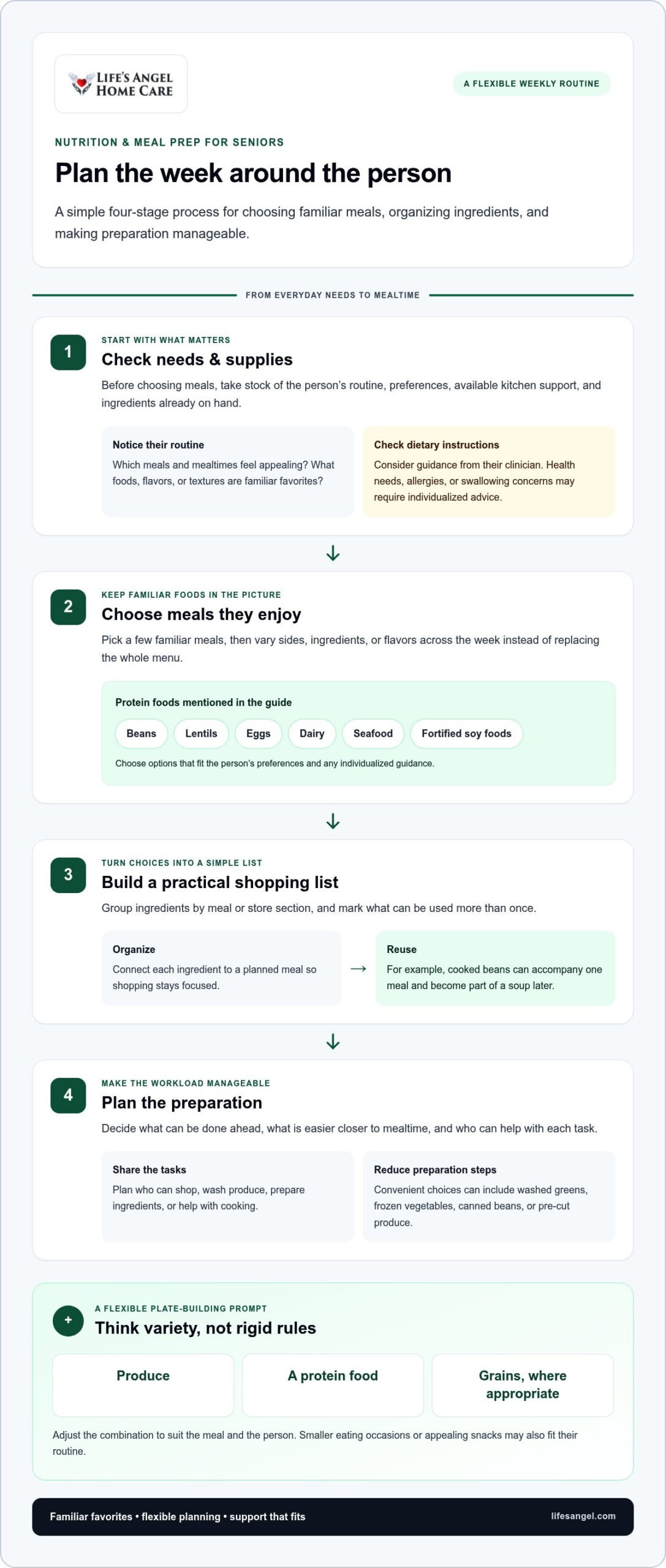
A weekly menu doesn’t need to be elaborate to be useful. A short planning session can help you see what’s already in the kitchen, choose meals that suit the older adult, and make cooking and shopping feel more manageable. Keep the plan flexible so it can change with appetite, energy, and the day’s schedule.
- Check needs and supplies. Review the person’s usual routine, food preferences, kitchen support, and any dietary instructions from their clinician. Take stock of what’s on hand before choosing meals, so the plan builds on ingredients already available.
- Choose familiar meals. Select a few meals the person enjoys, then vary the sides or ingredients across the week. Include different sources of protein, such as beans, lentils, eggs, dairy, seafood, or fortified soy foods, as they fit the person’s preferences and guidance.
- Build a practical shopping list. Group ingredients by meal or store section, and note what can be used more than once. For example, cooked beans might accompany one meal and become part of a soup later.
- Plan the preparation. Decide which tasks can be done ahead and which are easier closer to mealtime. Consider who can shop, wash produce, prepare ingredients, or help with cooking.
For a simple plate-building prompt, include produce, a protein food, and grains where appropriate, adjusting the combination to suit the meal and the person. This is a flexible way to think about variety, not a strict formula or a prescribed diet. The Nutrition Guidelines for Older Adults offer broader food and nutrition information; use individualized clinical guidance for needs that call for it.
Build a flexible menu from familiar foods
Start with meals the older adult already likes, then make small changes rather than replacing the whole menu. Serve a familiar main dish with a different vegetable, grain, or protein option, and allow for appealing snacks or smaller eating occasions if those fit the person’s routine. Variety can come from rotating ingredients and flavors, not following one recipe pattern every day.
A weekly meal plan should adapt to personal preferences and professional dietary guidance, rather than asking the person to fit a fixed menu.
Make shopping and preparation easier to manage
Choose convenient ingredients when they make cooking more accessible. Washed greens, frozen vegetables, canned beans, or pre-cut produce can reduce steps, while still giving you options for different dishes. Check labels and preparation instructions as needed, especially when a clinician has recommended specific foods or limits.
Keep the shopping list short and tied to planned meals, household preferences, and the help available that week. A family member or caregiver can assist with errands or agreed-upon meal preparation, while the older adult stays involved in choices. If support at home would make the routine easier, in-home meal preparation support can be part of a practical plan.
Practical Meal Prep for Seniors: Make Cooking Easier and Safer
A useful prep session doesn’t have to mean cooking every meal in advance. Start with a clear, comfortable workspace, gather the ingredients and tools you’ll need, then choose a few manageable tasks. You might wash fruit, cook a pot of rice, portion soup, or prepare vegetables for another meal. Preparing a few ingredients ahead can make mealtime take less effort without locking the household into a rigid menu.
Batch-prepared staples can be used in different ways, which helps keep meals flexible. Cooked beans might go into soup one day and accompany vegetables another. Store components separately when that makes it easier to adjust portions or put together a different combination. Label containers with the food and preparation date so family members can identify what’s ready and use older items first.
Choose preparation tasks that match ability and energy
Break the session into short steps, with a chance to sit or rest between them. If chopping is tiring, washed or pre-cut produce may help; use kitchen tools only if the person can handle them comfortably and safely. Keep frequently used items within easy reach, and avoid asking anyone to lift heavy pots or stretch for supplies. A family member or caregiver can help with agreed-upon meal preparation while respecting the older adult’s role and preferences.
Store and serve prepared food thoughtfully
Safe storage matters as much as preparation. The USDA advises keeping a refrigerator at 40°F or below, refrigerating perishable food within two hours, and using most cooked leftovers within three to four days. Reheat leftovers to 165°F. Follow the USDA’s leftover food safety guidance for details, including advice for foods that need different handling.
For a calm routine after cooking:
- Divide food into portions that suit the person’s likely appetite and planned meals.
- Label containers with the meal or ingredient and the date it was prepared.
- Refrigerate or freeze food promptly, using suitable containers and safe handling practices.
- Reheat only the portion you plan to serve, and follow current food-safety guidance.
Serve a portion that looks inviting and feels manageable, then let the older adult decide whether they’d like more. Don’t change food texture to address swallowing concerns without professional advice. In nutrition and meal prep for seniors, convenience should support comfort and choice, not replace individualized guidance. A steady, modest preparation routine can ease kitchen work while keeping meals adaptable to the person’s needs that day.
Adapt Senior Meals for Appetite, Hydration, and Dietary Restrictions
A meal plan should be able to flex with the day. Appetite, energy, and interest in food can vary, so offer a smaller serving first and let the older adult decide whether they’d like more. If it suits their routine, a familiar snack or a smaller eating occasion may feel more appealing than a full plate. A favorite flavor, comfortable mealtime, and welcoming company can also make eating feel more pleasant, without turning each meal into a task.
Hydration can be part of everyday meal routines. If appropriate for the person, offer a drink with meals and keep water or another preferred beverage nearby. Fluid needs differ, however, and some medical guidance may include specific limits. Follow the person’s clinician-provided instructions rather than setting a general target or encouraging extra fluids without considering their care plan.
Respond gently when appetite or interest in meals changes
Try practical, low-pressure adjustments based on what the person says they enjoy. A smaller portion, a familiar snack, or a mealtime with company may help make eating more comfortable. Don’t assume you know why appetite has changed. If a change is sudden, persistent, or worrying, share what you’ve noticed with a healthcare professional so the older adult can receive appropriate guidance.
Handle special diets and texture concerns carefully
Keep dietary changes within the guidance the person has already received. A family-created restriction may unnecessarily remove foods they enjoy, while a condition-specific diet may need individual direction. Ask the clinician or a registered dietitian about questions involving allergies, chronic conditions, or prescribed diets. Swallowing concerns need particular care: don’t thicken drinks, puree meals, or otherwise change food texture without appropriate professional guidance.
A short written note can help family members and other helpers prepare meals consistently. Include the person’s preferences, known allergies, and current dietary instructions, and update it when their care guidance changes. Keep it practical and easy to find, while protecting personal health information.
- Note preferred flavors, foods, and meal timing.
- Record allergies and clinician-provided dietary instructions clearly.
- Share relevant updates with the people helping with meals.
Flexible adjustments are different from prescribing a new diet. Offering a smaller portion or serving a familiar dish can respect the person’s preferences; removing entire food groups or changing texture may have health implications and calls for individualized advice. With nutrition and meal prep for seniors, a written plan and thoughtful observation can help the family adapt without guessing at medical needs.
If preparing meals at home has become tiring for your family, explore in-home meal preparation support that can respect the older adult’s preferences and established routine.
When Help With Senior Meal Preparation at Home Can Make a Difference
A meal routine can become harder to manage gradually. Shopping may take more energy, standing at the counter may feel tiring, or familiar ingredients may go unused because planning and cooking are difficult to keep up with. You might notice meals being skipped, preparation becoming less consistent, or kitchen tasks piling up. These signs don’t mean the older adult has to give up their independence. They can be a gentle prompt to talk about what kind of help would make daily life easier.
Start by asking the person what support they’d welcome. They may want someone to pick up groceries but prefer to choose the meals themselves, or appreciate help with preparation while keeping their usual mealtimes. Respecting those preferences can make assistance feel like teamwork, not a loss of control.
Make meal support collaborative and respectful
Agree on a routine together. The older adult might choose meals and snacks, while a family member handles shopping and another person helps prepare food or tidy the kitchen. Companionship can be part of the meal too, if the person enjoys having someone nearby. Keep choices open, check whether the arrangement still feels useful, and adjust tasks as energy and needs change.
A shared plan can prevent confusion among family helpers. Write down the person’s preferred foods, usual meal times, shopping needs, and the tasks each person has agreed to handle. For a broader view of household assistance, the home care services checklist can help families consider which daily routines could use support. If cleaning up after cooking is also a burden, light housekeeping for seniors may be relevant to the conversation.
Recognize when routine household support could ease the load
Consider additional in-home caregiver support in Durham, NC if grocery errands, preparing ingredients, or staying on top of meals has become difficult for the older adult or family. Life’s Angel Home Care provides in-home meal preparation and companionship in Durham and nearby communities, including Chapel Hill and Raleigh. A caregiver can help with agreed-upon meal preparation and kitchen routines while taking the person’s preferences into account. This practical support is not medical nutrition therapy; questions about a prescribed diet or other health-related food needs belong with the person’s clinician or registered dietitian. Learn more about senior meal preparation services in Durham, NC and how support can fit a loved one’s routines.
Nutrition and meal prep for seniors can be easier to sustain when the plan reflects the person’s wishes and the family shares the work. You don’t have to organize every task alone. If in-home support could help your household, learn about in-home support in Durham, Chapel Hill, and Raleigh at a pace that feels right for your family.
Take One Small Step Toward Easier Mealtimes
You don’t have to perfect the routine before making a change. Choose one small step together, such as sharing a shopping task or setting aside time to prepare a favorite meal. Then notice what feels helpful to the older adult and what still feels tiring. A gentle check-in can help the plan grow at a comfortable pace while keeping their voice at the center.
That’s the heart of nutrition and meal prep for seniors: creating a familiar, workable routine that respects the person and leaves room for adjustments. If your family could use a caring hand with everyday routines, Life’s Angel Home Care offers in-home support, including meal preparation. Learn how compassionate in-home support can help with everyday routines.
Every family’s needs are different, and asking for help can be one thoughtful way to care for each other. Start where you are, take the next step that feels right, and let the routine become easier together.
Frequently Asked Questions
What is a healthy meal plan for seniors?
A healthy senior meal plan is varied, practical, and tailored to the individual rather than built around a standard menu. One person might enjoy oatmeal with fruit in the morning and beans with vegetables later, while another prefers different familiar foods. Think about variety across the day instead of expecting every plate to be perfect. Health conditions, allergies, appetite, and clinician instructions can affect what’s appropriate, so discuss personal needs with a clinician or registered dietitian.
How can I make meal prep easier for an older adult?
Meal prep can feel easier when the older adult isn’t expected to do every task at once. Choose one manageable step, such as rinsing produce or sorting ingredients, and let a helper handle tasks that feel tiring. For nutrition and meal prep for seniors, a small basket with the day’s ingredients and a simple note about what to prepare can reduce searching and help family members coordinate without relying on memory.
What are good snacks for seniors with a small appetite?
Good snack choices depend on the person’s tastes, dietary instructions, and ability to eat comfortably. If they’re suitable, options such as applesauce, yogurt, or crackers with cheese may be easier to approach than a full serving at once. Offer choices rather than pressure, and pay attention to what the person actually enjoys. If appetite changes persist, weight loss is a concern, or swallowing is difficult, seek advice from a healthcare professional.
How can seniors stay hydrated throughout the day?
Make preferred drinks visible and easy to reach, and connect offering a drink with an existing routine, such as sitting down to read or taking a break between activities. Water is one option, and other foods and beverages may also contribute to fluid intake. Don’t set a fluid target without considering individual needs. If a clinician has given specific instructions or limits, follow that guidance and ask about any questions.
Should seniors follow a special diet as they get older?
No, getting older alone doesn’t mean someone needs a special diet. Food choices should reflect the person’s preferences, health, and any recommendations from their healthcare team. A prescribed diet may be important for some people, but adding restrictions without guidance can make familiar meals harder to enjoy. Before changing established eating habits, discuss medical conditions, allergies, or nutrition concerns with a clinician or registered dietitian who understands the person’s situation.
How often should older adults eat during the day?
There’s no single meal schedule that suits every older adult. One person may feel comfortable with regular meals, while another prefers a different pattern that works with their appetite and daily activities. Notice when the person seems most ready to eat and plan around that where possible. If eating becomes difficult over time or changes suddenly, share what you’ve observed with a healthcare professional instead of relying on schedule changes alone.
Can an in-home caregiver help with meal preparation for seniors?
Yes, an in-home caregiver can provide practical help with meal preparation and may offer companionship during everyday routines. The older adult can stay involved by choosing meals, sharing preferences, or deciding which tasks they’d like help with. Life’s Angel Home Care provides in-home support in Durham, Chapel Hill, and Raleigh. Caregivers can follow household instructions, while medical diets, swallowing concerns, and nutrition treatment remain guided by healthcare professionals.